
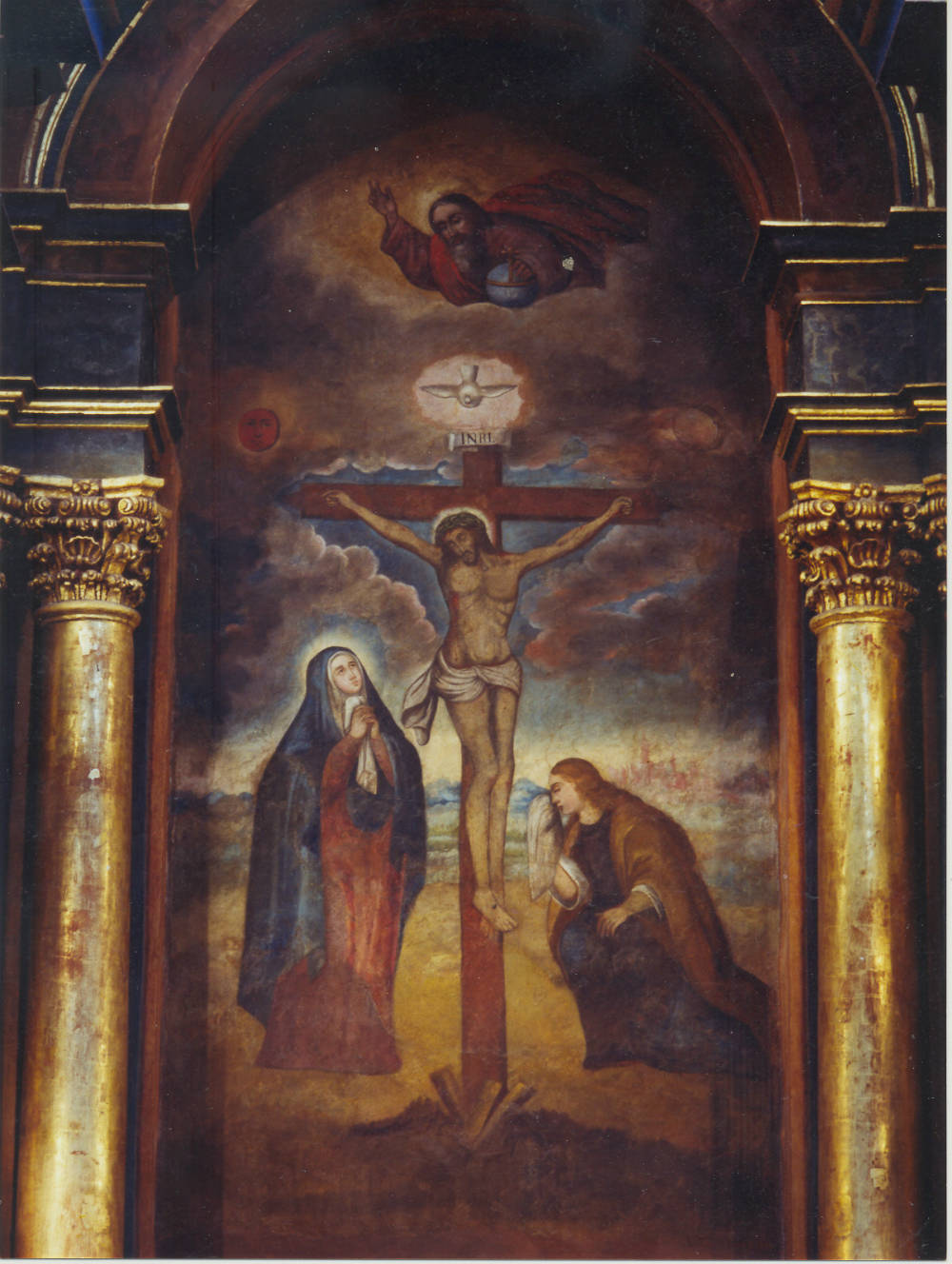
 The Lord of Miracles (Señor de los Milagros) is an image painted of Jesus Christ that is venerated in Lima, Peru. The image was painted during the 17th century by Benito or Pedro Dalcon, an African taken from what is now Angola to Peru as a slave. An annual procession commemorating the image occurs every October. It is one of the oldest Catholic traditions in Peru. It is one of the largest religious processions in the world.
In the middle of the seventeenth century, Lima had only 35,000 residents. This number increased steadily from that point on with the arrival of thousands of immigrants. Most of them were tribes from the Atlantic coast of western Africa such as Angolas, Carabelíes, Congos, and Mozambiques.
The Angolas were members of brotherhoods who venerated different images, carrying out related religious acts in which they remembered their freedom and nostalgically sang the songs of their ancestors in their own languages; they also tended to the sick, and gave their members a decent burial.
In 1650 the various groups of Angolas united and created a joint brotherhood in the Pachacamilla district, where indigenous people from Pachacamac had previously lived, and where stands the church and monastery of Nazarenas and the building of the brotherhood of the Lord of Miracles. Their life conditions were those of absolute poverty. In the brotherhood’s house there were large mud walls; on one of these, situated in a room where the brothers used to gather daily, one of the Angolas painted in tempera, an image of Christ on the cross.
On November 13th 1655, at 2:45 p.m. a terrible earthquake changed the face of Lima and Callao, destroying churches and homes, and leaving thousands dead and homeless. The earthquake strongly affected the Pachacamilla district, and all the Angolas’ houses collapsed, including that of the brotherhood; but miraculously, the wall containing the image of Christ on the cross escaped unharmed.
As a result of the earthquake, the Angolas moved to another area, leaving the wall with the sacred image in a state of dereliction. Fifteen years later, Antonio León saw the image of the Christ on the cross painted on this wall in the same perfect condition as the first day it was done. Truly astonished, Leon tidied up the place and built an altar, until he was forced to stop work due to a strange pain that affected him. Miraculously, the pain disappeared after some days. As a sign of gratitude, he returned with harps, instruments, and musicians.
According to the reports of the period, Leon was the first to take care of the place, not knowing that from that point onward intense devotion to the sacred image of the Pachacamilla Christ would start. The devotion began to grow, the believers gathered each Friday night to sing prayers to Christ.
More people were attending the meetings, often official Catholic religious practices were not followed. Therefore civil and ecclesiastic authorities forbade the gatherings and ordered that the image of the Christ on the wall should be erased. However, when the painter climbed up a ladder placed against the wall, he immediately started to experience tremors in his entire body, and was forced to climb down, helped by his companions. After a while, he tried again to climb up but became so fearful that he could not start the job, so he rapidly climbed down and disappeared. Another soldier climbed up a ladder, but immediately climbed down, saying that he saw the image become more and more beautiful, while the crown turned green.
Because of these strange events, people started protesting loudly and the group sent to erase the image ran away. Once the civil authorities knew what had happened, he decided to cancel the order to erase the image and granted people the right to venerate it instead.
On September 14, 1671, the first mass was celebrated in front of the crucified Christ of Pachacamilla, and from that day onward the number of devotees grew steadily. Soon the image started to be called the “The Lord of Miracles”.
During October 1687, an off-shore earthquake razed the city of Callao, part of the city of Lima and destroyed the chapel built in honor of the Christ image. But by a miracle, the wall containing the image of Christ remained undamaged. After this terrible event, a copy of the painting of the image of Christ was made and for the first time was carried in procession through the streets of Pachacamilla district.
On October 28th 1746, the biggest earthquake in the history of Peru and a tsunami struck Lima and Callao. However, once again the image of Christ wall did not collapse. Therefore, to commemorate the first anniversary of the earthquake of 1746, the authorities declared that October 28th will be the main festivity of the Lord of Miracles.
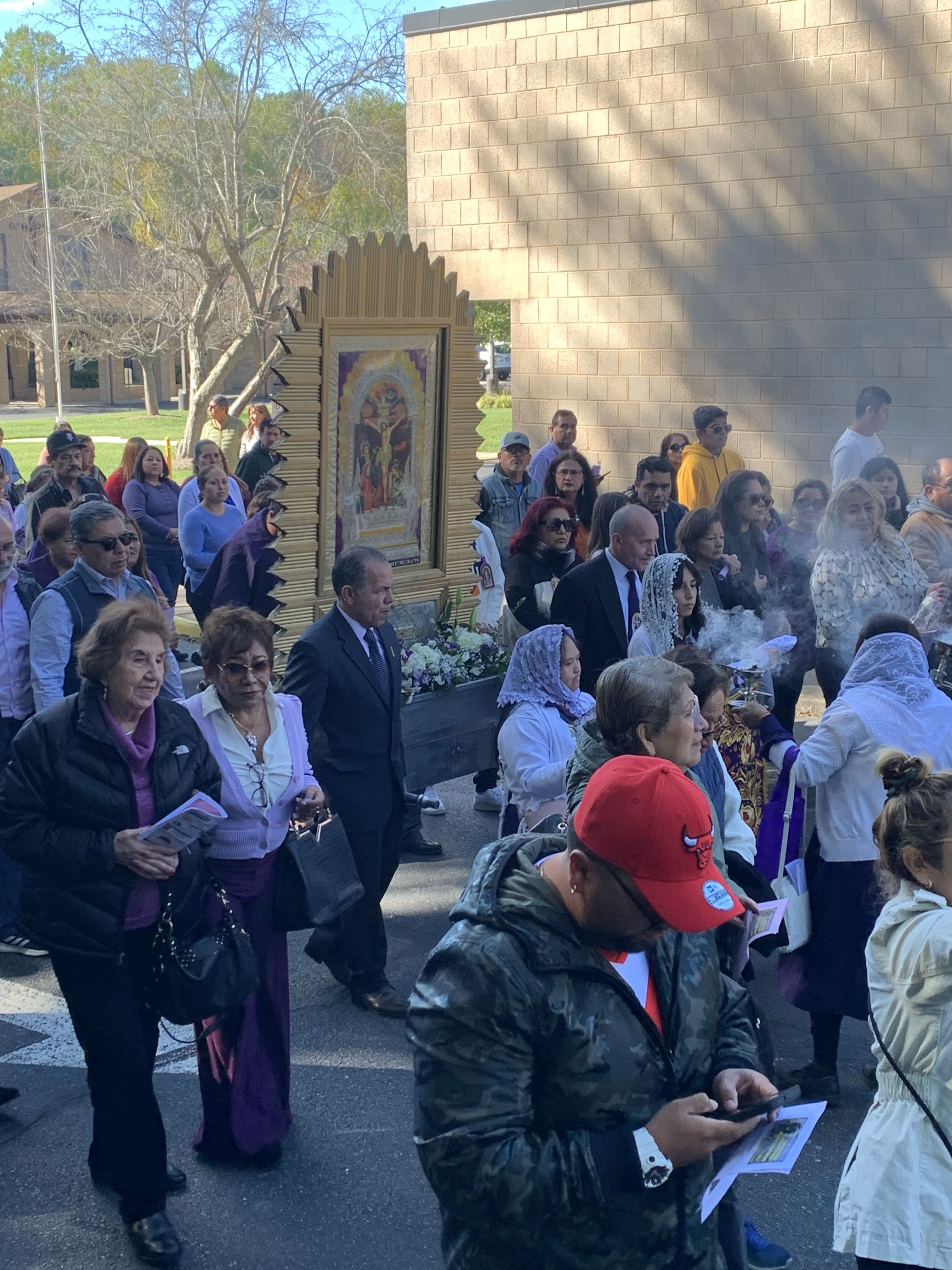
Since then, every October, hundreds of thousands of devotees participate in a procession honoring Christ through the streets of Lima. Here at St. Francis of Assisi in Triangle VA, the Latino community had a wonderful celebration.
Discover more from friarmusings
Subscribe to get the latest posts sent to your email.
 friarmusings