Back in the day when I served in a slum parish on the edge of Nairobi. Over the course of several encounters I came to know a Mill Hill priest, Fr. John Kaiser. Fr. John was a missionary legend. Originally from Minnesota, he had a Paul Bunyan like quality to him – larger than life. By the time I met him he had been serving in Kenya for 30 plus years. One day he randomly showed up at the parish where I worked and asked me if I wanted to go with him on a trip “into the bush” to visit a group of semi-nomadic Maasai to whom he had been ministering for many years. By “into the bush” he meant the Transmara, the name for the Serengetti on the Kenyan side of the border. Instantly I imagined an exotic safari, an “Out of Africa” moment, … I mean, this was what it meant to be a missionary!
So, I showed up in Lolgorian at the appointed hour and at 0-dark-30 in the morning, we headed out in his Range Rover. In time, the paved road gave way to the dirt road, then to the two-track, then to no discernible road at all. In time, the sun rose, the day began and we arrived at the community kraal.
I had wondered why we had departed Lolgorian in the middle of the night, but quickly came to realize, Fr. John’s arrival was a big deal. It had been a while since his last visit and there were babies to baptize, first communions and confirmations to celebrate, marriages to witness, herds to bless, the elders to meet with, and a whole host of kids that wanted John’s attention. I milled around, tried to stay out of the way, kicked a round thing (technically a ball… of sorts) with the kids, and answered questions about my family and how many cows we owned. The questions seem to be asked in Kimaa, the language of the people, and were translated into Kiswahili by some of the teens. Since I wasn’t a priest, my answers seemed to raise a bit of incredulity. I imagined the summary report was: “ He comes from a small family, is the only son, is not married, has no kids, and owns no cows.” Years later I wondered if they were deciding whether I was hopeless or they were discussing which one of their daughters would be a suitable match.
Later that evening, after an amazing, joyous Mass – and you have to remember these folks only were able to receive Eucharist several times a year – there was a banquet/party under the incredible night sky. I was approached by one of the teens who said that the mzee (respected elder) wanted to speak to me. Of course I agreed. We sat near the fire, I offered the greeting one gives an elder, he responded and then asked me, “Do you know what faith is?” Heck of a question, heh? I had been in Kenya long enough to know the proper response, “Mzee, teach me that I may learn.” And so began his masterclass in faith.
He described in detail why and how the lion hunts, something the Maasai would know quite well. He noted that unlike the muzungu who came as the “great white hunters,” the lions did not hunt for sport. They hunt to feed the cubs, sate their hunger, and to live. Their lives depend on the hunt. He went on to describe how they watched the herd, positioned themselves downwind, crawled through the tall grass hidden from sight, all in a process that might take days. All the time they watch for the animal of the herd that might make the ideal prey. Eventually comes the moment to spring from hiding. It is a total commitment, holding nothing back. This is not sport; this is life.
The elder described in great detail the final moment of the hunt when the lion leaps up onto the back of its prey. Its maw opening wide to sink its teeth into the neck of the animal, its forelegs encircling the animal, the claws digging deeply into the breast, then powerfully tearing open the animal to reveal the heart of the beast. As he was saying all this, I almost felt the hot breath of a lion on the back of my neck. He then stopped, looked deeply at me, and asked, “Now do you know what faith is?” I had no idea how this account was connected to his question. Thankfully, he continued.
He told me that the Christian God was like a lion that hunted the people, but it did not hunt like the lion. God came from upwind that the people would catch his scent. God came upright and in plain sight that we would recognize his coming. Like a lion He was relentless, waiting for the proper moment. Then He sprang upon us. And at the moment when we awaited the final stroke of the hunter, this Christian God turned his claws inward, opening his own breast, revealing his heart, giving his heart for us. “Now do you understand faith?” I remained silent, transfixed, hoping he would continue…and he did.
He said that God did all of this, sacrificing himself, never knowing if we would accept the sacrifice. That is faith, the faith God has in us.
I hear echoes of the story whenever I see a crucifix. Jesus arms open wide, waiting to embrace us, waiting for us to respond to his act of faith, waiting for us.
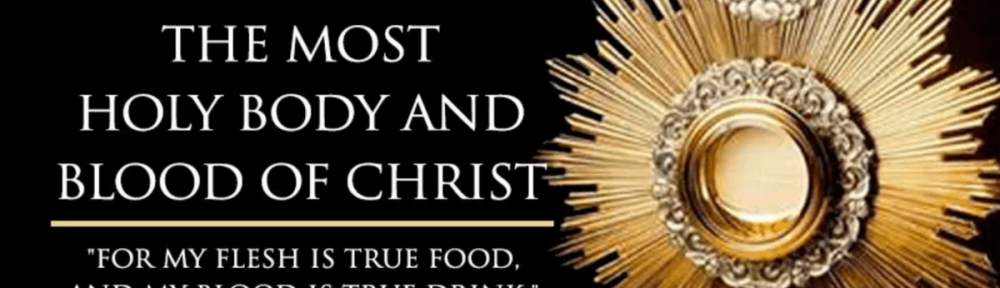
I hear echoes of the story at every Mass in the words of the Eucharistic Prayer: “Take this, all of you, and eat of it, for this is my body… Take this, all of you, and drink…for this is… the blood of new and eternal covenant.” Eternal words. Words of love spoken in hope. Hope that we will respond and accept the life-giving gift. All the while Jesus waits.
In this story the words of St. Francis of Assisi have new meaning: hold back nothing of yourself for yourself so the He who gave himself for you completely may receive you completely.
Amen
Discover more from friarmusings
Subscribe to get the latest posts sent to your email.
 friarmusings