There was a just-ordained priest was asked to celebrate a wedding for the first time. He was nervous. So he decided to seek help from the Pastor, who told him, “Don’t worry about it. Just recite any appropriate Bible verse and everything will be all right. They’re not going to remember what you say anyway.” The day of the wedding came, and the priest was even more nervous. As he looked at the couple standing before him, he forgot everything he was going to say. Remembering what the Pastor said, he quoted the first Scripture that came to mind, “Father, forgive them for they know not what they do.”
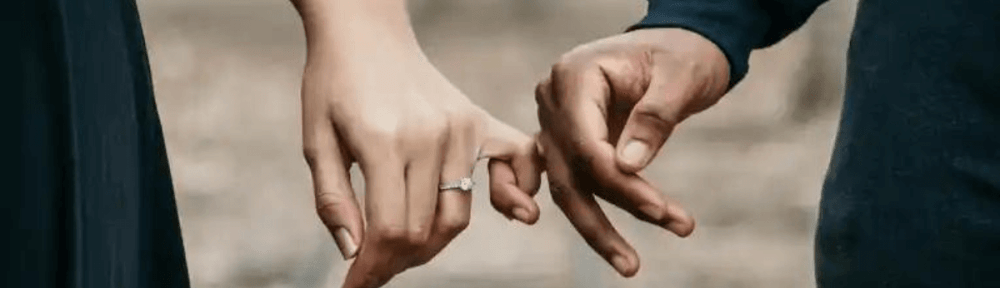
Jokes aside, marriage preparation in the Catholic Church is geared to ensure that the couple know exactly what they are doing: making a life-long commitment, a covenant, to love, honor and be faithful to each other so long as they both shall live. But through the preparation process it becomes clear that we are creatures “wired” for connection. Such a search has been the topic of writers more ancient than the Gospels. In Plato’s Symposium, Aristophanes tells the story of how human beings originally were androgynous creatures with two faces, and four arms and legs. Threatened by the power of these humans, Zeus decided to weaken them by cutting them in two. These two halves were miserable, continuously longing for its other half. Love and companionship can thus be described as trying to get back to one’s original self. Aristophanes notes: “Love is born into every human being; it calls back the halves of our original nature together; it tries to make one out of two and heal the wound of human nature. Each of us, then, is a ‘matching half’ of a human whole…and each of us is always seeking the half that matches him. (Plato, Symposium, 27).
Our Gospel takes up the issue of divorce, the severing of this relationship of a man and a woman in the real world of human pain and pleasure, the knowledge of good and evil, faithfulness and sin. Sadly, the reality and the mystery of human love is that sometimes it endures and sometimes it does not. But the first reading reminds us of God’s original intention and desire for humans–to find in at least one other person a bond of love that calls us back to our original nature. Such a love is the hard work of a lifetime.
Yet, it is in the first reading that is so rich and speaks to our original nature and God’s intent for us.
In the biblical story of Creation, from day one God created and saw that it was “good.” On the 6th day he created a human being and saw that it was “very good.” Turn the page and in our gospel reading for this Sunday, God surveys all that he has created and senses something is “not good:” “It is not good for the man to be alone” (2:18). God’s discovery highlights what is fundamental to human nature and human flourishing: we are social creatures who thrive in close and intimate relationships with others. God then resolves “I will make a helper [ezer] suited to him.” A “helper” in the Old Testament is not a subordinate but one who may be an equal or sometimes even a superior to the one who is being helped. In fact, God is often called a “helper” to humans in need (Psalm 10:14; 54:4).
God’s first response is to create an array of wild animals, birds, and domestic animals as possible helpers for the human. God marches the colorful parade of diverse wild life before the human and invites him to give names to the various creatures (2:18-20). The act of naming in the ancient world was a means of defining and shaping the character and essence of the one named. By naming the animals, the human participates with God as a co-creation, but sadly, while the animals are interesting, none of the animals are a helper “suited to him.” None of them fully resolves the ache and void of human loneliness.
So God tries again. We know the story. What is different is that this new attempt at finding a “helper suited to him” will not involve human co-creation this time. It will all be God’s doing, a gift from God alone. The man awakes and instantly recognizes the fulfillment of his deep longing in the eyes of the new “other,” the woman. For the first time in Scripture, the human speaks in the elevated language of poetic verse as a sign of the ecstasy and joy that accompanies this discovery: “This one, at last, is bone of my bones and flesh of my flesh”
At last, the search is over. The imagery of being “bone of my bones” and “flesh of my flesh” speaks of a bond between the man and woman so strong that to sever it would be as if to rip out a physical part of one’s own body. The man’s poetic response is the Bible’s first example of love poetry but not its last. The Bible’s other great celebration of human love and passion is the Old Testament book, the Song of Songs, a commentary and sequel to Genesis 2.
St. Pope John Paul II commented on this biblical moment. He offered that in the single moment, man recognized that in the woman, and only in the woman, did he have the conditions for the possibility to be whole, to be complete, to become fully as he was intended to me. This union of two lonely human beings yearning for community and finding it in one another is the great climax of the second creation story.
It is the story that is told by every couple preparing for marriage. And so we bless their endeavor in the Sacrament of Matrimony, we pray for them as they begin their journey together, and we keep them in prayer as they work their way through the days and nights, the joys and sorrows, and so much more in this cauldron called life.
What I love about our first reading is that it begins with loneliness, it ends with intimate companionship. It also expresses what God desires for us: the most intimate companionship with each one of us that awaits us in heaven.
It is the work of a lifetime now, and a gift awaiting in the life to come.
Amen.
Image credit: Photo by Jasmine Carter on Pexels.com | CC-0
Discover more from friarmusings
Subscribe to get the latest posts sent to your email.
 friarmusings