
Action and Planning for 1945

Sometimes the task at hand is like trying to rewire the house while keeping the lights on. Such was the 12 months preceding the planned November 1, 1945 Operation Olympic’s landings on the southern Japanese home island of Kyushu. That was the “rewiring” part. The “lights” that needed to be kept burning brightly were spread far and wide. Here is a brief summary of the major Pacific engagement from October 1944 until the end of the war.
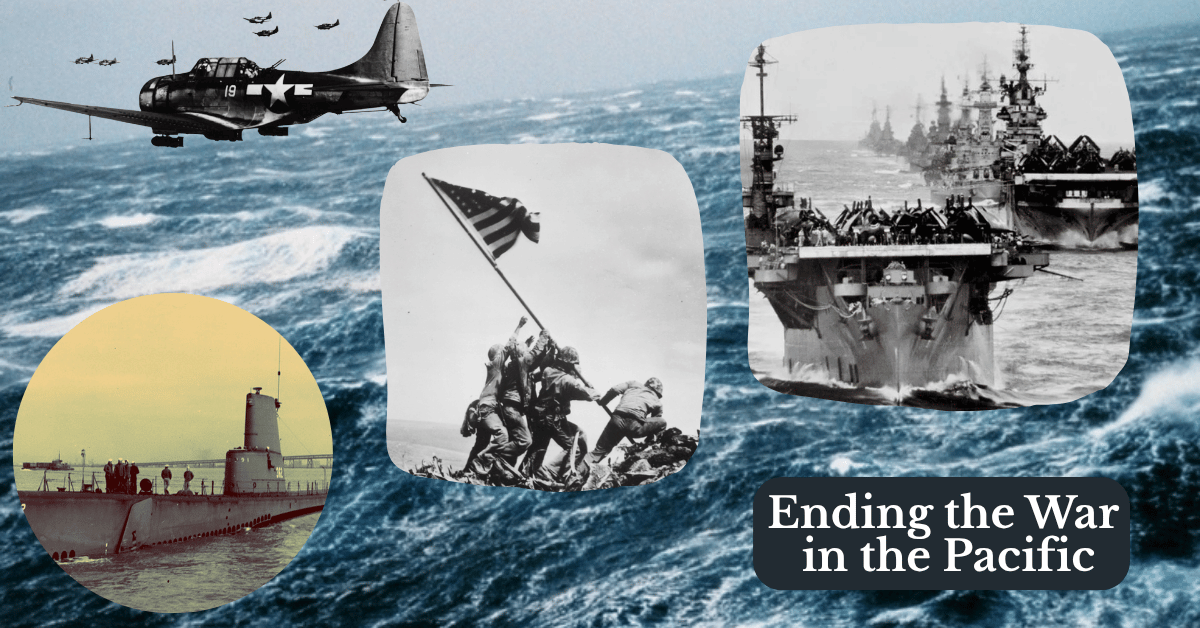
  • Repatriation of the Philippines (Leyte, Luzon, Palawan, Visayas, Mindanao) (Oct 1944 until the end of the war)
  • Formosa Air Raid by the Fast Carrier Task Force (Oct 1944)
  • Strategic Bombing of Japan (Nov 1944 until the end of the war)
  • Burma: Battle of Meiktila and Mandalay (Jan – Mar 1945)
  • Iwo Jima Campaign (Feb 19 – Mar 26, 1945)
  • Dutch East Indies (Indonesia) operations to retake key islands (May 1 – Jun 21)
  • Burma: Battle of Rangoon (Apr 30 – May 3)
  • Okinawa (Apr – Jun 1945)
  • Unrestricted submarine operations (until the end of the war)
  • US 5th Fleet Fast Carrier Raids from the Sea of Japan to Singapore  (Feb-May 1945)
  • Mining of Japanese coastal waters (Feb-May 1945)

These operations engaged the entirety of Central Pacific Command (Nimitz) and Southwest Pacific Command (McArthur) – and yet at the same time the Allied forces were asked to begin preliminary planning for Operation Olympic which would be an amphibious invasion far more complex that Normandy.

Continue reading

Praying for Faith

Why do the apostles make the request: “Increase our faith”? Does their request indicate that one can have more or less faith? If one remembers that pístis (“faith”) is also translated as “trust” then our own experience shows us that we trust, but in different and varying degrees. But what was it that indicated their faith was somehow lacking?  Jesus commissioned them and sent them out with power over demons and diseases (9:1-6). They preached and healed; went about without any supplies of their own. They had trusted God for their necessities. They trusted God to heal the sick and cast out demons. They trusted God and proclaimed the coming Kingdom of God. Why do they now ask for more faith? Did they need more faith to stand up to temptations to sin? To cease from causing others to sin? To rebuke those who had sinned against them? To forgive one another? Perhaps moving mulberry trees (or mountains as in the parallels) into the sea is an easier act of faith than moving us to “rebuke” and “forgive” people who have sinned against us.

Culpepper (Luke, 322) writes on this verse:

The disciples’ plea in this context conveys the recognition that on the one hand faith is a dynamic process and one can grow in faith. On the other hand, the disciples ask that the Lord add to or strengthen their faith, thereby recognizing that faith is not just a matter of their own strength. In both of these aspects, Luke’s concept of faith is similar to Paul’s who writes of righteousness as being revealed “through faith for faith” (Rom 1:17) and declares that we have been saved by grace through faith and that this it not of our own doing (Eph 2:8). 

I think that our growth in Christ is nearly always a movement from faith to faith (rather than only from unbelief to faith). While the faith I have today is similar to the faith given at baptism, it is also different. As we grow in our intellectual and physical skills and abilities yet remain the same person, so too, who we are today is both spiritually the same and different from who we were as an infant. Either way we are loved by God.


Image credit: The Exhortation to the Apostles | James Tissot | ca. 1890 | Brooklyn Museum NYC | PD-US