
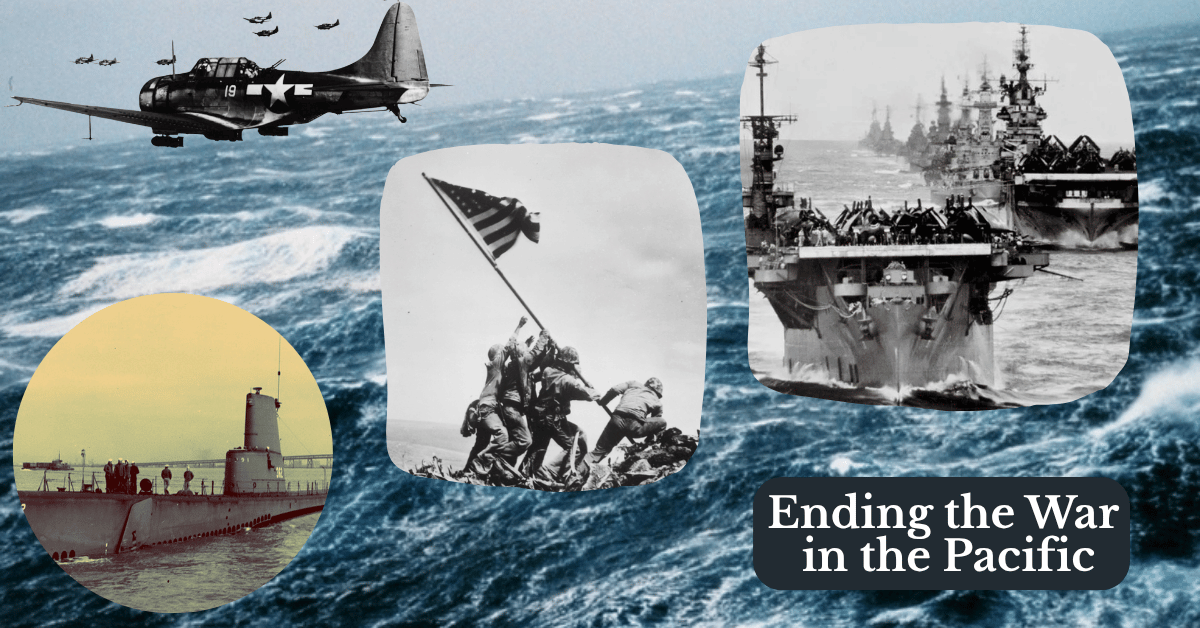
In the modern age, the average Catholic looks to the Catechism of the Catholic Church to find guidance on the concept of just war. The Church teaches that war can be morally justified under certain conditions, which are rooted in the principles of just cause, legitimate authority, right intention, and proportionality. (Found in paragraphs 2307 to 2317). The conditions fall into three broad categories:
- jus ad bellum (before the war)
- Jus in bello (during the war)
- jus post bellum (after the war)
The first four conditions address jus ad bellum.
Just Cause: A war is considered just only if it is waged for a good and just purpose, such as to protect innocent life or to secure basic human rights. The damage inflicted by the aggressor must be lasting, grave, and certain (§2309).
Legitimate Authority: Only duly constituted public authorities may wage war. This principle emphasizes that war must be declared by those who have the responsibility to safeguard the common good of the people (§2309).
Right Intention: The intention behind the war must be good. Even with a just cause, if the intention is to gain something unjust or to inflict harm, the war would not be justified (§2309).
Proportionality and Last Resort: The harm caused by the war must be proportional to the good expected to result from it. Additionally, all other means of resolving the conflict must have been exhausted before resorting to military action (§2309).
The next condition is jus in bello
Conduct in War: The Catechism also emphasizes the need to adhere to moral principles during the conduct of war. This includes the protection of non-combatants and the prohibition against using weapons that cause excessive destruction (§2312).
The final condition is jus post bellum with its beginning jus ad bellum.
Peace as a Goal: Ultimately, the Church teaches that the aim of a just war is to restore peace and order. The pursuit of peace should always be the primary goal, and efforts must be made to reconcile and heal after the conflict (§2308).
The foundations of this thought is rooted in Augustinian and Thomistic thought, each of which calls peace a fruit of charity (caritas) which is revealed in the social dimension as a concord between members of a community when they act together to promote a common good. This concord is present in the peace between individuals, within the family, in the community – each with its own form of friendship. Among the natural forms of friendships, St. Thomas gives prominence to the republica or civitas – a temporal polity that in our lexicon we call a “nation” or a “state.” This is a thought St. Thomas takes from Aristotle’s Nicomachean Ethics. He extends this thought in his Summa Theologiae II-II, q.29: “peace is the work of justice indirectly, insofar as justice removes obstacles to peace: it is the work of charity directly, for love is a unifying force.”
St. Thomas then considers the way in which peace is undone at a societal level: bellum severs the bond of friendship whereby one political community has amity against another. In other words, he is speaking of bellum as sin, a grave sin against the highest of natural goods, peace. It is at this point he describes this as “just war” – bellum isutum – a term already in use by theologians of his age. St. Thomas recognized the term as a bit of an oxymoron but he followed the tradition he inherited. He understood that war is bound up with our sinful condition, choices, and actions of at least one party nation.
Recognizing he was appropriating a term for other than its current use, he clarifies his inquiry by asking utrum aliquod bellum sit licitum – can war be licit. In his typical style he sums up thoughts pro and con, finally answering in the affirmative: “For a war to be just three things are required, namely the authority of a prince… a just cause …and an upright intention.” St. Thomas then goes on to say not that waging war can be narrowly allowed, but affirms that waging war might be hypothetically obligatory. Later writers added proportionality and distinction between combatants and non-combatants to the understanding based on comments made elsewhere in the Summa.
The above serves two purposes. First, it simply lays out the foundational thinking on jus bellum on the part of the theologian most notable for giving it form. Second, to note that Thomas inherited the term from his predecessors in the sense that bellum names a sin – hence the question if bellum can be licit. St. Thomas is clear that there are instances when forcible resistance to injustice may be warranted. He cites self-defense, but he also notes the case to overthrow tyranny. There are modern commentators who off-handedly point to the hint of the oxymoron in the modern term “just war” and then dismiss further discussion. I think one does not so easily dismiss the thoughts of Thomas Aquinas.
As a theologian his point was to raise the moral questions for consideration of whoever might contemplate going to war. Thomas did not hold war and peace as diametrically opposed. He acknowledged that waging war might be in the interest of peace, recognizing that men can establish “an evil peace.” In my mind that well describes the lay of the land in the Asia Pacific region prior to December 1941.
Image credit: various photographs from Naval Aviation Museum, National World War II Museum, and US Navy Archives.
Discover more from friarmusings
Subscribe to get the latest posts sent to your email.
 friarmusings