
A great deal of the discussion about Just War theory focuses on the state and national polities especially before the war and in the context of the decision to declare war: jus en bellum. The focus is the justice of the cause. What is often overlooked, or at least not often spoken of, is the moral and spiritual burden borne by the warfighter. Already in the Summa Theologiae (II–II, q.40), Aquinas notes that the individual soldier’s actions must be ordered toward right intention — not hatred, cruelty, or greed. That is not only to avoid sin, but also a recognition of the impact of war is very different on the foot soldier than on the monarch. St. Thomas does not offer more on the topic, but then it was not the focus of his writings.
In cinematic offerings before, during, and after WW II, combat was depicted as heroic: soldiers carrying out their righteous duty to protect their country, complete their mission, and sometimes, take the lives of their enemies. But the cinematic lens of that era rarely focused on what happens after the gunfire stops, after the explosions cease, and after a soldier takes another human’s life. The notable exception is “The Best Years of Our Lives.” The film, which won an Academy Award for Best Picture, follows three servicemen as they re-adjust to civilian life, dealing with issues like unemployment, physical disability, and the emotional toll of war. Movies of this century have more offering of the time after combat ends, leaving behind a harsh and devastating reality: the psychological toll of combat, specifically for those who have taken a life. Moral injuries have been part of the warrior culture throughout human history. There is a perilous journey into war and a perilous journey back. It is a journey that is volatile, uncertain, complex, and ambiguous.
In a study conducted by the Walter Reed Army Institute of Research, they found that 30 percent of soldiers returning home from Iraq have emotional problems related to combat. A later study conducted by the Army surgeon general’s Mental Health Advisory Team, found that 27 percent of noncommissioned officers (the battlefield cadre of leadership) suffer posttraumatic stress symptoms after three or four deployments, compared to roughly 12 percent who exhibit those symptoms after one deployment and 19 percent after a second deployment. This is just one of many studies that show the cumulative effect of combat exposure.
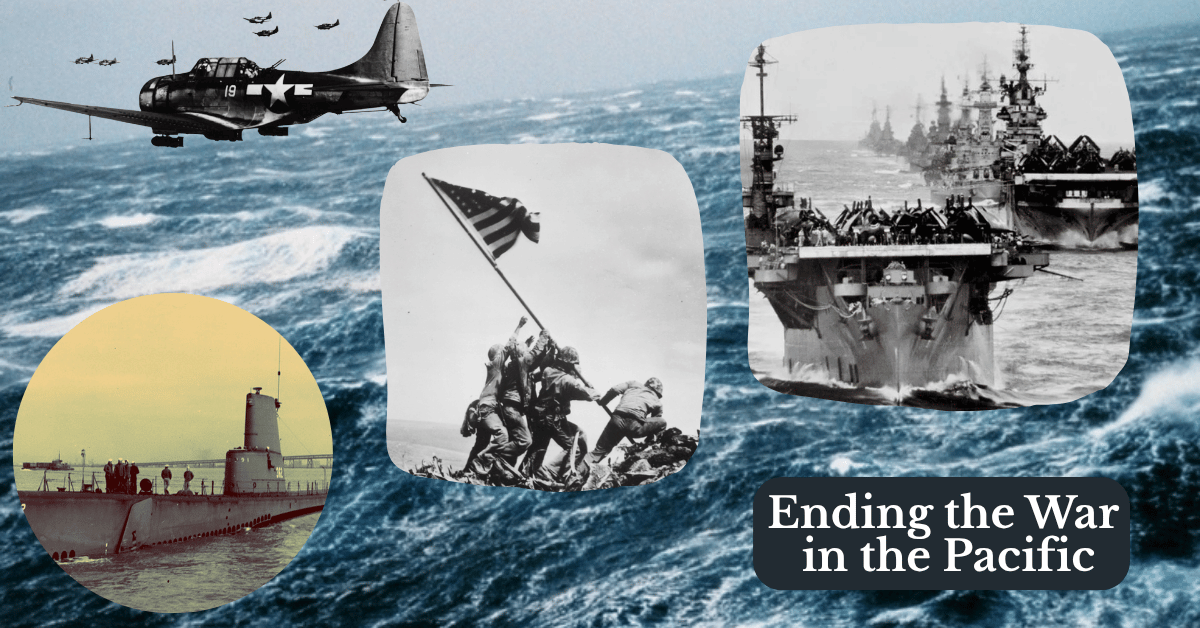
There is no reason to think a similar experience does not apply to the warfighters of WW II. The stories of the island fighting in the Pacific are legend in the annals of the US Marine Corp: Guadalcanal, Tarawa, Cape Gloucester, Saipan, Peliliu, Iwo Jima, and Okinawa – all fought from June 1942 to June 1945. The First Marine Division, the “Old Breed,” saw action at Guadalcanal (7 months), Peleliu (1 month until it was taken off the line due to high casualty rates), and Okinawa (3 months). In each campaign the rate of battle fatigue injuries significantly increased as some men saw second and third campaigns or new recruits were exposed to the realities of the battlefield not portrayed in the cinematic versions.
The greatest generation came home from the war, went back to families, work, and a normal life – and were stoically silent about their experience. Only years later did we begin to understand the nature of moral injury. Moral injury is caused by events that a warfighter was part of, witness to, or in some cases failed to prevent. Some of these events leave a profound sense of guilt, shame, and betrayal often accompanies these events. We are not speaking of war crimes, just the “ordinary” of combat in a just war.
The average warfighter enters combat with an intact moral code that recognizes murder is evil. We understand that murder is far different from taking a life in self-defense or in protection of the innocent, but being directly involved in combat can become morally ambiguous. War accounts from the Pacific – such as Eugene Sledge’s memoir – paint an evolving picture of the experience of extended combat. One might enlist with a motivation to defend the country and strike a blow against the tyranny of the enemy, but in time the motivation becomes the bond with the warfighter in the same foxhole, the same squad, platoon or company. After a firefight, the warfighter who receives a citation of honor because of their bravery in defending the lives of his brother marines, can still be troubled by the memories of his just actions when he remembers the carnage of the battlefield. Taking a life is not a small matter and even when justified still remains in tension with one’s internal moral code. The same is true for the one who witnessed the heroic actions of another.
The experience of warfighters on Saipan and Okinawa were burdened by the moral weight of having encountered civilians in combat, seeing civilian suicides, and events that were not part of what combat was supposed to be about. Some also carry the burden of being unable to provide medical aid to a wounded comrade or freezing during a dangerous moment. And there can be moments when one wonders if the toll and sacrifices are not valued or understood by the civilian population. One wants to go home, but worries if they can “go home.”
The moral burden is contemporaneous with the spiritual burden. Many warfighters bring to the service their religious traditions and spiritual framework which provided an anchor for their identity. Combat can profoundly challenge this system of meaning, leading to a spiritual crisis. How a loving or just God could allow the horrors they experienced or witnessed to happen? “What happened to me?” The experience of combat may lead to a feeling of disconnection from the person they once were. In some cases, leading to a sense of being tainted, making it difficult to find joy or hindering self-forgiveness. In the modern language of this age, it can be as severe as a “soul wound” – an injury to one’s very essence.
The emotional turmoil of moral and spiritual injury can manifest in a variety of damaging ways, impacting relationships, mental health, and overall well-being – something we know all too well from the experience of the warfighters who served in Iraq, Afghanistan, Syria and in the ongoing battle against terrorism.
At the level of the war fighter, views of what called “narrow consequentialism” in a previous post come across as the most meaningless of ivory tower exercises. Other views do not seem to offer any clear guidance beyond “The moral law binds both the one who orders a war and the one who fights in it” (CCC §2308)
Image credit: various photographs from Naval Aviation Museum, National World War II Museum, and US Navy Archives.
Discover more from friarmusings
Subscribe to get the latest posts sent to your email.
 friarmusings