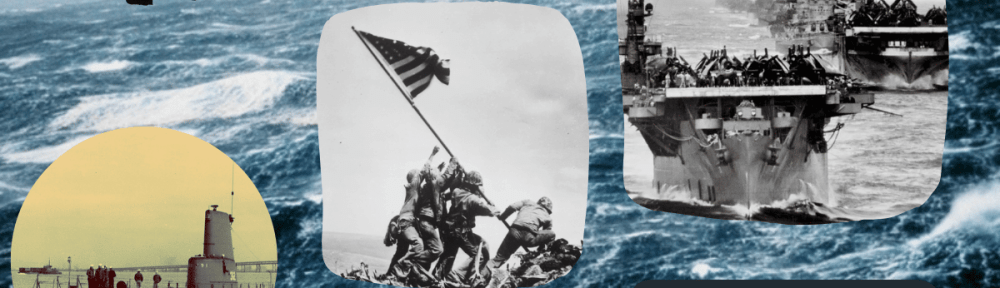
Last year (2025) I explored World War II in the Pacific in order to consider the moral framework of the war considering the counter-factual that no atomic weaponry was available. If you are interested in the series you can read (or review) it here. In the course of reading and research I came across lots of other interesting information. Some was related to specific campaigns, others to strategy, and others still to a range of topics large and small. But there were also questions.
Some of the questions I received most often was allocating some share of the blame for U.S. involvement in the already on-going Asia-Pacific War by its support and aid to China, freezing of Japanese financial assets, the oil embargo of August 1941 or negotiating in less-than-good faith. In some cases, the question was framed to imply that the U.S. wanted the Japanese to initiate military action to give the United States a reason to enter the war in Europe.
Starting tomorrow, a related series begins that explores the currents and eddies of history that brought Japan its wars with China (1894-1895 and 1937-1945), with Russia (1904-1905), the annexation of Korea, Manchuria and French Indochina, and to wider war in the Pacific that stretched from Hawaii to Australia and nations in between, notably the Philippines, Malay, Borneo and the Dutch East Indies.
Perhaps the question that all of this raises is this: how did Japan think it could win such a war? Did its strategic and tactical planning understand the classic Clausewitz dilemma: a nation can be easy to conquer but extremely difficult to hold. Was Japan able to hold on to their gains and fight a war of attrition? We know the answer to the last question: no. But did Japan have other options it believed were viable?
Stay tuned.
Discover more from friarmusings
Subscribe to get the latest posts sent to your email.
 friarmusings