
In the previous post we considered Japan’s 19th century transition from the Tokugawa Shogunate to the Meiji Restoration which transformed the nation of Japan to an outward facing nation, under the Imperial guidance of the divine Emperor, with a moral obligation to bring order and harmony to the Asian world in the face of western colonial power.
In this post, we need to “back up” and catch up with U.S. activities since the time of Admiral Perry’s 1853 visit to Tokyo Bay. In a previous post we noted that making the journey to China and maintaining the U.S. presence there also required a network of ports extending across the Pacific Ocean, and as such, the China trade soon drove the United States to expand its presence throughout the Pacific region. At its root, Perry’s primary mission was to establish a foothold that would strengthen the U.S. position for trade and diplomacy in the region. In other words, the United States opened relations with Japan in large part to enhance its status in China. On a smaller scale, as U.S. merchants began to stop at many of the Pacific Islands to replenish supplies and acquire goods to trade with Chinese merchants, the U.S. Government appointed consuls to several of these places. For example, consulates were established in Fiji in 1844, Samoa in 1856, and the Marshall Islands in 1881.
There was a lot going on in the period 1889-1900. I will mention some of the key events in order to keep them in context – and then go on to mention some later events with the United States – before returning the series to a more orderly arrangement.
- The First Sino-Japanese War (1894-1895)
- The U.S. annexation of Hawaii in 1898
- The defeat of Spain in the the Spanish-American War of 1898
The China trade led to a growing U.S. presence in Hawaii that grew out of the need for a substantial base of maritime operations in the Pacific to support U.S. interests in China. Ultimately this need became so great, and the U.S. presence so large, that the United States annexed the islands in 1898. We will cover the annexation of Hawaii in its own post.
Following the defeat of Spain in the Spanish-American War of 1898, the United States acquired overseas colonies in the Caribbean and the Pacific. The two key Pacific acquisitions were the Philippines, Wake Island, and Guam in the Mariana Islands. Overnight the U.S. was solidly ensconced in the Central Pacific.
In one year the U.S. was in possession of locales that would be critical places in the Asia-Pacific War: Hawaii, Wake Island, Guam, and the Philippines. U.S. possession of Guam and the Philippines would be of principle concern for Japan.
In its new status as a global power, the United States pursued a series of policies designed to protect American territories and aggressively expand its international commercial interests. These policies included the promotion of the “Open Door” policy in China and the attachment of the Roosevelt Corollary to the Monroe Doctrine that formally announced the intention to use military force to defend the Western Hemisphere against European incursions. It was in this same period that President Theodore Roosevelt oversaw the construction of the Panama Canal, which would have profound economic implications for American trade and ease the movement of merchant and military shipping between Atlantic and Pacific regions. In just over a decade, the United States had redefined its national and international interests to include a large overseas military presence, overseas possessions, and direct engagement in setting priorities in international affairs.
It is noteworthy that from 1909 to 1913, President William Howard Taft and Secretary of State Knox followed a foreign policy characterized as “dollar diplomacy.” Taft shared the view held by Knox, a corporate lawyer who had founded the giant conglomerate U.S. Steel, that the goal of diplomacy was to create stability and order abroad that would best promote American commercial interests. Knox felt that not only was the goal of diplomacy to improve financial opportunities, but also to use private capital to further U.S. interests overseas. “Dollar diplomacy” was evident in extensive U.S. interventions in the Caribbean and Central America, especially in measures undertaken to safeguard American financial interests in the region. In China, Knox secured the entry of an American banking conglomerate, headed by J.P. Morgan, into a European-financed consortium financing the construction of a railway from Huguang to Canton. In spite of successes, “dollar diplomacy” failed to counteract economic instability and the tide of revolution in places like Mexico, the Dominican Republic, Nicaragua, and China. But the idea reflects the underlying principle: diplomacy, military capability, and business were at the root of America’s international interests.
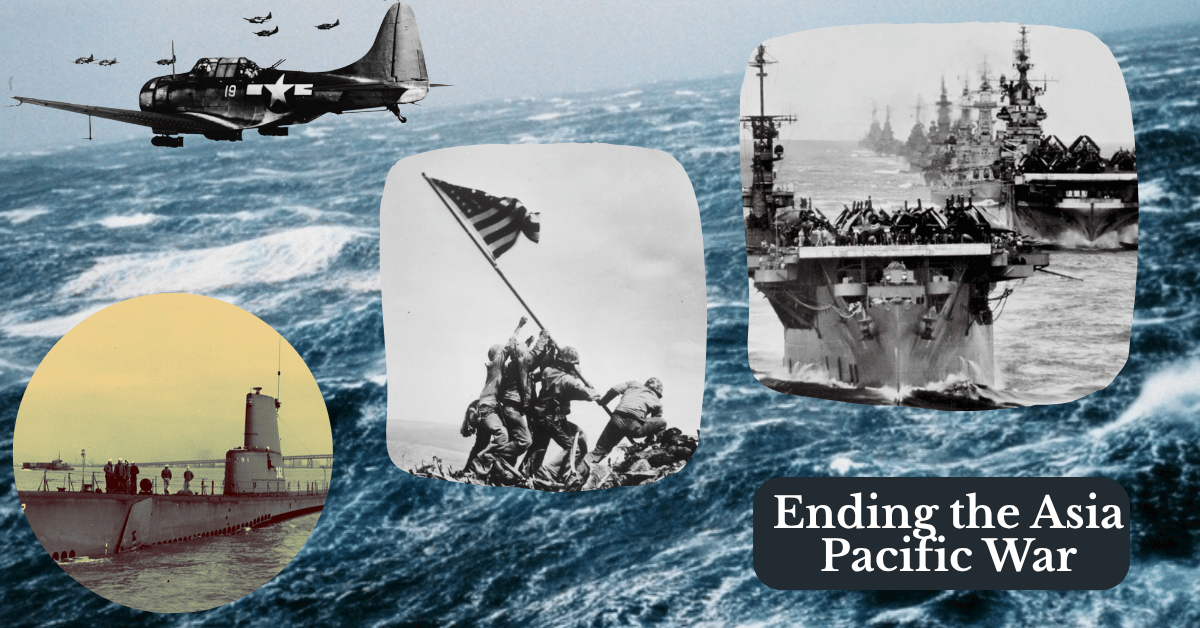
Image credit: various photographs from Naval Aviation Museum, National World War II Museum, and US Navy Archives. Source credit: “Dollar Diplomacy, 1909–1913” | Office of the Historian, Department of State.
Discover more from friarmusings
Subscribe to get the latest posts sent to your email.
 friarmusings