
It would not be accurate to describe the evolution of the Japanese military in the latter half of the 19th century. It was a radical revolution. After the Meiji Restoration (1868), Japan’s leaders concluded that national survival required a modern, Western-style military. They dismantled the Tokugawa samurai-based system and built a centralized national force modeled on European powers. This was made possible by Universal male conscription (1873) replacing hereditary samurai service, creating a national military loyal to the emperor rather than to domains or lords.
In order to accomplish this radical change, Japan looked to the nations it considered threats to Japan’s independence. This was accomplished by adopting foreign military models under the tutelage of foreign advisors. The army was modeled on Prussian doctrine that emphasized discipline, general staff organization, and state-controlled command. The navy was modeled on the British Royal Navy, adopting British ship designs, training methods, and naval strategy. At the same time, Japan imported modern rifles, artillery, and warships, then rapidly developed domestic arms industries, arsenals, and shipyards to ensure self-sufficiency.
Essential to the development of a modern military was formation and education. To this end, western-style military academies, staff colleges, and technical schools were established, professionalizing the officer corps and emphasizing science, engineering, and modern tactics. Western techniques were combined with emperor-centered loyalty, making the military both modern in form and uniquely Japanese in spirit. In addition, the spirit and lessons of the samurai were not lost. Japan did not simply preserve samurai tradition; it selectively reconstructed it.
Bushidō and the Meiji Military
Under Tokugawa Shogunate rule, “samurai spirit” referred to class-based ideals: loyalty to one’s lord, honor, discipline, and readiness to die. After 1868, the Meiji state detached these values from the samurai class and recast them as virtues for all citizens, especially soldiers. This recasting of the “samurai spirit” became known as Bushidō, and was a national moral code, not a code restricted to the military. But it did serve as a bridge between Japan’s past and its modern conscript army. No longer was there feudal loyalty to a daimyō; loyalty was now absolute and directed to the emperor. The Meiji Constitution made the emperor the “command-in-chief” of the army and navy. Bushidō preserved the form of samurai loyalty while transforming its object.
Formation and indoctrination of Bushidō was incorporated into every level of military training. While Japan adopted western drill, weapons, and organization, it paired them with ethical and spiritual instruction drawn from samurai ideals. Soldiers were taught: endurance, self-control, obedience, and acceptance of death as honorable if done in imperial service. These ideals were reinforced from the oath of service and in every course of education and training. Bushidō was simplified from is historical samurai basis and then standarized for modern instruction.
Bushidō was also incorporated in symbolic practices and rituals. Ceremonial language was ripe with honor and shame, casting failure as disloyalty to comrades and especially to the Emperor. Rituals reinforcing collective identity, willingness to endure hardship, and death as preferable to dishonor. The officer corp carried swords as symbols of moral authority and leadership. Clearly in modern warfare, the use of the sword was limited, but at the end of World War II photographs of kamikaze pilots before their final mission showed the officers with their swords which were carried in the cockpit on the one-way flight. All of this was an effort to link the modern military psychologically to the samurai past.
Key writers and thinkers such as Nitobe Inazō positioned bushidō as Japan’s equivalent to Western chivalry, and proof Japan possessed a moral civilization worthy of great-power status. This intellectualization helped justify both military discipline at home and imperial mission abroad.
The fusion of western military structure, samurai-derived moral absolutism, and emperor-centered ideology produced a military culture that valued spirit (seishin) over material limits, encouraged endurance and sacrifice, and discouraged surrender and compromise. These traits became especially pronounced in the early 20th century. It is noteworthy that during World War II, less than 3% of imperial Japanese soldiers surrendered – and most of these were extremely sick, starving or critically wounded. In many instances, there were no Japanese survivors.
The effects of bushidō formation was strikingly evident in 20th century combat behavior.
- preference for death over surrender
- emphasis on spirit over material reality – commanders often stressed seishin (spiritual strength) to compensate for shortages in equipment or supplies, encouraging frontal assaults and last-stand defenses even when strategically unsound.
- fanatical defensive tactics where soldiers fought to the last man in Biak, Pelilui, Tarawa, Iwo Jima, and Okinawa reflecting the belief that total sacrifice was the highest form of loyalty.
- Banzai charges and later kamikaze missions were framed as noble offerings to the emperor, transforming death into a sanctioned military tactic.
- harsh treatment of prisoners and civilians since their surrender was and thus the prisoners were viewed with contempt, brutalized and executed in violation of the Law of War to which Japan was a signatory.
It also led to actions and campaigns that were strategically and tactically questionable supported by the guise that the bushidō spirit would compensate for all the evident shortcomings.
At the advent of the 20th century
By the late 19th century, Japan possessed a modern, disciplined, and industrialized military, capable of defeating China (1894–95) and Russia (1904–05), demonstrating that Japan had successfully adapted Western military systems to its own political and ideological framework.
When Japan adopted a Social Darwinist lens, East Asia ceased to be a shared moral world and became a competitive ecological system. Bushidō was the ideological element needed to form the military and the citizenry to not simply remain competitive but to become the apex nation in the Asia-Pacific sphere.
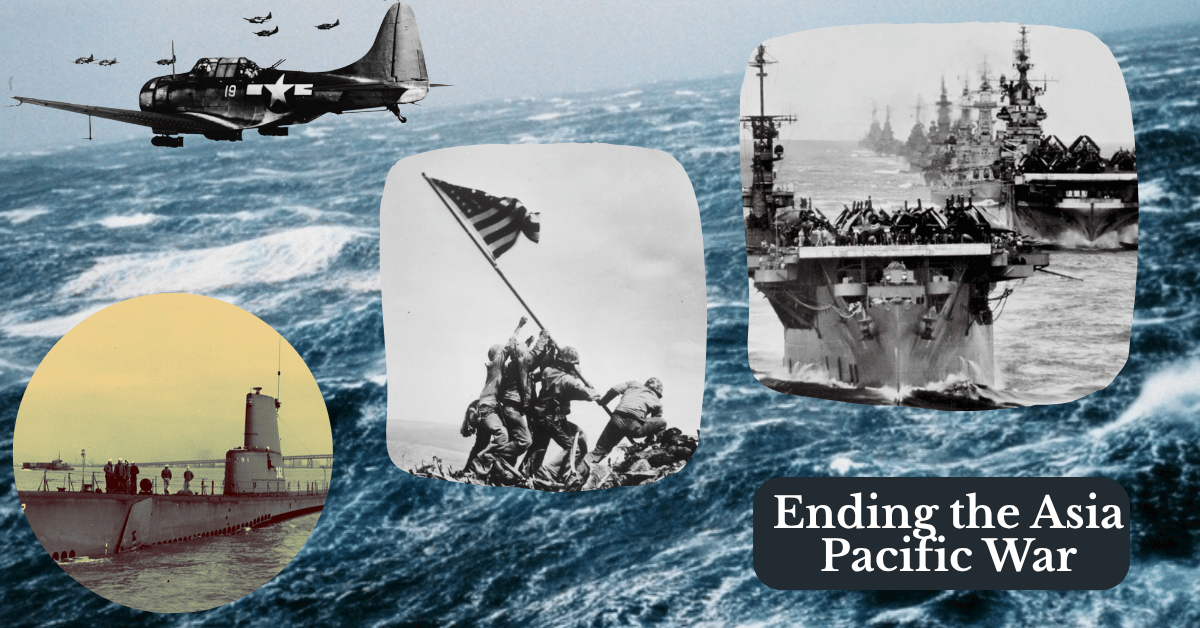
Image credit: various photographs from Naval Aviation Museum, National World War II Museum, and US Navy Archives.
Discover more from friarmusings
Subscribe to get the latest posts sent to your email.
 friarmusings