
In previous posts there have been references to internal dynamics within the governance structures of Japan. By the 20th century that structure would best be described as a constitutional monarchy, somewhat akin to Great Britain which served as the model for the Meiji Constitution. Akin, but not exactly a match. The differences involved the role of the king/emperor and the makeup of the cabinet. If you’d like to learn more, take a look at the post, In the Beginning. In more recent posts there have been references to the rise of ultra-nationalism, militarism, and other movements within Japanese society. The rise in nationalism is a natural consequence of pride in its language, culture, and uniqueness – as well as a reaction to the incursion of western imperialism into the world of East Asia. In recent memory of the nation is not only the samurai culture, but also the recent military victories in the First Sino-Japanese War as well as the Russo-Japanese War. True, each of these victories came at a cost of lives and led to wartime sacrifice, but Japan was a nation that had never been defeated. Those victories, from the centuries earlier Mongol invasions, turned back by divine winds (kamikaze) to the more recent victories were guided by the hand of Emperor, descendant of the sun goddess.
The military rose to great prestige in civil society’s eyes because of Japan’s war victories. These reinforced the idea that military strength was central to Japan’s survival and success especially against the intrusion of western influences. The Meiji Constitution of 1889 gave the military independence from civilian control: the army and navy were responsible only to the Emperor. In addition, the cabinet required that the Army and Navy ministers be active-duty officers, giving the military an essential veto over government policies. This structural design later allowed military leaders to dominate politics in the 1920s and 1930s. Combine this with the military indoctrination of bushidō focused on reverence for the Emperor and you have an environment where militarists could claim to act in the Emperor’s name for the good of Japan.
Within the Japanese government this gives rise to a moderate wing who believe the diplomatic path is the way forward for Japan to take its place in the world order. Opposing them will be the militarist wing which holds up evidence of the U.S. Immigration Act of 1924 and other western impositions as evidence of the weakness and ultimate failure of diplomatic efforts. In their minds, respect, dignity and the place in the world order would be achieved with demonstrations of military power and the will to use it.
The problem is that the Japanese military was not of one mind, vision, purpose or strategy.
The Roots of Imperial Rivalry
From the beginning there was a natural divide between the Imperial Japanese Army (IJA) and Navy (IJN) that can be traced to the Meiji decision to emulate western military power and structure as a means to ensure Japan did not fall to the same fate as China in the 19th century. The IJA was formed by Prussian advisors whose experience was limited to ground warfare. The Prussian model emphasized discipline, mass conscription, and decisive land battles which were closely tied to Japan’s mainland Asia strategy and the Emperor as supreme commander.
The IJN was formed and modeled on the British Navy who, as expected, faced seaward. The emphasis was professionalism, technology, and command of sea lanes with an oriented toward commerce protection and fleet engagements. While professionalism might seem an odd thing to mention, it stands out within the IJN mainly because within the IJA we will see repeated instances of junior office initiative/insubordination (sometimes a thin line) that had major consequences on national policy and on the battlefield. The IJN did not experience anything similar.
From their formation the two branches of the military developed distinct institutional cultures, different strategic geographies (mainland vs. ocean), and separate professional identities from the very beginning.
Back Home
As mentioned above, the Meiji Constitution placed the Army and Navy directly under the Emperor, outside normal cabinet and parliamentary control. Which meant there was no direct civilian control of the military. In addition, there was no unified command/organization such as the (later) U.S. Joint Chiefs, or a single Department of Defence/War as a cabinet position. Each branch of the military had its own Ministers at the cabinet level as well as their own General Staffs. The results were many, but one was that with independent budgets there would always be major infighting for funds based on their strategic geographical forces. As one might expect, the structure encouraged competition rather than coordination, political intrigue, and direct appeals to the Emperor. But also, the cabinet included both Ministers as well as the head of the Army and Navy. Very often the Ministers were either active duty or retired military leaders. Together or separately, the armed forces had political leverage through institutional veto power.
The Experience of Combat
The success of the First Sino-Japanese War (1894-95) and the Russo-Japanese War (1904-05) brought success, victory, but very different conclusions. In the earlier war the Navy’s victory at the Yalu River secured sea control which they believed enabled the Army’s rapid victories on land by interfering with Chinese logistics. Those same victories reinforced the Army’s belief in offensive spirit as the critical success factor. Each service thus drew different lessons. The Army believed moral superiority and offensive will were decisive while the Navy concluded sea control and modern fleets were decisive. There was no structure where unified doctrine was examined. As a result, rather than fostering joint doctrine, success hardened service parochialism.
The critical element to Japan’s victory in the Russo-Japanese War was … well it depended upon who you asked. The Army was victorious on land, but at a great cost of manpower. The casualties in Manchuria were enormous, but it reinforced their belief in sacrifice as the key to mainland success which in turn was the essential element to safeguard Japan from foreign incursions. The Navy was phenomenally successful at sea from its peremptory strike against the Russian Eastern Navy at Port Arthur at the beginning of the war, to its devastation of the Russian Baltic Fleet at the Battle of Tsushima. These two battles became almost mythic within naval circles and confirmed their commitment to the Mahanian doctrine of sea power as the key to national security and empire. (Alfred Thayer Mahan, naval strategist, whose work The Influence of Sea Power on History was the framework of Japanese and U.S. naval strategies in the 20th century.)
After 1905 the Navy saw itself as Japan’s strategic shield against great powers while the Army saw itself as the nation’s blood-paying guardian on the continent. Both believed they had saved Japan. A rivalry was born.
The Infighting
As mentioned in earlier posts, the Russo-Japanese War resulted in territorial gains, but not the war indemnities that had enriched the national coffers after the earlier Sino-Japanese War. Now Japan faced heavy war debts, limited industrial capacity, and finite state resources. At the time there was a need to resupply and replenish the Army so that it would be able to secure and hold the recent gains in Manchuria and Korea, recruit and train new soldiers, begin to enhance the recently acquired Southern Manchurian Railroad, and build supporting garrisons.
The Navy’s priority was the development of their 8-8 plan: 8 battleships and 8 heavy cruisers in order to form two battle fleets inspired by Admiral Satō Tetsutarō’s Mahanian theories This meant a huge capital investment in shipyards and new construction, recruiting and training to man the new ships, technological innovation, and the development of bases and coaling stations.
Budgeting became a zero-sum competition, not a joint planning exercise.
World War I did not help the rivalry. The Army was largely sidelined with no active role in the war in which Japan fought against Germany on the side of the British and Americans. The Navy benefited from expanded operations and increased prestige via its experience in coalition warfare with Britain.
Japan neutralized German naval forces in East Asia, protected sea lanes vital to British imperial communications and supply in the Western Pacific and parts of the Indian Ocean, providing security of sea lanes from Southeast Asia to the Mediterranean. In addition, a flotilla of Japanese destroyers deployed to the Mediterranean conducting convoy escort, anti-submarine patrols and search and rescue operations. At the same time, the IJN hunted German commerce raiders in the Pacific and laid siege to German commerce ports in China (Shandong ) which would later become Japanese possessions, as well as the Mariana, Caroline, and Marshall Islands.
Coalition warfare reinforced several naval convictions about sea power, technology and alliances (this latter conviction would be shattered in the post-war naval conferences). Meanwhile the IJA was largely on its own in China and Manchuria. As a result the IJN took on a more internationalist, technocratic view of its role and developed realistic views about industrial limits. Unlike the Army, the Navy could not avoid confronting industrial constraints because warships required steel, precision machining, turbines, armor plate, fire control systems and ships took years, not months, to build. Costs were enormous and easily quantified. The IJN understood that their mission was directly tied to fleet size which depended on shipyard capacity and industrial throughput. All this made industrial limits impossible to ignore.
The Army was far more dependent upon simple manpower although they too needed the industrial capacity for production of weapons, artillery, and ammunition – all of which, by comparison, we “light” industry. Their concerns centered more on suspicion of diplomacy, the priority of unilateral continental action, and that they were becoming the “little brother” to IJN. As a result, within the IJA there was a renewed emphasis on spiritual purity, bushidō, and a national destiny to be fulfilled on the Asia mainland. Lacking coalition experience, there was a suspicion of internationalism in general, but with the turn inward, there was a marked increase in the politicization of Army officers, especially among the junior officers.
After the War
Based on their experience during the First World War, the IJN expected to have won and secured continued recognition as a British partner in maritime matters. During the war they had partnered so that Japan was responsible for maritime security in the western Pacific and eastern Indian Ocean – they expected this division of responsibilities to continue. It was believed they had achieved parity with the western navies. Then came the shock of:
- Indifference of British willingness to prioritize the alliance as they assumed responsibility for maritime security of their own Pacific colonial interests.
- 1922 Washington Naval Conference and what seemed to be an Anglo-American effort to contain and diminish the IJN.
- 1924 U.S. immigration exclusion
The 1922 Washington Naval Conference was a moment that would fracture the cohesiveness of the Imperial Navy, deepen the sense of needing to set its course and destiny independent of the view and consensus of western powers.
Up next: 1920s – the decade of treaties
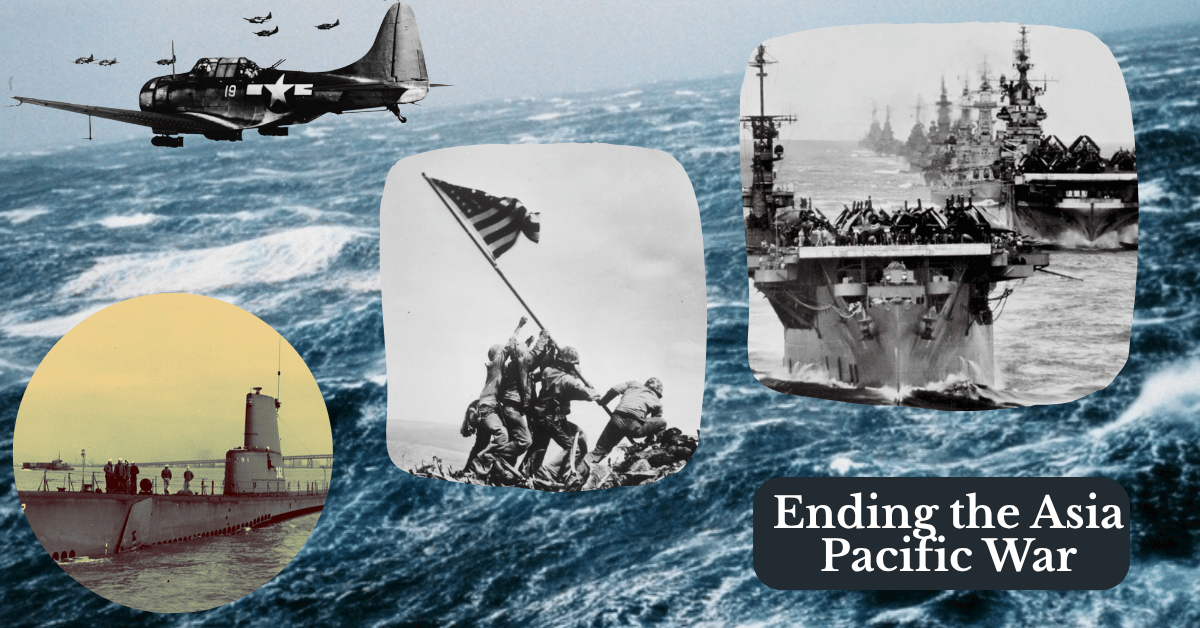
Image credit: various photographs from Naval Aviation Museum, National World War II Museum, and US Navy Archives. | The Immigration Act of 1924 (The Johnson-Reed Act), Office of the Historian, U.S. State Department
Discover more from friarmusings
Subscribe to get the latest posts sent to your email.
 friarmusings