
It would be a herculean task to consider all the elements and forces in the boiling pot that was the Asia Pacific region in the summer of 1937. And even then to understand the levers available to the U.S. to affect the military action in China and Manchuria that was initiated by Japan. Historians argue for or against financial leverage, military leverage, diplomatic leverage and a host of other factors. A book has been written that argues a coalition of merchant shipping companies could have been assembled that could have been effective in controlling Japan because of Japan’s dependence on foreign-flagged merchants to deliver even basic food items. Perhaps the most often discussed topic is that the United States missed a window of opportunity to broker peace between China and Japan that would have set in motion a chain of events so that the United States was never drawn into the war against Japan.
Background: US Foreign Policy
The priority of the President of the United States and the State Department was Europe and the rise of fascism in Italy and Germany, as well as the ongoing Spanish Civil War which was seen as a proxy for the coming conflict in Europe. It was also the priority for Britain and during this period they exerted diplomatic pressure to ensure the U.S. kept Europe as the priority. Nonetheless, the U.S. needed to pay attention to the Asia-Pacific region because of interests in China, the Philippines, Guam and elsewhere.
Some of the key players at the U.S. State Department were: Cordell Hull, Secretary of State; Stanley Hornbeck who headed the Far East Department; Nelson Johnson, Ambassador to China; Joseph Drew, Ambassador to Japan; and key advisors to Hull – J. Pierpoint Moffat and Hugh Wilson. Moffat was the son-in-law of Joseph Drew. Wilson had served in Japan in the mid-1920s.
Hull shared a view with Hornbeck: Japan was not trustworthy given their history of vague diplomacy, military aggression apart from civilian control, and a habit to ask specific current action of the U.S. while pinning their commitments to future events that might or might not happen. By the 1930s they were not considered to be forthright in their diplomacy. In the 1920s, when there was a strong current of liberal democracy, Japanese diplomats were effective – perhaps because the western nations (i.e., U.S. and Britain) achieved their goals. Meanwhile, at home, the military/nationalist parties considered the diplomats to have harmed Japan in strategy and in honor. By the 1930s, it was this latter group that dominated internal and external politics and policy, even as Japan’s diplomatic core retained career people from the 1920s.
It must be noted that even at this point in history (1937), the U.S. had already broken the Japanese diplomatic cables and traffic (not the military). The U.S. was often reading diplomatic correspondence before the intended Japanese recipient. The distrust was rooted, not only in experience with Japan’s diplomacy of the 1930s, but also with evidence of current intentions revealed in the diplomatic cables.
Perceptions within the State Department
While Hull and Hornbeck agreed it was appropriate to be very cautious in dealing with Japan, where they were not on the same page as regards to “the next steps.” Hull was very much a diplomat who was pragmatic but at the same time was more interested in a lasting settlement rather than incremental steps to such a settlement. His emphasis was always on fundamental principles. Hull’s experience with Japan was they negotiated to keep options open, were reluctant to commit to hard action, dates and consequences, and most often replied with vague ideas or contingent events whose outcome was rarely knowable. In addition, the principled but pragmatic Hull believed that the U.S. did not have adequate naval assets to project power to the western Pacific; did not have substantive national interests in China to warrant the threat of military action; understood that any action taken in the summer of 1937 had zero popular support; and that the U.S. did not possess sufficient financial leverage to entice/force Japan to modify its China program. Hull did note in correspondence that “Japan’s invasion of China was not desirable but not intolerable.”
Hornbeck and Johnson believed that Japan’s aggression would never be limited to China but would eventually expand to include the Southwest Pacific, especially the oil rich nations. Japan wanted diplomatic and trade action that would legitimize their expansive actions, both categories of which were turned down by Hull and President Roosevelt. Hull’s position was to do nothing to antagonize Japan but nothing to assist them either. Roosevelt’s position was harder to pin down. He would agree that the U.S. should do nothing to aggravate Japan, then he would make a very public speech, e.g. Chicago 1937, when we would openly criticize Japan’s aggression and seem to call for a “moral embargo” from U.S. citizens and companies to not buy Japanese goods. In any case, there was nothing concrete that was offered to mitigate Japan’s actions – and that was, in part, due to pressure from Britain and the Netherlands who had substantive interests and holding in the Southwest Pacific – the very target of Japan’s attention.
The Neutrality Acts
The U.S. was also constrained by the Neutrality Acts. By 1937 the acts prohibited arms sales to all belligerents – in this case China and Japan. It was designed to keep the U.S. isolated. This initially gave Japan a freer hand in its aggression against China without fear of U.S. intervention. Following the outbreak of the Second Sino-Japanese War in 1937, President Roosevelt did not invoke the Neutrality Acts, arguing that no formal declaration of war had been made. This allowed the U.S. to avoid hindering China’s defense, allowing for the shipment of arms to China, which frustrated Japan.
The 1937 Act introduced cash-and-carry, allowing the sale of non-lethal, and later other goods, if paid for upfront and transported by the buyer. While this technically allowed Japan to purchase supplies, Roosevelt selectively used this to enforce a moral embargo on aircraft sales to Japan. Revisionist historians (and what this often means is just the 2nd wave of historians) see this as escalating tensions, making diplomatic resolution difficult. Or as some argue, impossible, as it forced Japan to choose between abandoning its expansionist goals or initiating war to secure needed resources.
This latter line of reasoning continues as time moves into 1941 concluding that every action of the U.S. to limit Japan’s ability to buy scrap steel, key material resources, aviation fuel, freezing of U.S. held Japanese financial resources, and eventually a complete oil embargo – all “caused” Japan to start the war. In the several books with trajectories along this line (Utley’s Going to War with Japan 1937-1941 and Miller’s Bankrupting the Enemy) while interesting insights and historical details are offered, the analysis seems to miss that Japan had options. In 1937, military spending was 45% of Japan’s national budget and would grow to 65% by 1940; in the United States military spending was 3% (1937). There was more than enough budget for Japan to focus on becoming a commercial powerhouse (as it became post WW2). The currents of history led Japan to become a nation with an outlook on the world similar to Nazi Germany. There is also little to no mention of the rapidly growing death toll in China among civilians and the devastation of cities and economies.
Bankrupting the Enemy acknowledges that the Japanese leadership justified the war as self-defense against the United States, who was trying to strangulate and pauperize Japan and that this was the prevailing view among the majority of government/military leaders in Japan at that time who controlled the nation. Going to War with Japan 1937-1941 notes that Grew, Moffat and Wilson were in contact with the Japanese government who wanted the U.S. to approach Japan offering to moderate a peace settlement with China. True, but in reality they were only in dialogue with the moderate wing of Japanese politics who held no influence within the cabinet, the Diet, the military, and little if any with the Imperial household. The revisionist view seems to base their conclusions of causality on “if only we’d given the moderates a chance…” It is simply near impossible to hold that view if one understood the body politic of Japan from 1937-1941.
The Contingent Window
A missed opportunity? Was there a window to bring peace to the Asia-Pacific region and avoid the carnage and destruction that happened from 1937 to 1945? Most historians agree that by late 1937 the political, military, and ideological conditions in Japan made a negotiated peace exceedingly unlikely, extraordinarily difficult, though not theoretically impossible even then it was only for the briefest window of time.
There was indeed a moderate faction in the autumn of 1937 but it was fragile and divided. They included people associated with Prime Minister Konoe, a member of Japanese royalty, and considered by those connections to have access to the Prime Minister. As well there were diplomats in the Foreign Ministry, some officers in the Naval Staff worried about overextension and potential engagement with the U.S., and some Army Staff officers whose primary responsibility was logistics. All in all it was not a prestigious or influential group. It should also be noted that Konoe, as Prime Minister, was an animator for even more aggressive actions in China. As a group they were not cohesive in their aims, lacked control over field commanders, and would not act openly against the tide of nationalism.
Even at its strongest, the moderate camp faced structural barriers – first among them was the autonomy of the Army. Field commanders often acted independently and civilian leaders could not guarantee compliance. At the same time, the war already enjoyed genuine public support, especially after early successes. Arguments again the war risked accusations of betrayal in a milieu when assassinations were not unusual. And lastly, and most importantly, the war already had Imperial legitimacy. Once the Emperor sanctioned operations, reversal became politically perilous for all involved.
Even if Japan’s moderates could convince a larger element of their own government to be receptive, the U.S. lacked any real means of leverage without economic sanctions or military force, both of which were never policy options for the U.S. Two other factors the moderates did not consider were: there was no U.S. domestic support for assertive involvement and it was likely that even an offer of American mediation risked being dismissed as hostile interference.
Was there a window of opportunity for a negotiated settlement in 1937? Theoretically, yes. Realistically, no and what is really meant is “Sure, occasionally “Hail Mary” passes work in football…but…”
By early 1938, the opportunity, if it ever existed, had effectively vanished.
The “lost moment” assertion is not absolutely wrong, but it vastly overstates the cohesion and power of Japanese moderates and underestimates the force of nationalism, military autonomy, and momentum.
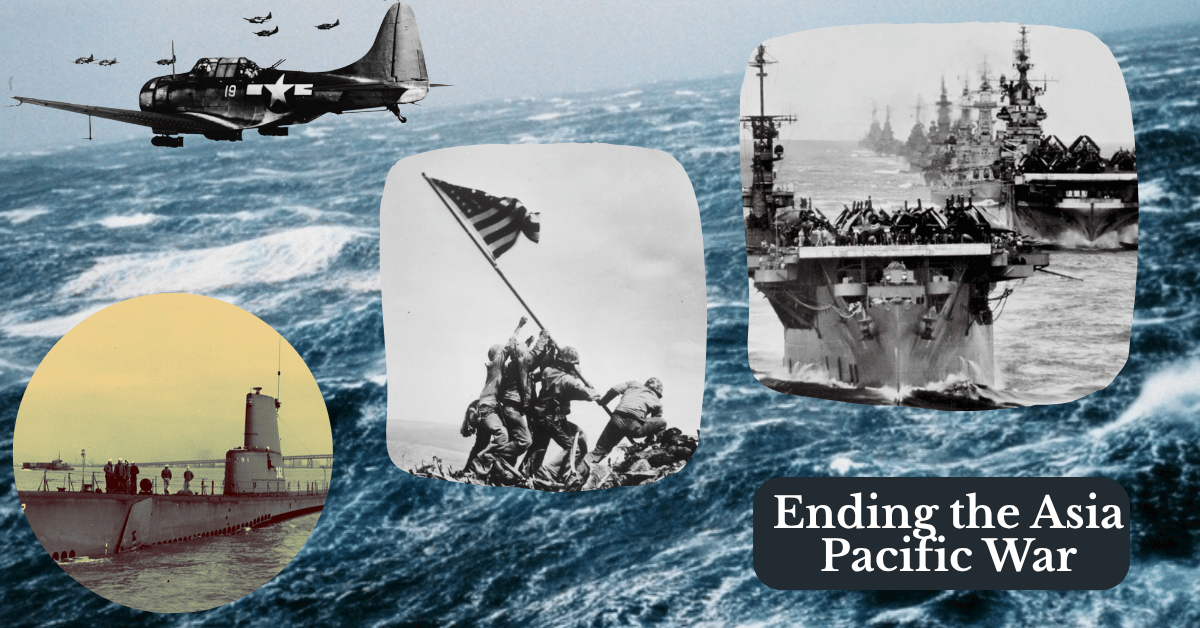
Image credit: various photographs from Naval Aviation Museum, National World War II Museum, and US Navy Archives. |
Discover more from friarmusings
Subscribe to get the latest posts sent to your email.
 friarmusings