
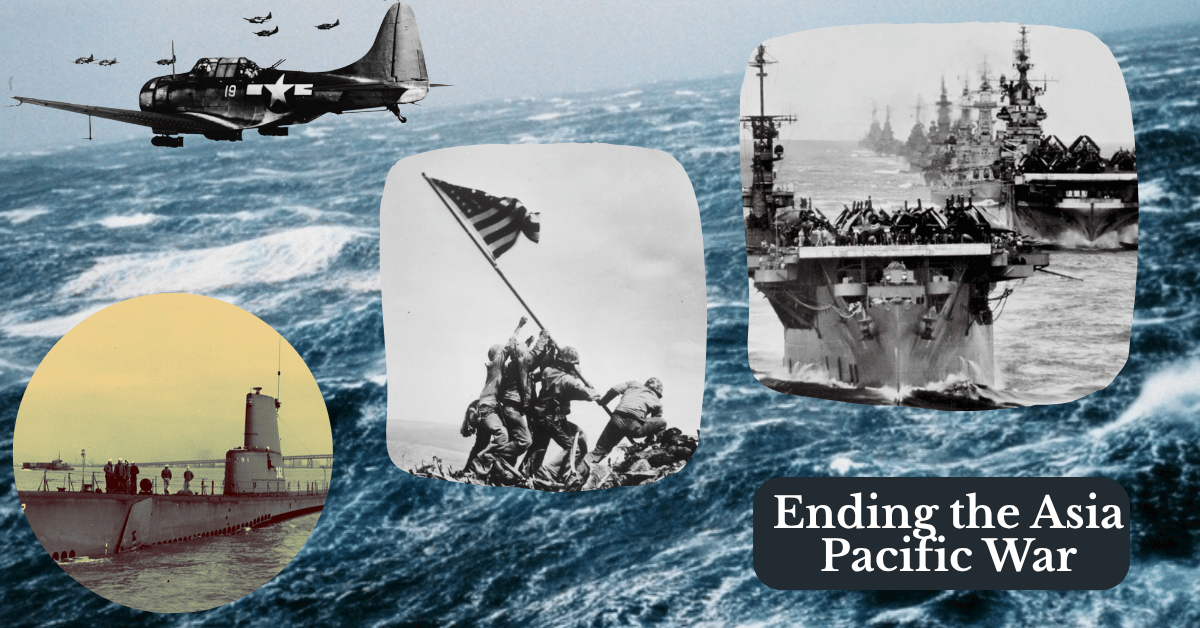
So far in this series we have worked our way up to 1937. From the summer of 1937 until Pearl Harbor the conflict in mainland China is the dominant factor that drives and animates Japan’s relationships (or lack thereof) with China, the United States, Britain, the Netherlands, and all the nations of the Asia-Pacific region. The ebb and flow of this conflict known as the Second Sino-Japanese War is really the beginning of the Asia Pacific War that will become World War II upon the 1939 outbreak of war on the European continent and the entry of the United States into the war after the attack on Pearly Harbor in December 1941.
The Second Sino-Japanese War began not as a formally declared conflict but as a local military clash that escalated beyond political control, reflecting the structural weaknesses of both Chinese sovereignty and Japanese civilian authority over the Imperial Japanese Army (IJA). From the Marco Polo Bridge Incident in July 1937 to the summer of 1941, the war evolved from a short punitive campaign into a protracted, brutal struggle that reshaped East Asia and set Japan on an increasingly irreversible path toward wider war.
The Marco Polo Bridge Incident and the Slide into War
Since 1905 and the Boxer Revolt in China, foreign nations, including Japan, had the right to station troops to protect their nationals and legations. For the Japanese this included guarding key railway lines connecting Beijing to the port of Tianjin. The Marco Polo Bridge spanned the Yongding River and sat on the main rail and road routes linking Beijing and Tianjin. As such it was of high strategic importance to Japan and a tactical chokepoint. Because of this Japanese units frequently patrolled and trained nearby. Night exercises were common and technically permitted under treaty arrangements.
On July 7th, Japanese troops were conducting a night training exercise near the bridge when one soldier failed to return, Japanese officers suspected detention by Chinese forces and demanded entry into a local city to search for their comrade; the Chinese refused. Shots were exchanged, and the situation escalated.
Similar incidents had occurred before and had been defused diplomatically. What made 1937 different was not the presence of troops, but the political climate surrounding the incident.
By 1937 Chiang Kai-shek’s coalition of northern and central warlords was deemed to be weakening in the view of the Japanese. This gave the Japanese field commanders (junior officers) the opportunity to aggressively respond as was their inclination. As discussed previously, by this time the field commanders knew that the civilian leaders in Tokyo were reluctant to restrain the Kwantung Army and so they pressed ahead. But they had misread the resolve of the Chinese leaders. So to speak, this time the incident was a bridge too far. The system that once contained incidents had broken down. Neither side was willing or able to step back once violence occurred. Mutual distrust, heightened nationalism, and the absence of firm political restraint allowed the confrontation to spiral.
Neither Tokyo nor Nanjing initially sought full-scale war. Japanese civilian leaders hoped to localize the conflict, while Chiang Kai-shek remained cautious, wary of Japan’s military superiority. Yet Japanese field commanders continued to press forward, and political leaders in Tokyo, fearful of appearing weak and constrained by past precedents of insubordination, ratified military escalation rather than restraining it.
By late July, Japanese forces had seized Beijing and Tianjin. What might once have ended in diplomatic compromise instead became a test of national will.
Shanghai and the Expansion of the War
The conflict escalated dramatically with the Battle of Shanghai (August–November 1937) a key seaport and source of income to the Chinese government. The Marco Polo Bridge incident ignited the conflict; Shanghai made it irreversible. Before August 1937, both governments still claimed to want containment and find a “local solution.” But locally, the Japanese approach into the region was a punitive campaign initiated by local field commanders and Shanghai was the goal.
Shanghai was China’s economic and financial center. It was a major port for foreign trade and it controlled the Yangtze River which was the “highway” into Central China. By 1937, Japan had a large civilian population and commercial interests in Shanghai including banking and shipping. As well, Japan had naval facilities and marines stationed in their part of the International Settlement. Any fighting in or near Shanghai could be framed as protecting Japanese nationals and treaty rights giving them a legally defensible pretext for military involvement. The hope was to draw Chiang Kai-shek into battle, force him to negotiate resulting in a collapse of Chinese Nationalist morale, and bring the war to a quick end. This reflected a persistent Japanese belief that China would not endure sustained pressure. That working theory had not proved true in Manchuria which Japan still struggled to control. It would not provide true now nor would it prove true at any point over the next 8 years.
Chiang Kai-shek understood the Japanese intent and chose to commit his best German-trained divisions in China’s most international city. His aim was to demonstrate Chinese resistance to the international community with its large contingent of foreign press and media. While the Marco Polo Bridge was “out of sight”, Shanghai would force Japan to fight in full view of the world. Video of the fighting became a staple in US movie theatres in the news trailers that preceded the feature film. Chiang hoped the result would be foreign mediation and that they might intervene diplomatically.
Japan responded with overwhelming force, deploying naval, air, and ground units. Once fighting began, Japanese prestige and military logic demanded escalation rather than withdrawal. The battle became one of the largest and bloodiest urban engagements of the interwar period. Although Japan ultimately captured Shanghai, the cost in casualties, time, and resources dashed Japanese assumptions of a quick victory. But it did not extinguish the IJA’s optimism about the glory or destiny of the war.
The Shanghai campaign marked a turning point as the war became total in scope, involving mass mobilization on both sides. At home as the Japanese press reported success while not reporting the tremendous losses, Japanese public opinion increasingly supported the war and the Army, making it even more difficult as diplomatic compromise became increasingly untenable. The intentional strategic bombing of civilian areas as a means of breaking morale exacerbated the breakdown.
Shanghai became a symbolic test of national honor. In China, the battle unified the Chinese factions in the common cause against Japan – even the Communists joined. In Japan, the narrative fed into the State Shinto program that the Army’s sacrifice demanded public support and sacrifice all the way to victory.
After months of brutal fighting any compromise would be perceived as betrayal as the war became morally and emotionally entrenched in the psyche of the nations. There were no diplomatic off-ramps. Japan rejected mediation efforts and were on the road to total victory. China could not accept terms without sovereignty remaining intact. Historians often note that before Shanghai, war was possible. After Shanghai, peace was politically unimaginable.
Nanjing and the Descent into Atrocity
Following the fall of Shanghai, Japanese forces advanced up the Yangtze River toward Nanjing, then the capital of the Nationalist government. The city fell in December 1937, after Chiang Kai-shek had withdrawn the government inland to Wuhan.
What followed, the Nanjing Massacre (also known as the Rape of Nanking) became one of the most infamous episodes of the war. Over several weeks, Japanese troops committed widespread atrocities, including mass killings, rape, and looting. Estimates of the dead range from tens of thousands to over two hundred thousand.
The significance of Nanjing extended beyond the immediate horror. It destroyed Japan’s international reputation, hardened Chinese resistance, made negotiated peace politically impossible for Chiang Kai-shek, and deepened Japan’s moral and diplomatic isolation. Within Japan, however, the massacre did not provoke accountability; rather, it was subsumed beneath censorship and nationalist narratives, reinforcing the pattern established after earlier acts of military excess.
Nanjing was the most visible atrocity of the Second Sino-Japanese War, but it was only one episode in a broader pattern of mass killing, terror, and repression that unfolded across China from 1937 to 1945. Most historians agree that atrocities were systemic, not accidental and that violence escalated as Japan failed to secure quick victory. The dehumanization of Chinese civilians became embedded in military practice and was demonstrated in the 1938 Wuhan Campaign and Yangtze Valley operations, the Sankō Sakusen (kill all, burn all, loot all) policy in Chinese Communist areas from 1940-1943, the 1943 Changjiao Massacre, and the list goes on.
Stalemate and the Failure of Decisive Victory
By early 1938, Japan controlled China’s major cities, ports, and railways but not China itself. The Nationalist government retreated first to Wuhan, then to Chongqing, deep in China’s interior. From there, Chiang adopted a strategy of protracted resistance and giving up territory to garner time while the Japanese were stretched even thinner. At the core, Chiang relied on China’s vast geography and population.
Japan faced a growing dilemma as military success did not translate into political control. The vastness of their conquest and occupation required ever-larger troop commitments. The IJA had been modeled on the Prussian system, and yet Japan failed to understand the noted war theorist, Hans Clausewitz who argued that merely occupying territory is not the same as defeating an enemy. If an occupier controls cities, roads, and fortresses but fails to destroy the enemy’s army, government, or will to resist, the population will turn to partisan guerrilla warfare. Such resistance can and will bleed the occupier over time, even when conventional victory seems complete. The fall of Wuhan in October 1938 failed to end the war. Instead, Japan found itself trapped in what many leaders privately acknowledged as a “China quagmire”, though publicly they insisted on eventual victory.
Ideology, Policy, and the Deepening War
As the war dragged on, Japan’s political and ideological posture hardened. In January 1938, Prime Minister Konoe declared that Japan would no longer deal with Chiang Kai-shek’s government, foreclosing diplomatic settlement. This decision, often cited by historians as a critical error, was driven by military pressure, nationalist public opinion, and the belief that China would eventually collapse internally. In practice, this policy eliminated Japan’s best chance for a negotiated exit.
Japan attempted instead to construct a “New Order in East Asia”, envisioning China as a subordinate partner under Japanese leadership. In reality, this meant expanded occupation, collaborationist regimes, and intensified repression.
Throughout this period, the United States remained formally neutral, but increasingly sympathetic to China. American responses included moral condemnation of Japanese aggression, loans and limited aid to the Chinese government, and growing public outrage after incidents such as the Panay Incident (1937) when the Japanese sank a U.S. gunboat involved in rescue operations of U.S. citizens along the Yangtze River. However, until 1940, U.S. actions remained cautious, constrained by isolationism and legal neutrality. Japanese leaders interpreted this restraint as reluctance to intervene militarily, reinforcing the belief that the China war could continue without provoking direct conflict with the United States.
The Road to Wider War, 1939–1941
By 1939–1940, the war in China had become institutionalized. Japan had mobilized society for long-term conflict. Military influence over government had deepened and political dissent was suppressed. The outbreak of war in Europe in 1939 altered Japan’s strategic calculations. With France defeated and Britain embattled, Japan turned increasingly toward southern expansion, while continuing the China war without resolution.
In 1940, Japan signed the Tripartite Pact with Germany and Italy, further alarming the United States. American responses escalated gradually to include export controls on aviation fuel and scrap metal, increased support for China, and increased strategic planning for potential conflict with Japan. In July 1941, Japan’s occupation of southern Indochina prompted the United States to impose a freeze on Japanese assets and an effective oil embargo. By this point, Japan was fighting an unwinnable war in China while facing mounting pressure from the world’s leading industrial power.
From the Marco Polo Bridge Incident to the summer of 1941, the Second Sino-Japanese War evolved from a local confrontation into a protracted, brutal, and strategically disastrous conflict. Japan’s inability to control its own military escalation, combined with nationalist ideology and structural flaws in governance, transformed early victories into long-term overextension. For China, the war became one of survival, unity forged through suffering. For Japan, it became the central trap from which all subsequent decisions would follow: southern expansion to the Southwest Pacific region, confrontation with the United States, and ultimately the full Asia Pacific War.
Image credit: various photographs from Naval Aviation Museum, National World War II Museum, and US Navy Archives.
Discover more from friarmusings
Subscribe to get the latest posts sent to your email.
 friarmusings