
After the Marco Polo Bridge Incident (July 1937) the United States took measured but meaningful actions in support of China, while still stopping well short of alliance or military intervention. The pattern is best described as moral, diplomatic, and limited material support, shaped and heavily limited by existing U.S. neutrality laws and the general sense of isolationism among the American people and Congress.
Given the mood and legal constraints facing the Roosevelt administration there was little to be done if the goal was to avoid military actions. What actions were taken are best described as nonrecognition and positioning. To that end the U.S. refused to recognize Japanese territorial gains in China, continued to uphold and advocate the Open Door Policy regarding commercial trade with China, and treated China as the legitimate sovereign power throughout the conflict.
This stance mattered because it denied Japan international legitimacy as virtually all nations followed the U.S. lead in this matter. It also gave China an enhanced standing in international diplomatic forums. The actions, limited as they were, did signal U.S. sympathy without military commitment. While Secretary Cordell Hull worked the diplomatic world, striking a balance that applied limited international pressure in a moral sense to Japan, he also had to temper calls from Britain for concrete economic sanctions. Britain was at the threshold of war in Europe (which began September 1939) and was concerned with Japanese aggression in the Asia Pacific area against British colonies and interests.
A Divided Asian Policy
In the post “American Diplomacy in 1937” we considered some of the key figures in determining the U.S. diplomatic response to Japanese aggression in China: President Franklin D. Roosevelt; Cordell Hull, Secretary of State; Stanley Hornbeck who headed the Far East Department; Nelson Johnson, Ambassador to China; Joseph Drew, Ambassador to Japan; and key advisors to Hull – J. Pierpoint Moffat and Hugh Wilson. Moffat was the son-in-law of Joseph Drew. Wilson had served in Japan in the mid-1920s.
Roosevelt, Hornbeck and Johnson can be viewed as members of an “activist camp” although in varying degrees. Hull, Grew, Moffat and Wilson would be viewed as members of a “don’t aggravate Japan” camp who wanted to confine U.S. responses to diplomatic channels while avoiding economic sanctions of any form as well as military action. At this point “military action” primarily meant action by naval and marines forces stationed in Shanghai as protection of U.S. citizens and interest in Shanghai’s International Settlement as well as citizens and interests upstream on the Yangtze River.
Hull’s position was to do nothing to antagonize Japan but nothing to assist them either. President Roosevelt did not like Hull’s Asian policy. While he accepted them as prudent the President was frustrated by a policy that let Japan get away with blatant aggression. Roosevelt was known to keep his own counsel and on occasion “go his own way.” In October 1937 he gave what came to be known as the Quarantine Speech that implicitly condemned Japan’s aggression (alongside Italy and Germany). In the speech he framed Japan as a disturber of international order but deliberately avoided naming Japan to prevent escalation. But his meaning was clear: “The present reign of terror and international lawlessness… [means that] the very foundations of civilization are seriously threatened…international anarchy destroys every foundation of peace…This situation is of universal concern.” Roosevelt went on to compare the terror and lawlessness to a contagion becoming an epidemic and note that the only reaction to an epidemic is quarantine. “War is a contagion, whether it be declared or undeclared…There must be positive endeavors to preserve peace.”
The speech did everything that Hull was trying to avoid. First, it exacerbated diplomatic relations with Japan. Although Roosevelt never named Japan, Japanese leaders and the press immediately understood that Japan was one of the principal targets. From Tokyo’s perspective, the speech signaled that the United States was morally siding with China, Japan was being described as a threat to international order, not merely a regional power pursuing interests, U.S. neutrality was becoming conditional rather than detached, and this signaled a shift from U.S. disapproval to U.S. warning.
The Japanese Foreign Ministry responded with measured, non-confrontational statements. This restraint reflected a desire to avoid provoking sanctions, an awareness that Japan still depended heavily on U.S. trade, and a hope that American isolationism would reassert itself. In the Cabinet it was viewed as a trial balloon for later economic sanctions. Within the military it added to the view that the U.S. viewed them as a second-rate nation. The Japanese Army dismissed it as moralizing. Within the Navy the speech confirmed fears that American opinion was shifting and that the current moral pressure could evolve into economic or naval measures – but still considered armed conflict years away.
Hull was also concerned that the speech would have the western signatories to the Nine Power Treaty call for an international conference (which it did) and that the U.S. would be thrust into the leadership role. Within domestic politics/policy it marked the beginning of a division within the nation’s foreign policy with Roosevelt pushing for something more dynamic and assertive – and yet not giving any concrete substance to the notion – while at the same time Hull was trying to maintain the established policy.
This difference would prove to be somewhat problematic as Roosevelt tended to think in broad, sweeping terms while avoiding detailed plans. Hull tended to think in categories of fundamental goals without incremental steps towards that end.
Proposals and Next Steps
Among the activists, Hornbeck shared Hull’s conviction that diplomatically Japan was not an honest dialogue partner, but also understood Japan’s foundational interests: economic and political security in her area of interest. While much of the U.S. Department of State believed Japan had “taken on more than it could chew,” Hornbeck understood that with every bite, Japan’s appetite increased, but that there were very different levels of “appetites” between the nationalist/militarists in Japan and their moderate counterparts in civil governance and diplomacy. Hornbeck wanted to actively approach Japan with the “carrot” that would give them the security they desired, but needed a “stick” to forestall further Japanese aggression in China. In this he was aligned with President Roosevelt, but the President in 1937 did not believe he had the support of either Congress or the public for any form of “carrot.”
While the U.S. internal debates continued and Japan aggressively moved in China, an element of the Japanese government initiated “feelers” from offices in Tokyo, Washington DC, and Paris. They wanted to see if the U.S. would help present Japan’s terms for peace and moderate Sino-Japanese talks. Unfortunately, Japan’s offer matched their history of vague diplomacy, asking for specific current actions from China while pinning their commitments to future events that might or might not happen. Ambassador Grew in Japan, in general more positive about Japan than others, acknowledged that his analysis of the terms to China were really full capitulation couched in ambiguous language. Grew attempted to get Japan to commit to “details” consistent with the Nine Nations Treaty of which Japan was a signatory. Eventually the initiative “died on the vine.”
By December 1937, Treasury Secretary Morgenthau, of a like mind with Roosevlet and Hull, raised the possibility of beginning to seize Japanese assets held in the U.S. as a first step. Roosevelt was initially keen on the idea, but by late January 1938 that initiative “died on the vine.”
There were other initiatives but in the end all suffered the same fate. The U.S. was not able to field a policy for Japan other than Hull’s “don’t aggravate, just wait.” Some of the division and lack of action was certainly tied to U.S. politics with the American people largely isolationists, still suffering from effects of the Great Depression, and mid-term elections being close by. But a good deal was connected to the divisions with the State Department. Ambassador Grew, long serving in Japan, had a belief in the moderates of the party – people he had known since the 1920s. Historians agree that he placed too much emphasis on the standings of the moderates, who by the 1930s were largely sidelined. With Washington DC, the Far East Department (FED) firmly believed that the nationalists and military elements held key control of Japan’s policies. FED believed that Japan had not only regional but global aspirations and foresaw in the spring of 1938 that Japan would formally partner with Germany and Italy – which they did in the September 1940 Tripartite Treaty.
By the Spring of 1938, China was holding its own…to some degree. Hull concluded that Japan was overextended, lacked the resources to capture China, much less control China, and concluded that Japan would never win the war. And that they might even lose the war over time. This “betwixt-and-between” view was supported by General Joseph Stillwell, US Army, an advisor to Chiang Kai-shek. The next effect was to further convince Hull that his policy of waiting while not aggravating Japan was the right course of action.
As a result, a routine was established: Japan took some action which required Ambassador Grew to protest. Japan offered conciliatory words with no concrete actions apart from a renewed request for the U.S. to moderate peace talks (as before). In the end, with no actions forthcoming, the U.S. would formally protest. Japan did not respond. It was a cycle of rinse and repeat as each incident came along.
In May 1938, Japan initiated a campaign of strategic bombing of Chinese civilian populations. This campaign was extensively covered by U.S. news outlets and American missionaries. At the movies, new reels and reports of the campaign were seen by the American public. It is estimated that in 1938, in urban America, the average adult saw two movies in-theatre each week. It did not take long for a wave of public outcry to arise. From that came the calls for U.S. companies to stop their “blood trade” with Japan. The outcry forced Hull to initiate a “moral embargo” asking U.S. companies to voluntarily stop trade with Japan in aircraft, aviation maintenance items, aviation fuel, and key resources and tools needed for the production of war goods. Hull’s goal was to calm the U.S. public. At the same time Hornbeck and other departments in State wanted the U.S. to abrogate the 1911 U.S.-Japan Trade Agreement.
The war in China continued through the summer and into the autumn. The Chinese lost the city Xuzhou at the end of May but the battle proved the Chinese strategy of attrition that increasingly made Japan pay an ever increasing costs in terms of casualties and equipment. The Japanese were drawn into the Battle of Wuhan which involved over 1 million soldiers and great loss, but marked the end of Japan’s rapid advance and the beginning of a long-term strategic stalemate. This advance was also forestalled when Chinese forces breached the dikes of Yangtze River, creating a massive, man-made flood to block the Japanese advance.
In November 1938, the Prime Minister of Japan, Prince Konoe, gave what is called the “New Order” speech that made public what the Far East Department (FED) had long promoted – Japan’s ambitions were super regional and also global. This was the start of a coming change within the State Department, the Treasury Department and Congress to make loans to China and begin to discuss abrogating the 1911 U.S.-Japan trade agreement. Withdrawing from this agreement made later sanctions and embargoes possible.
Of interest is also at this time, Ambassador Grew was vacationing in the United States, and when asked the Charge of Affairs Doorman reported that the military and nationalists were in complete control of the governance of Japan. This March 1939.
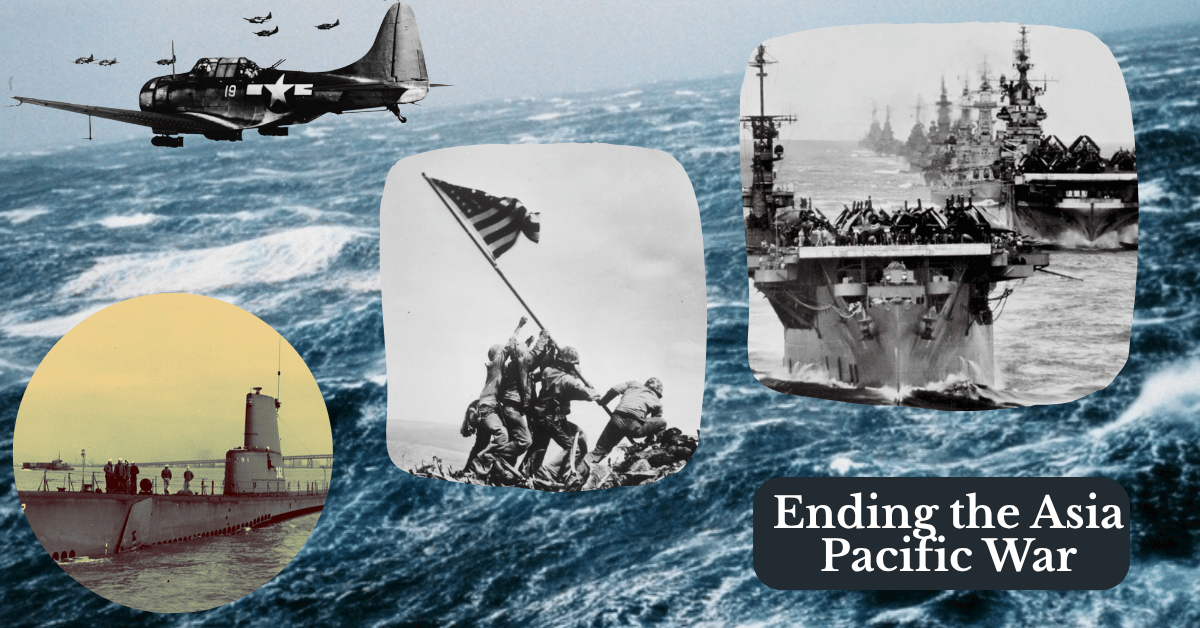
Image credit: various photographs from Naval Aviation Museum, National World War II Museum, and US Navy Archive
Discover more from friarmusings
Subscribe to get the latest posts sent to your email.
 friarmusings