
By June 1939 Japan was deeply entrenched in China with a military stalemate, the Chinese willing to fight a war of attrition, and there was no political settlement in sight. Japan had just suffered a major defeat at Nomonhan, though this was not fully appreciated in Washington at the time, and elements of Japanese leadership were increasingly suspicious of Western intentions. That same month the U.S. formally notified Japan it would terminate the 1911 Treaty of Commerce and Navigation, effective January 1940. This did not impose sanctions immediately but freed the U.S. legally to restrict trade later. The purpose of the actions was to signal displeasure with Japan’s conduct in China, create leverage without escalation, and preserve diplomatic ambiguity. It was not well received in Japan as they understood that beginning in January 1940 there would be no treaty in place that could limit trade restrictions. At the same time the State Department issued nonbinding requests to U.S. firms not to sell aircraft, aviation fuel or strategic materials to Japan. This reflected Hull’s belief that economic pressure should precede coercion, and coercion should precede war. This would come to be known as the “moral embargoes” and marked the first move from moral pressure towards economic leverage
French Indochina
A key reason China could continue fighting was that foreign supply routes remained open, especially the Burma Road and rail and port access through French Indochina, particularly via Haiphong into Yunnan Province.From Tokyo’s perspective, cutting these supply lines became essential. Japan was presented a strategic opportunity with the collapse of France to German forces in June 1940. As a consequence the Vichy regime replaced the French government. This left French colonial authorities isolated, under-resourced, and politically uncertain. To Japanese planners, Indochina now looked militarily weak and diplomatically unsupported and unlikely to receive British or American military support in the short term. To the Army, Navy, and politicians this created a low-risk window of opportunity.
Japan initially pursued its objectives through coercive diplomacy, not outright invasion. Japan demanded that Vichy France close supply routes to China, permit the Japanese to station inspectors at transportation junctions (and later military forces), and provide unfettered access to airfields in the North. Vichy France wanted to preserve sovereignty but lacked the military means to resist and so hoped that accommodation would prevent full occupation. Negotiations dragged on while Japan prepared militarily, a familiar pattern since Mukden.
Despite French promises, Japan believed that supplies were still leaking into China, French officials were unreliable, and only physical control could guarantee closure of routes. The Japanese Army argued that diplomatic assurances were meaningless without troops on the ground, reflecting the Army’s broader pattern of fait accompli strategy.
In September 1940, Japanese forces crossed into northern Indochina and occupied key airfields and rail lines. They clashed briefly with French colonial troops but soon enough all resistance collapsed. Shortly afterward a formal agreement legalized the Japanese presence while French administration remained nominally in place. Japan was fine with leaving administration to the French because they had gained what they wanted: control of transport corridors and air bases from which to control supplies into China.
Japan limited itself initially to northern Indochina because the stated goal was cutting China’s supply lines and it allowed Japan to test Western reactions in an incremental way as it avoided directly threatening oil supplies.
To the international community, Japan deliberately framed this as a “temporary” measure, a defensive necessity and not an annexation. But while China was the immediate justification, larger strategic calculations were at work. After the defeat at Nomonhan, the Northern expansion against the USSR lost credibility and attention shifted south toward Southeast Asia. Indochina offered a stepping stone toward the Dutch East Indies with airfields within reach of British Malaya. Japan also believed a decisive move would demonstrate resolve to the point the U.S. and Britain would protest but would not fight or take any decisive action. Internally it provided prestige to the military and the government and was promoted at home. Japan calculated that in the short term Britain was fully engaged in a battle for its national life (the “Battle of Britain”) while the U.S. was still divided and formally neutral.
The U.S. response was as Japan expected: a strong diplomatic protest, limited export controls, but no other embargo action. All in all, this reinforced Japanese beliefs that incremental expansion would work.
Reaction with the U.S. Government
The U.S. response to Japan’s occupation of northern Indochina exposed deep internal divisions within the Roosevelt administration over how far and how fast to confront Japan. At the center of the debate was a shared recognition that Japan had crossed an important threshold, but no consensus on whether that threshold justified decisive economic retaliation or continued diplomatic caution.
Within the State Department, Secretary of State Cordell Hull favored a measured, incremental response. Hull believed Japan’s move was aggressive but still reversible and that premature, sweeping sanctions, especially on oil, risked provoking a war the United States was not yet prepared to fight. State Department officials continued to emphasize negotiation, the preservation of legal and moral principles (such as the Open Door in China), and the use of graduated economic pressure to influence Japanese decision-making. Hull and his advisers, especially Ambassador Grew, held out hope that divisions within Japan, particularly between civilian moderates and the military, could still be exploited diplomatically.
By contrast, Treasury Secretary Henry Morgenthau Jr., supported by some in the Interior and Navy Departments, argued that Japan’s occupation demonstrated that incremental pressure had failed; it had been applied for almost three years. This faction favored stronger economic sanctions, including tighter export controls and financial restrictions, to signal that further expansion would carry unacceptable costs. Morgenthau was particularly concerned that continued U.S. trade, especially in oil, gasoline, aviation fuel, and scrap metal, was materially enabling Japanese aggression. President Franklin Roosevelt ultimately sided, for the moment, with Hull’s caution: the U.S. imposed new export controls and intensified diplomatic protests but stopped short of an oil embargo. The compromise reflected a broader strategic judgment that time was needed to strengthen U.S. defenses while keeping open the possibility, however slim, of restraining Japan without war.
Export Controls Act
In July 1940 Congress passed the Export Controls Act in response to Japan’s move into northern French Indochina. At the core of the legislation was that the State Department gained authority to license or deny exports. Immediately restrictions were placed on aviation gasoline, high quality scrap iron and machine tools. The licensing process gave the State Department the ability to “approve” the request and then slow march the license through the administrative process where decisions were deliberately incremental and often reversed
The Departments of Treasury and Interior wanted stronger measures and more excluded items. Despite pressure from Treasury and some Navy officials, the administration deliberately excluded oil from the provisions of the 1940 Act. Petroleum exports continued, ordinary commercial goods remained largely unaffected, and financial transactions were not yet frozen. All this reflected Secretary Hull’s view that an oil embargo would be indistinguishable from a declaration of economic war. This marked a clear escalation in U.S. policy, but one carefully calibrated to apply pressure without forcing an immediate showdown.
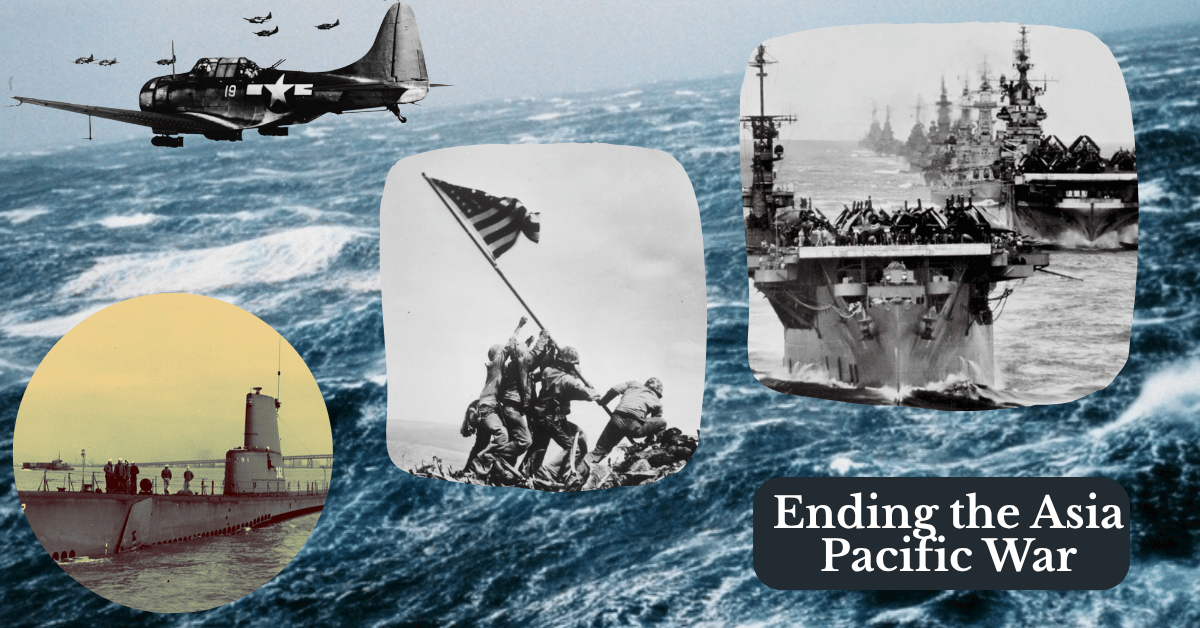
Image credit: various photographs from Naval Aviation Museum, National World War II Museum, and US Navy Archive
Discover more from friarmusings
Subscribe to get the latest posts sent to your email.
 friarmusings