
 Commentary. The verses from Scripture, in the previous post, also show vv.41-50 as part of the context – simply to remind the reader that Jesus’ discourse is controversial and has raised grumblings among the people.
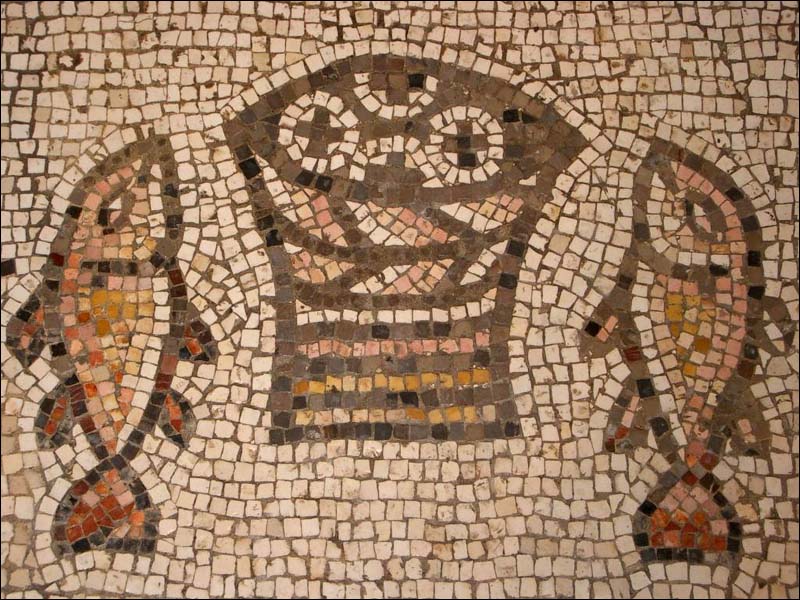
Jesus gives his flesh to eat. The question that emerges from the dispute among “the Jews” is a rejection of Jesus’ outrageous suggestion: “How (ōs) can this man give us his flesh to eat?” (v. 52). But it allows Jesus to conclude his discourse on his perfection of the Mosaic gift of bread from heaven through his gift of himself as the true bread from heaven. Unable to go beyond the physical, “the Jews” by their question misunderstand Jesus’ promise. Jesus insists on a gift of flesh and blood for life by stating negatively (v.53) and positively (v.54) that whoever eats the flesh and drinks the blood of Jesus, the Son of Man, has eternal life now and will be raised up on the last day. The midrashic play on the verb “to eat” provided by the Exodus passage in v. 31 has reached its high point. “Flesh” and “blood” emphasize that it is the incarnate life and very real death of the Son that are life giving food. Only the physical body of a human being produces flesh and blood. The argument of vv. 25-51 continues into vv. 52-59, especially in Jesus’ words that point to the resolution of a series of promises (cf. vv. 12-13, 27, 35, 51c). Jesus will provide a food for the life of the world, and that food is his flesh and blood. As the ancestors of Israel were nourished by the gift of the Torah, Jesus will nourish the whole world with the gift of himself. The people of Israel were nourished by eating the manna, perennially recalled in the nourishment provided for them by their total receptivity to and absorption of the Law. Now “the Jews” are told of the absolute need to eat the flesh and drink the blood of the Son of Man. Unless they eat the flesh and drink the blood (ean me phagete . . kai piete) of the Son of Man they have no life (v. 53); whoever eats the flesh and drinks the blood (ho treigōn . kai pinon) of Jesus has eternal life (v. 54). The shift from the more respectable verb “to eat” (phagein) to another verb that indicates the physical crunching with the teeth (trōgein) accentuates that Jesus refers to a real experience of eating. Hints of the Eucharist continue to insinuate themselves into the words of Jesus. Flesh is to be broken and blood is to be spilled. Violence has been in the air since Jesus’ behavior on the Sabbath led “the Jews” to initiate a process that would lead to his death (5:16-18).
Notes
John 6:51 the bread that I shall give for the life of the world is my flesh: Many elements in v. 51c reflect eucharistic traditions found elsewhere in the NT and in the early Church. The Johannine celebration of the Eucharist lies behind the use of key expressions: ho artos (bread), sarx (flesh), ego dōsō (I will give), hyper (for the sake of). These explicit eucharistic links are seen by most commentators as the introduction to vv. 51c-58, a discrete section within John 6 that deals with the Eucharist. It may be true that the “backbone of vss. 51-58 is made up of material from the Johannine narrative of the institution of the Eucharist” (Brown, Gospel 1:287), but behind the eucharistic language the interpretation given continues to support the more overarching message of Jesus’ self-gift for the life of the world. His body (“flesh”) will be given over in crucifixion for the life of the world.
John 6:52 The Jews quarreled among themselves: The quarreling (emachonto oun . . . hoi Ioudaioi) continues the theme of the “grumbling” from Exodus 16.
Discover more from friarmusings
Subscribe to get the latest posts sent to your email.
 friarmusings