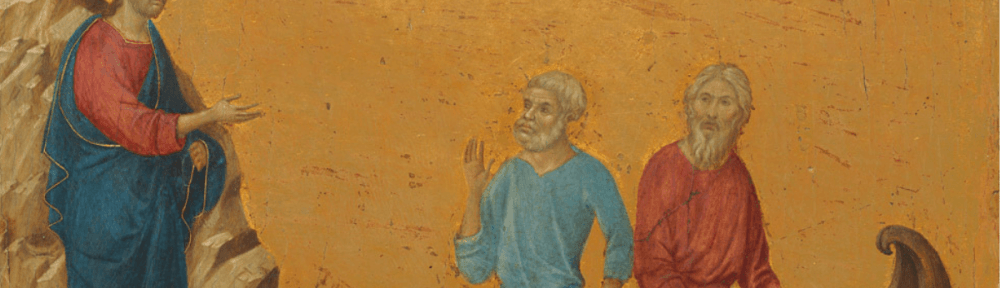
This Sunday is the 11th Sunday of Ordinary Time in Liturgical Year A. The gospel is taken from Matthew 9:36 – 10:8 which falls in a section that is part of the Galilee ministry, but towards the end with a third cycle of Jesus’ mighty acts (9:18–34) which reveals his power over death and chronic illness, blindness, and speechlessness. The Galilee ministry ends with essentially a summary verse: “Jesus went around to all the towns and villages, teaching in their synagogues, proclaiming the gospel of the kingdom, and curing every disease and illness.” (Mt 9:35, a virtual repeat of Mt 4:23)
It is from this summary verse that we see the connection between discipleship and mission:
At the sight of the crowds, his heart was moved with pity for them because they were troubled and abandoned, like sheep without a shepherd. Then he said to his disciples, “The harvest is abundant but the laborers are few; so ask the master of the harvest to send out laborers for his harvest.” (vv. 36-38)
The connection is made clear in that both endeavors, shepherding and harvest, need workers to bring the endeavor to its completion. God is the ultimate shepherd and harvest master, but he needs the cooperation of those who accept Jesus’ invitation to discipleship. The three sections on discipleship in chapters 8–9 emphasize the radical demands that it can involve, the fact that all kinds of people can be called to it and the radical newness that it represents, and its missionary dimension (9:35–38). The final verses of Matthew 9 serve as the prologue for the great Missionary Discourse (Mt 10:1-42).
The disciples’ mission is limited to the people of Israel (vv. 5b–6), and they are to avoid entering the cities of non-Jews and Samaritans (whose Judaism was suspect in the eyes of Judeans and Galileans). Only after the death and resurrection of Jesus does the mission to the latter groups begin (see 28:19). The disciples’ mission replicates and extends the mission of Jesus in preaching the coming of God’s kingdom and in healing the sick. As discipleship has been offered to them as a gift, so they are to offer it to others.
Wandering preachers representing various philosophies and religions were a common sight in the world of Jesus’ time. Jesus’ disciples are instructed not to be anxious about money or baggage or lodging, but rather to depend on the charity of their hearers (vv. 9–13). Their lack of concern for money, clothing, and lodging allows them to carry out the mission in a more single-minded way. It also bears witness to their trust in God’s care for them and to their conviction that what has been freely received should be freely given.
Image credit: Duccio di Buoninsegna, 1308-1311, National Gallery of Art, Public Domain
Discover more from friarmusings
Subscribe to get the latest posts sent to your email.
 friarmusings