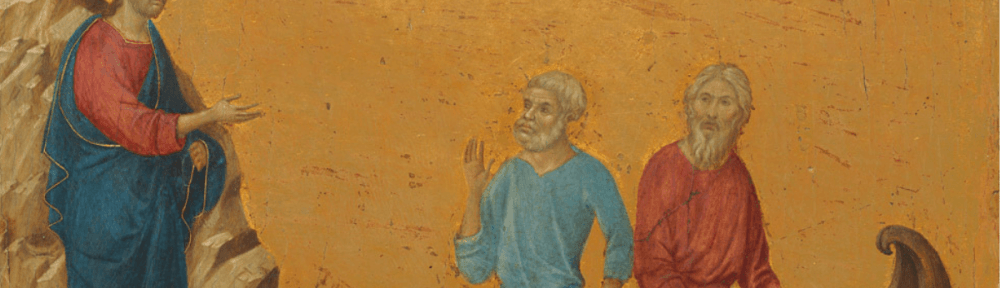
This Sunday is the 11th Sunday of Ordinary Time. The gospel is from the opening verses of the Matthean Missionary Discourse. In the previous two posts we explored the intention and meaning of the geographical limitations placed on the Twelve’s commissioning. In this post we examine two simple verses that provide the framework for the mission itself: “As you go, make this proclamation: ‘The kingdom of heaven is at hand.’ Cure the sick, raise the dead, cleanse lepers, drive out demons. Without cost you have received; without cost you are to give.” (Mt 10:7-8)
This is not the first place in Matthew’s gospel in which the proclamation “the kingdom of heaven is at hand” has been heard. Consider John the Baptist: “Repent, for the kingdom of heaven is at hand!” (Mt 3:2) While “repent” is not specifically included in Mt 10, it is not hard to imagine that it is now a given part of the proclamation given Jesus exactly repeats (4:17) the Baptist’s words. The theme of “repentance” reaches back to the OT prophets who called on God’s people to “return” to their true allegiance. Our modern language would call it “conversion.”What is different is that now there is a new note of urgency, of a “now or never” opportunity because the kingdom of heaven has arrived in the person of Jesus.
The proclamation is to be accompanied by actions corresponding to Jesus’ own miraculous activity. As R.T. France [2007, 383] notes “four acts of deliverance specified are carefully worded to reflect the miracles in chs. 8–9 … Their mission is an extension of his, and … what he could do they are given the power to do too. Healing through divine power… was widely regarded as an appropriate activity of holy men, and even exorcism was an accepted part of the Jewish scene… Given Jesus’ wide reputation already for such supernatural acts, people would have expected his representatives to do likewise …But within this list the unobtrusive inclusion of “raise the dead” is remarkable. Its very matter-of-fact tone raises the stakes significantly. Only two great men of the past were credited with such a feat (Elijah, 1 Kgs 17:17–24; Elisha, 2 Kgs 4:32–37; cf. 13:21), and Jesus’ resuscitation of the official’s daughter has introduced a new element into the demonstration of the Messiah’s authority…We have no record that the disciples did in fact “raise the dead” during Jesus’ lifetime, though subsequent miracles of Peter (Acts 9:36–42) and Paul (Acts 20:9–12) would no doubt be taken as a fulfilling of this charge.”
The final verse, “Without cost you have received; without cost you are to give.” does not need a great explanation. What the Twelve have received is all gift and they are to give freely what they have freely received.
Image credit: Duccio di Buoninsegna, 1308-1311, National Gallery of Art, Public Domain
Discover more from friarmusings
Subscribe to get the latest posts sent to your email.
 friarmusings