Jesus uses the expression “take up his cross” here and more famously in Mt 16:24: “Whoever wishes to come after me must deny himself, take up his cross, and follow me.” What is Matthew’s intent in using this expression? Undoubtedly writing some 40 years after the Crucifixion, it echoes the Roman execution methods broadly and the death of Jesus specifically. The cross, in this context, represents the suffering, rejection, and ultimately, the crucifixion that Jesus himself would endure. Taking up one’s cross, therefore, implies a willingness to bear the hardships and challenges associated with following Jesus, even if it leads to personal sacrifice or persecution.
Matthew’s use of the expression “take up his cross” conveys several important messages:
- Self-Denial: To take up one’s cross means to deny oneself, to relinquish personal desires, ambitions, and comforts in order to fully commit to following Jesus. It implies a surrendering of one’s own will to align with God’s purposes.
- Identification with Christ: Taking up the cross signifies an identification with Jesus in his suffering and rejection. It means embracing the path that Jesus walked, even if it entails hardship or persecution. It is a call to imitate his sacrificial love and obedience to God.
- Counting the Cost: By using the image of the cross, Jesus underscores the seriousness and commitment required in discipleship. It is a call to count the cost and understand that following Jesus may involve personal sacrifice, including the possibility of enduring suffering or opposition.
- Radical Allegiance: Taking up the cross signifies a radical allegiance and loyalty to Jesus above all else. It requires placing Jesus at the center of one’s life and being willing to prioritize him over personal comforts, ambitions, or even the expectations of others.
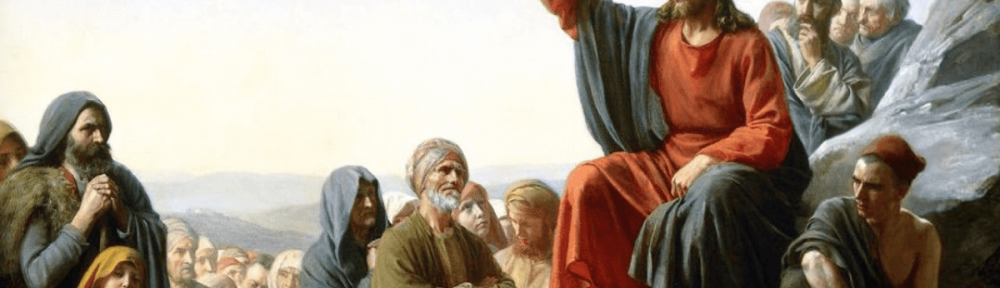
Image credit: Sermon on the Mount (1877) by Carl Heinrich Bloch, Museum of National History at Frederiksborg Castle, Public Domain
Discover more from friarmusings
Subscribe to get the latest posts sent to your email.
 friarmusings