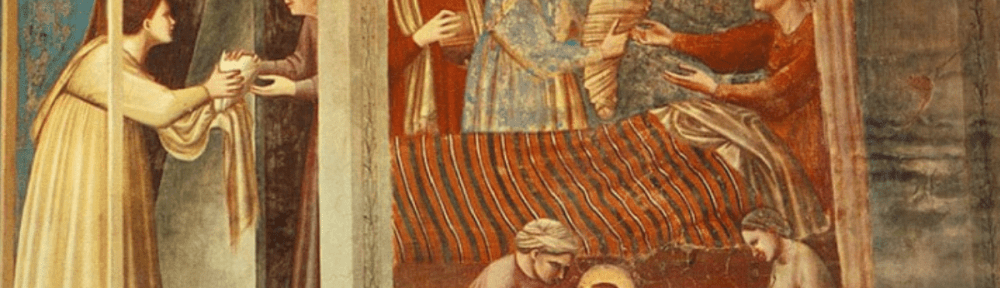
This is one of the most ancient Marian feasts. It is thought that this feast originated in connection with the Feast of the dedication of a church dedicated to Mary, now the Church of St Ann, in Jerusalem in the 6th century. Tradition holds that this is where the house of Mary’s parents, Joachim and Ann, stood and where she would have been born. What began as a local Jerusalem celebration began to be celebrated in Rome in the 8th century. The traditional date of the celebration is chosen to follow 9 months after the celebration of the Immaculate Conception on December 8th. It is noteworthy that the tradition of the Church is to celebrate the life of a Saint on the anniversary of their death. However, in the case of Mary and John the Baptist, the celebration is on their day of birth, recognizing the special grant of holiness that was theirs from the beginning.
There is not an account of Mary’s birth in Sacred Scripture. What information is used comes from the 2nd century apocryphal Protoevangelium of James. It is in this work that we learn the names of Mary’s parents, Anna and Joachim, who are infertile but pray for a child. They receive the promise of a child who will advance God’s plan of salvation for the world. Such a story, like many biblical counterparts, stresses the special presence of God in Mary’s life from the beginning.
In Sacred Scripture, we first encounter Mary at the Annunciation which connects Mary’s life with the life of Jesus. Saint Augustine wrote of this connection when he encourages the earth to rejoice and shine forth in the light of her birth. “She is the flower of the field from whom bloomed the precious lily of the valley. Through her birth the nature inherited from our first parents is changed.” The opening prayer at Mass speaks of the birth of Mary’s Son as the dawn of our salvation, and asks for an increase of peace.
Image credit: Birth of the Virgin, fresco by Giotto in the Scrovegni Chapel Padua, Italy (c. 1305) | Public Domain
Discover more from friarmusings
Subscribe to get the latest posts sent to your email.
 friarmusings