This coming Sunday is the 24th Sunday in Ordinary Time.
31 Now when his fellow servants saw what had happened, they were deeply disturbed, and went to their master and reported the whole affair.32 His master summoned him and said to him, ‘You wicked servant! I forgave you your entire debt because you begged me to.33 Should you not have had pity on your fellow servant, as I had pity on you?’34 Then in anger his master handed him over to the torturers until he should pay back the whole debt. 35 So will my heavenly Father do to you, unless each of you forgives his brother from his heart.”
We are not told what motivated the other slaves to take up the case. Imprisonment for debt was not in itself illegitimate (cf. 5:25–26); the first slave was acting within his rights. What shocked them was his failure to exercise toward his fellow-slave even a little of the generosity with which he himself had been treated (cf. 7:12). And that is the charge the king now puts into words. The phrase “entire debt” puts it all in perspective and prompts the hearers to reflect on the extent of their own indebtedness to the grace of God.
The king tells the servant that what he received (pity/mercy) he should have paid forward to his fellow servants. “Blessed are the merciful, for they shall be shown mercy.” (Mt 5:7) If mercy is the characteristic of the king/God, it should also be the characteristic of his servants/people. Conversely, where God’s people do not show mercy they cannot expect to receive it (Jas 2:13).
The forgiveness which was freely granted is now withdrawn, not because the servant is any more likely to be able to pay the debt, but because he has proved himself unworthy of his master’s mercy. And this time it is worse: in place of being sold, he is to be tortured.
“But if you do not forgive others, neither will your Father forgive your transgressions.” (Mt 6:15) – as already made clear, God, whose generosity is beyond measure, will nonetheless not forgive the unforgiving. They must expect the punishment which their unforgiven sin deserves. And the forgiving-ness which he expects of his people is not a reluctant or merely verbal concession which leaves the underlying problem unresolved, but a genuine, warm forgiveness “from the heart” so that the broken relationship is fully restored. Those who will not forgive must not expect to be forgiven; the measure they give will be the measure they get back (7:1–2).
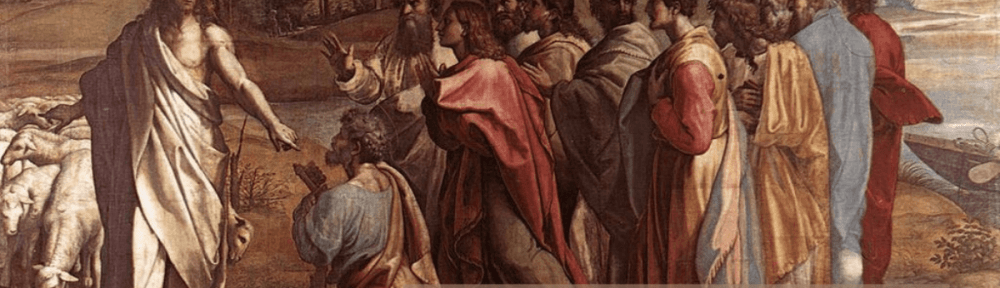
Image credit: Raphael, Handing-over the Keys, 1515, Victoria and Albert Museum, London | Public Domain
Discover more from friarmusings
Subscribe to get the latest posts sent to your email.
 friarmusings