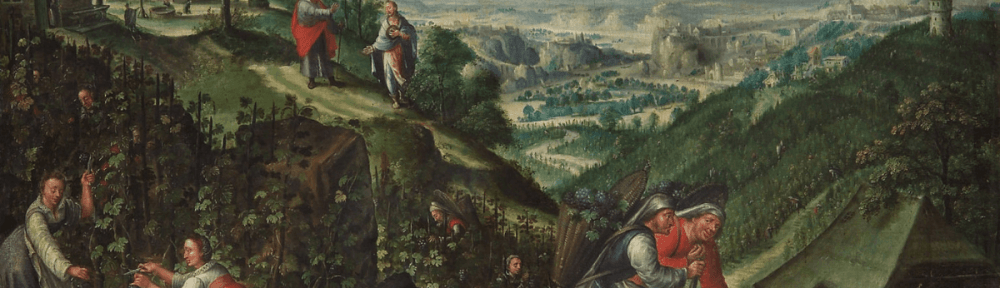
This coming Sunday is the 27th Sunday in Ordinary Time. Much like Isaiah 5:1-2 (the reading from the OT accompanying our gospel), Matthew’s parable has a vineyard setting (also the preceding two parables: 20:1-16, the workers in the vineyard; 21:28-32, the two sons). What does the vineyard represent? In Isaiah it represents Israel and many have assumed that that is its meaning in the gospel parable, e.g., the vineyard = Israel; the tenants = religious leaders; landowner’s slaves = prophets whom they rejected. With this interpretation, we note that the vineyard is not destroyed, but turned over to new tenants. To use another biblical metaphor, the unfaithful, greedy shepherds are removed (Mt 9:36; Ezekiel 34) and new shepherds are installed to care for the sheep.
In Matthew’s gospel the vineyard takes on a broader, more universal meaning. Rather than simply, “Israel,” the vineyard is generally taken to mean the Kingdom of God. Remember that entry into the Kingdom was central in the closing warning in the parable of the Two Sons that immediately preceded our text.
Another theme that continues from the preceding parable is the importance of actions that reflect the value of the kingdom. The chief priests and elders of Jerusalem are criticized for a manner of living out their faith that is inconsistent with God’s call; they refuse to change their hearts in the face of the prophetic actions of Jesus. They understand that to acknowledge his authority means to abdicate theirs. They not only say nothing in response to Jesus’ question; they do nothing. As seen in the parable of the Two Sons, bearing fruit is expected of all disciples.
Image credit The Parable of the Wicked Tenants, Maarten Van Valckenborch, c. 1585, Kunsthistorisches Museum | Public Domain PD-US
Discover more from friarmusings
Subscribe to get the latest posts sent to your email.
 friarmusings