This coming Sunday is the 27th Sunday in Ordinary Time. In today’s parable, four times the word karpos (“fruit”) appears in the text, although not always translated that way [v. 34 literally “time of the fruits” = NAB’s “vintage time;” 34 and 41 literally “fruits” = NAB’s “produce;” and in v.43 translated as “fruits”]. By comparison the word karpos occurs once in Mark’s version (12:2) of this parable. Matthew’s use of this theme/image is consistent across his gospel (see also: 3:8, 10; 7:16-20; 12:33; 13:8, 23). It is central to this parable.
There are some significant differences between Mk 12:2 (At the proper time he sent a servant to the tenants to obtain from them some of the produce of the vineyard) and Mt 21:34 (When vintage time drew near, he sent his servants to the tenants to obtain his produce). In Mark the servant is sent “at the proper time” (kairos); the implication is that the fruit was ripe and thus the time to harvest the fruit was here. Yet in Matthew vintage time (kairos) of the fruits “drew near.” In other words, the fruit was almost ripe, but not quite. The expression is the way in which Matthew speaks of the in-breaking of the kingdom (3:2; 4:17; 10:7) and of Jesus’ hour (26:45) pointing to the coming (here, but not fully here) sense of God’s kingdom breaking into our time (chronos).
It is perhaps noteworthy that in Mark the landowner seeks to receive “some of the produce,” literally, “a share” of the fruit of the vineyard. Presumably the workers get to keep their share. But in Matthew the landowner seeks to receive “his produce,” possibly implying “all,” since he owned the entire vineyard. This may well be the meaning when one considers v.41:” give him the produce at the proper times.”
In the parable of “The Two Sons,” when the chief priests and elders remain silent in the face of Jesus’ question, in v.41 the leaders of Jerusalem have no problem in answering when Jesus asks: “What will the owner of the vineyard do to those tenants when he comes?”. They do so immediately and with some vehemence: “He will put those wretched men to a wretched death.” The tone and tenor of the response indicated that this parable has hit close to home. The story of an absentee landowner reflects a familiar economic situation at the time; some of the chief priests and elders to whom Jesus is speaking would probably have owned land away from Jerusalem. The landowner must be a wealthy man, because a newly planted vineyard could not be expected to produce fruit for at least four years, during which he would have no return on his capital outlay. Once the vines began to bear fruit there would be an agreed proportion of the crop due to the owner, leaving the tenants to derive their living from the rest. The fault of the tenants in withholding the due produce is compounded by the violence upon the servants. This fault is massively compounded by their decision to murder the owner’s son and so to attempt to take over the property.
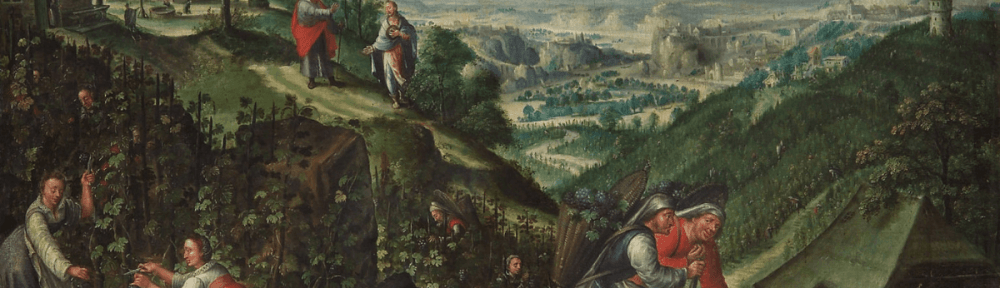
Image credit The Parable of the Wicked Tenants, Maarten Van Valckenborch, c. 1585, Kunsthistorisches Museum | Public Domain PD-US
Discover more from friarmusings
Subscribe to get the latest posts sent to your email.
 friarmusings