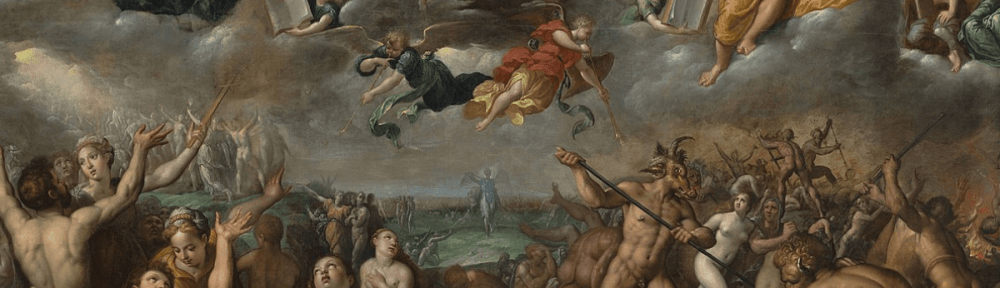
This coming Sunday is the Solemnity of Christ the King. Brian Stoffregen, a Lutheran Pastor, writes that he has a love/hate relationship with this gospel:
“I hate it, because it seems to make works the requirement for being blessed by God. There is no mention of faith or justification or forgiveness or the cross — the acts of God that bring us salvation. Rather, the text is all about human actions.”
“I hate it from a family systems approach, because doing such things for others can create co-dependent relationships between the helper and those in need. We have usually answered the question: ‘Am I my brother’s keeper?’ with ‘Yes.’ We are to take care of our needy brothers and sisters. Our text would support this answer. However, if we look at this answer from another perspective, we may want to change our response. Who of us wants to be ‘kept’? We ‘keep’ animals in the zoo or pets in a pen. Such ‘kept’ animals are unable to survive on their own. Sometimes we may ‘keep’ people in a similar bondage. So, we need to struggle with how we can best care for the needy as Jesus’ parable says we should. How can we do it in a way that doesn’t put them or us in bondage?”
“I love it, because these good works are not really works that earn us heaven because the doers of them don’t realize that they have done anything good. Caring for other people is such a part of their (redeemed) nature that the caring acts come naturally, perhaps even unconsciously — like a good tree naturally producing good fruit. It doesn’t have to ‘think’ about producing fruit. They just happen. Their production is part of its nature. In the same way, the ‘goats’ don’t realize that they have done anything wrong. ‘The Great Surprise’ may be a more appropriate title to this text than ‘The Final Judgment.’ Both groups are surprised when they hear about their good deeds (or lack thereof).”
“Most of us have had a similar type of ‘surprise’. Someone comes up to us and says, ‘What you did for me sure helped me a lot.’ or ‘What you said to me had a powerful influence on my life.’ While they are saying this, we are trying to remember what we said or did that was so great. Often we don’t know what good we are doing — and only later discover that we have served Christ in the least of these. On the other hand, if we assume we are doing a great job, we might be surprised to hear about what we haven’t done.”
All this is not to say that Christians can be quite intentional about their way of going through the world and not being surprised (while at the same time remaining humble.)
Stoffregen is raising the caution flag that reminds us Christianity has long dealt with “works” especially in the heresy of Pelagianism. Pelagianism is a late 4th century heresy that, in its most ardent forms, taught man is capable of saving himself through free will and doing what God asks while avoiding that which is forbidden. This salvation was apart from the grace of God, the merits of Christ, and the attending faith in Jesus. In modern times, semi-pelagianism is more problematic. It is a position that “yes, faith is necessary, but you also have to do works.” If that is understood in the sense that faith is but a necessary precursor, such that salvation is then fully dependent upon the works – then one finds themselves outside the boundaries of orthodox Christianity as understood by Protestants, Reformers, and Catholics alike. While certainly there is much theological nuance and debate among Christian denominations, most would agree that we are saved by grace. Period. It is from cooperation with that grace that comes faith and works.
Image credit: Jacob Adriaensz Backer: Last Judgment (Matthew 25:31-33), National Museum in Warsaw, PD-US
Discover more from friarmusings
Subscribe to get the latest posts sent to your email.
 friarmusings