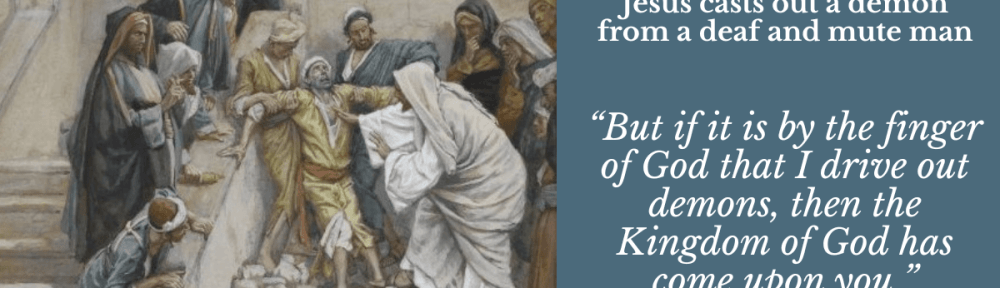
“If today you hear his voice, harden not your hearts” (Ps 95:8) – our refrain from today’s Psalm. The thing is that God knows the hearts of humans and can anticipate our responses, a sobering thought echoed throughout the Bible (see Jeremiah 17:10). While the Psalm command is clear enough, you have to wonder if our “hearts” are already leaning one way or another. Think about the biases and prejudices we carry – aren’t a heart already leaning in one direction. Being from the South I was always under the assumption that New Yorkers were rude and folks from Boston were prickly. Of course they probably heard the semblance of a Southern accent and wondered if I could read.
What is God’s role in all this? There are some passages in Scripture that make you wonder.
In Exodus 7 the Lord is telling Moses to go to Pharaoh and ask him to let the people of Israel go into the wilderness in order to worship God: “You will speak all that I command you. In turn, your brother Aaron will tell Pharaoh to let the Israelites go out of his land. Yet I will make Pharaoh so headstrong that, despite the many signs and wonders that I work in the land of Egypt, Pharaoh will not listen to you.”
The passage leaves you wondering who caused the hardening? Was Pharaoh already leaning that way or did the Lord cause his heart to harden? In the first meeting between Pharaoh, Moses and Aaron, we hear: “Pharaoh, however, hardened his heart and would not listen to them, just as the LORD had foretold.” (Ex 7:13) As we keep reading, in the first five plagues that God sends on Egypt, the hardening of Pharaoh’s heart happens by his own will. It is in the last five plagues that we see a change
- Plague #5 in which the livestock die: Pharaoh’s heart “remained obstinate” (9:7)
- Plague #6, the boils: “The Lord hardened Pharaoh’s heart” (9:12)
The Lord called Pharaoh to humble himself and acknowledge that God of Israel is the one true God with all authority and that Pharaoh cannot redefine good and evil on Egyptian terms. Pharaoh’s response is to balk at the God of Israel. After this, God gives Pharaoh five opportunities to repent and humble himself. And five times Pharaoh hardened his own heart, becoming obstinate. Then God says “fine, you want to lean that way, let me help you…” The author wants us to see that even the most heinous and absurd forms of human evil are not a true threat to God’s purposes. He can steer even this kind of evil toward his plan to bless all humanity.
Romans 9 is the lengthiest reference Paul makes to Exodus in the New Testament. Paul sees in Pharaoh’s hard heart, a pattern that was again at work in his own day, namely the rejection of Jesus the Messiah by many of his own, Jewish people. It is evident in today’s gospel. Later Jewish writings indicate that one sign of the Messiah would be the exorcism of a demon from a mute. This particular exorcism would have been considered sign worthy because it is believed that the means to “control” the evil spirit is to learn its name – impossible to do if the demon/person is mute.
The crowd viewing the casting out of the mute demon is closed to the meaning of the event. Some put the worst possible interpretation on Jesus’ act of power – Jesus acts in the power of Beelzebul (v.15) – others demand even further signs before they will believe (v.16). This is the kind of hardness of heart that even ten plagues would not penetrate (Exod 7–11).
“If today you hear his voice, harden not your hearts” (Ps 95:8) You might want to check which way you’re already leaning. Are you already leaning into the blessings of God? Or do you always need another sign?
Image credit: Exorcising the blind and mute man | James Tissot| Brooklyn Museum | PD-US
Discover more from friarmusings
Subscribe to get the latest posts sent to your email.
 friarmusings