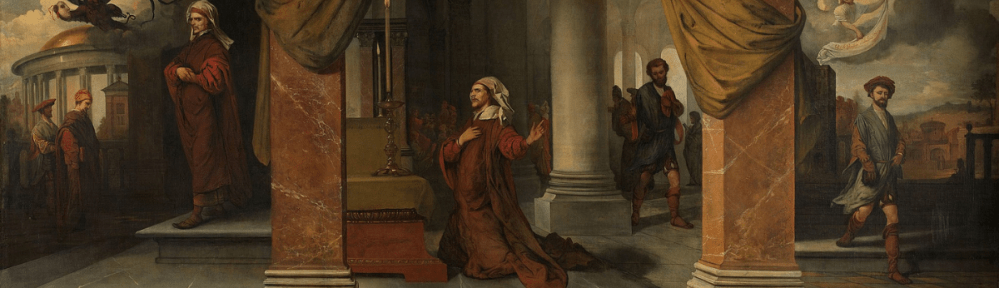
“Two people went up to the temple area to pray; one was a Pharisee and the other was a tax collector. (Luke 18:10). In today’s gospel we encounter a Pharisee and tax collector in prayer. Interestingly, the pericope follows the parable of the persistent widow and the unjust judge (Luke 18:1-8). While the common thread is certainly prayer, there are other aspects which bind together these two narratives. One of Luke’s ongoing themes is the inclusivity of the Gospel. In these two parables, God who hears all prayers is addressed by a (saintly and probably poor) widow and the sinful (and probably rich) male tax collector. Luke continues to demonstrate that the Reign of God is open to all – a message of keen importance to his Gentile audience.
The two parables are well placed. Alan Culpepper (Luke, 340) notes that “By reading these two parables together, the reader is instructed to pray with the determination of the widow and the humility of the tax collector. Peter Rhea Jones has characterized the complementary themes of the two parables as ‘The promise of persistent prayer’ (18:1-8) and ‘The peril of presumptuous prayer’ (vv. 9-14).” Each parable is instructive for the disciples of all ages about the nature of Christian prayer.
Luke Timothy Johnson (Luke, 274) writes:
“The parables together do more than remind us that prayer is a theme in Luke-Acts; they show us why prayer is a theme. For Luke, prayer is faith in action. Prayer is not an optional exercise in piety, carried out to demonstrate one’s relationship with God. It is that relationship with God. The way one prays therefore reveals that relationship. If the disciples do not “cry out day and night” to the Lord, then they in fact do not have faith, for that is what faith does. Similarly, if prayer is self-assertion before God, then it cannot be answered by God’s gift of righteousness; possession and gift cancel each other.”
Just some weekend thoughts for your consideration.
IImage credit: De Farizeeër en de tollenaar (The Pharisee and Publican), Barent Fabritius, 1661, Public Domain
Discover more from friarmusings
Subscribe to get the latest posts sent to your email.
 friarmusings