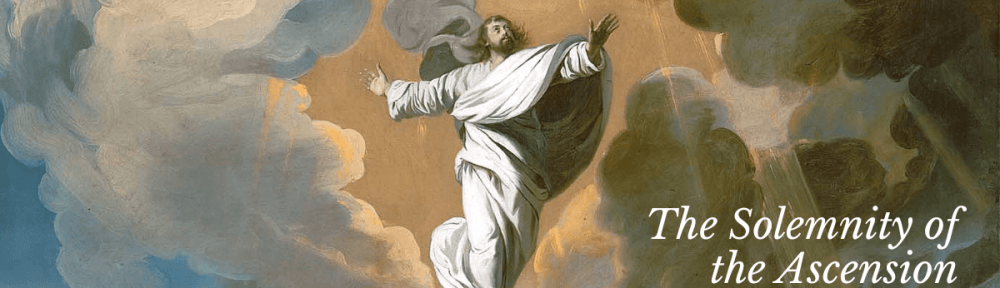
This coming Sunday in the Solemnity of the Ascension taken from the Gospel of Mark.
The shorter ending – This ending is found after Mk 16:8 before the Longer Ending (vv. 9-20) in four seventh-to-ninth-century Greek manuscripts as well as in one Old Latin version, where it appears alone without the Longer Ending:
8 Then they went out and fled from the tomb, seized with trembling and bewilderment. [They said nothing to anyone, for they were afraid…And they reported all the instructions briefly to the companions of Peter. Afterwards Jesus himself, through them, sent forth from east to west the sacred and imperishable proclamation of eternal salvation.]
9 When he had risen, early on the first day of the week, he appeared first to Mary Magdalene…
Most modern bibles do not have these verses in the text, but might include them at the end of the Gospel with an amplifying note.
The Freer logion – Found after Mk 16:14 in a fourth-fifth century manuscript preserved in the Freer Gallery of Art, Washington, DC, this ending was known to Jerome in the fourth century.
“14 later, as the eleven were at table, he appeared to them and rebuked them for their unbelief and hardness of heart because they had not believed those who saw him after he had been raised. [And they excused themselves, saying, ‘This age of lawlessness and unbelief is under Satan, who does not allow the truth and power of God to prevail over the unclean things dominated by the spirits [or, does not allow the unclean things dominated by the spirits to grasp the truth and power of God]. Therefore reveal your righteousness now.’ They spoke to Christ. And Christ responded to them, ‘The limit of the years of Satan’s power is completed, but other terrible things draw near. And for those who sinned I was handed over to death, that they might return to the truth and no longer sin, in order that they might inherit the spirit] 15 He said to them, “Go into the whole world and proclaim the gospel to every creature.
I know of no modern Bible where this appears other than in technical notes.
Credit image: detail from “The Ascension” (1775) by John Singleton Copley | Museum of Fine Arts, Boston | PD-US
Discover more from friarmusings
Subscribe to get the latest posts sent to your email.
 friarmusings