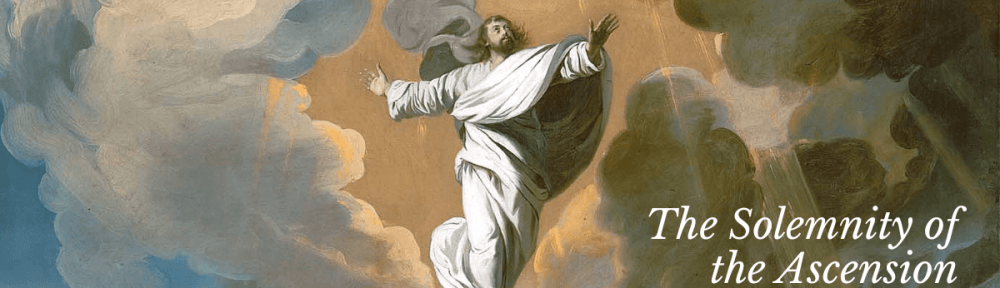
This coming Sunday in the Solemnity of the Ascension taken from the Gospel of Mark: “15 He said to them, ‘Go into the whole world and proclaim the gospel to every creature. 16 Whoever believes and is baptized will be saved; whoever does not believe will be condemned. 17 These signs will accompany those who believe: in my name they will drive out demons, they will speak new languages. 18 They will pick up serpents [with their hands], and if they drink any deadly thing, it will not harm them. They will lay hands on the sick, and they will recover.’ 19 So then the Lord Jesus, after he spoke to them, was taken up into heaven and took his seat at the right hand of God. 20 But they went forth and preached everywhere, while the Lord worked with them and confirmed the word through accompanying signs.”
Based on the previous discussion it is clear that this reading is taken from the so-called “longer ending” without the addition of the Freer Logion. While the verses are accepted as canonical, it is interesting that many scholarly and technical commentaries offer no insights or analysis. What commentaries do address these verses give them a fairly quick treatment. The context for their comments are as though explaining the source information for the “longer ending.” Such treatment is akin to the following:
- Verse 15 – adds content from the Matthean commission: “Go, therefore, and make disciples of all nations, baptizing them in the name of the Father, and of the Son, and of the holy Spirit, teaching them to observe all that I have commanded you” (cf. Mt 28:19-20). Notably the baptismal formula is absent from Mark.
- Verse 16 is similar to “Whoever believes in him will not be condemned, but whoever does not believe has already been condemned, because he has not believed in the name of the only Son of God.” (John 3:18) or “Whoever believes in the Son has eternal life, but whoever disobeys the Son will not see life, but the wrath of God remains upon him.” (John 3:36)
In any case, the text indicates the importance of baptism in the early church.
The writer then moves to a number of items pertaining to miraculous signs: “These miraculous signs will accompany those who believe: They will cast out demons in my name, and they will speak in new languages” (Mark 16:17). The passage underscores the miraculous signs believers would employ in support of the gospel message. Source texts might include:
- “Amen, amen, I say to you, whoever believes in me will do the works that I do, and will do greater ones than these, because I am going to the Father.” (John 14:12)
- “Many signs and wonders were done among the people at the hands of the apostles.” (Acts 5:12)
- Paul casting out a demon from a woman (Acts 16:18)
- “And they were all filled with the holy Spirit and began to speak in different tongues, as the Spirit enabled them to proclaim.” (Acts 2:3–4)
- “The circumcised believers who had accompanied Peter were astounded that the gift of the holy Spirit should have been poured out on the Gentiles also, for they could hear them speaking in tongues and glorifying God.” (Acts 10:45-46)
In other words, by the time of the writing of Mark’s gospel, the early life of the Church already had a vast collection of stories. It may well be safe to say that the longer ending is something to remember in one’s spiritual life: signs are to be given to those who believe, not primarily in order that they may believe. This has been a point of conflict between the Pharisees and Jesus, with the Pharisees reiterating their demands for a sign, and Jesus equally adamant that no sign would be given to unbelief (Mark 8:11–12).
Credit image: detail from “The Ascension” (1775) by John Singleton Copley | Museum of Fine Arts, Boston | PD-US
Discover more from friarmusings
Subscribe to get the latest posts sent to your email.
 friarmusings