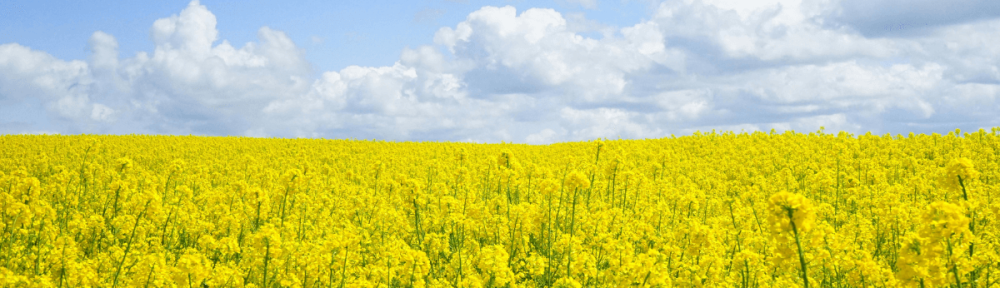
This coming Sunday is the 11th Sunday in Ordinary Time. 30 He said, “To what shall we compare the kingdom of God, or what parable can we use for it? 31 It is like a mustard seed that, when it is sown in the ground, is the smallest of all the seeds on the earth. 32 But once it is sown, it springs up and becomes the largest of plants and puts forth large branches, so that the birds of the sky can dwell in its shade.” (Mark 4:40-32)
In many commentaries on these three verses, the focus falls on the mustard seed being the “smallest of all the seeds on the earth.” Which is true, but even in Israel the orchid seed is smaller. If the result of these two seeds is to be compared, certainly the beauty of the orchid plant would claim the prize. The seed of the mediterranean cedar is not all that large and when it reaches maturity, compared to the 10-foot tall mustard plant, the cedar majestically towers above the largest of mustard plants, has awesome branches, and casts a lot more shade. And there is the question of identity. In parallel verses, Matthew and Luke, identify the mustard as a “tree.” Mark describes it as lachanon, which means “edible garden herb, vegetable” [EDNT, 345] which is closer to reality even if, untended, it can grow to 10 feet tall. Still, it makes me wonder about the old adage: “one person’s weed is another’s flower.”
The Kingdom focus is not on the seed but rather its development: a respite for the birds that they can find shelter in its shade. One easily can hear an echo from the Old Testament: “On the mountain height of Israel I will plant it [tender shoot of the cedar, cf. v22]. It shall put forth branches and bear fruit, and become a majestic cedar. Every small bird will nest under it, all kinds of winged birds will dwell in the shade of its branches.” (Ezekiel 17:23).
But notice that the Kingdom is not likened to the mustard seed, but to what happens to the mustard seed. The whole life of the plant provides the basis of the comparison. The reference to the birds of the air which find shelter in the branches of the mustard shrub may have a deeper significance. Echoes of the OT may be responsible for this formulation; the LXX of Ezek 17:23 has birds “under its shade” rather than “in the shade” of the tree. There are older variants of Matthew 13:31–32 and Luke 13:18–19 the seed grows into a tree. This variant highlights the OT use of great trees to depict the kingdoms of the world (Ezek 17:23; 31:6; Dan 4:12, 20–22). The great tree in Dan 4:20–22 corresponds to a kingdom that rules all the peoples of the world. The image of a mighty cedar of Lebanon symbolizes Assyria (Ezek 31:2) and Judah (Ezek 17:3–4). Perhaps the copyist thought it must have seemed contradictory to use the image of a bush to represent the kingdom of God. Changing the image for the kingdom from a bush to a tree emphasizes that the kingdom of God is greater than all human kingdoms.
Even when fully grown, the kingdom of God does not appear unusually large if it is compared to great trees. Birds that nest on the ground are sheltered by its branches. Jesus may have told this parable to counter the impression that God’s rule had to appear among the great and powerful. It may have been an expression of God’s providence in creation that even the lowliest in man’s hierarchy have “shade” in the Kingdom.
Brian Stoffregen has a great insight on this parable.
“The mustard is a common weed in Israel. One interpretation is that this parable lampoons the old pictures of the cedars of Lebanon. Today we might make a contrast between the mighty Redwoods of that exotic land, California, and the crab grass or dandelions growing in our own yards. Which is more illustrative of the kingdom of God? the power of God? The giant Redwood tree, which grows in northern California, like the cedar, would be a fitting symbol for the might and power and grandeur of God’s rule coming to earth. They are trees that seem to live forever. Their tops seem to reach right up to heaven. The trunks can grow so large that a tunnel can be cut out large enough to drive a car through. They are a magnificent, mysterious, part of God’s creation.
“In contrast to the cedar trees or the giant redwoods, Jesus says that the basileia of God is like a mustard plant. There is nothing grand and glorious about a mustard plant. It is a common, ordinary bush that grows everywhere around Palestine. Perhaps like crabgrass or dandelions in most of our neighborhoods — or sagebrush in the deserts of Wyoming. Jesus proclaimed that the basileia of God was at hand. As far as I know, there are still no cedars growing in Israel; but there are a lot of mustard plants.
“Is God ruling now or not? Perhaps we are looking in the wrong places — staring up in the sky for tall trees, instead of looking on the ground for common weeds — and maybe we do the same thing with people. I’ve heard it suggested that a weed is just a flower that’s a victim of prejudice. This interpretation of the parable — God’s rule is like a weed — is one that certainly would challenge and threaten the hearer’s world of assumptions of the coming, powerful kingdom of God. Yet, when the seed of a weed is covered by cement, they seem to find a way to grow through the tiniest of cracks.”
Image credit: Photo by Pixabay | CC-0
Discover more from friarmusings
Subscribe to get the latest posts sent to your email.
 friarmusings