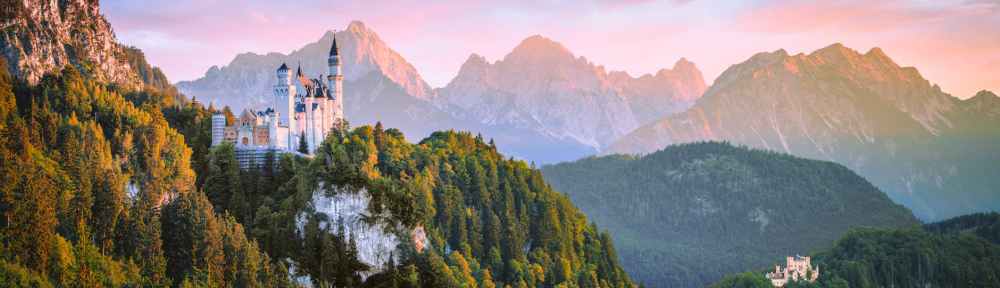
“Jesus departed to the mountain to pray, and he spent the night in prayer to God.” (Luke 6:12)
What is it about Scripture and mountains? Certainly they hold significant symbolic and spiritual importance in many biblical narratives. These mountain settings often serve as locations for divine encounters, revelations, and important moments in the biblical narrative.They are places where individuals are tested, receive divine instructions, or experience significant events that shape the course of their lives and the history of God’s people. Consider this short list:
- Mount Sinai (Horeb) – the Giving of the Law to Moses (Exodus 19-20)
- Mount Moriah – Abraham is tested by God and asked to sacrifice his son Isaac on Mount Moriah, which is traditionally identified with the Temple Mount in Jerusalem. (Genesis 22)
- Mount Carmel – Elijah confronts the prophets of Baal in a dramatic showdown to prove the true God. (1 Kings 18)
- Mount Nebo: Moses is granted a view of the Promised Land from Mount Nebo before he dies. (Deuteronomy 34)
- Mount of Olives – Jesus ascends into heaven from the Mount of Olives after his resurrection. (Acts 1:9-12)
- Mount Tabor: Jesus is transfigured and appears in radiant glory along with Moses and Elijah on Mount Tabor. (Matthew 17:1-9)
In the New Testament, several verses describe Jesus withdrawing to a mountain, often for prayer, solitude, or to teach his disciples.
- “When he saw the crowds, he went up the mountain, and after he had sat down, his disciples came to him.” (Matthew 5:1)
- “After doing so, he went up on the mountain by himself to pray. When it was evening he was there alone.” (Matthew 14:23)
- “And when he had taken leave of them, he went off to the mountain to pray.” (Mark 6:46)
- “In those days he departed to the mountain to pray, and he spent the night in prayer to God.” (Luke 6:12)
- “About eight days after he said this, he took Peter, John, and James and went up the mountain to pray.” (Luke 9:28)
- “Since Jesus knew that they were going to come and carry him off to make him king, he withdrew again to the mountain alone.” (John 6:15)
Mountains often symbolize a meeting point between heaven and earth in the Bible, representing a sacred space where humans encounter the divine. Several factors contribute to the biblical significance of mountains as places where people come to meet God:
In many ancient cultures, including those in biblical times, mountains were seen as closer to the heavens, both physically and symbolically. Climbing a mountain represented ascending toward God and leaving behind the distractions and concerns of the world. Being on a mountain symbolizes drawing near to God’s presence, which is often understood as residing in the heavens above.
Mountains often represent solitude and separation from worldly distractions. Many of the biblical figures who ascend mountains do so to focus solely on their relationship with God or to receive divine instruction, away from the busyness of everyday life.
As noted above, mountains in the Bible are often locations where God reveals himself in a significant way or establishes a covenant with his people. This gives mountains a special role in salvation history.
Mountains, being grand and immovable, symbolize God’s eternal nature, power, and majesty. Meeting God on a mountain can serve as a metaphor for encountering the greatness and unchanging nature of God.
In the New Testament, mountains also become places where God’s redemptive plan is revealed. Jesus’ transfiguration occurs on a mountain, where his divine glory is revealed to Peter, James, and John (Matthew 17:1-9). This event not only recalls the revelation of God to Moses on Mount Sinai but also foreshadows Christ’s ultimate glory in his resurrection and ascension.
Think of Abraham, Noah, Moses, Aaron, Elijah, Ezekiel, and Zechariah. All of these figures had a transformative encounter with the untamed, transcendent God on a mountaintop. Whether it was a vision, a covenant promise, a transfiguration—encounters with God happened in landscapes that were not domesticated. Such landscapes—dangerous and surprising—signified the dangerous and surprising God.
In almost every culture close to mountains, they are associated with the divine, and mountain climbing is a metaphor of the spiritual quest. Comparative religion scholars have collected numerous examples of the sacrality of mountains. Mountains were often perceived as the place where heaven and earth touch, the place of divine dwelling, the cosmic mountain as sacred center, and the place of divine revelation and vision. Perhaps this is the intuition behind the building of temples in unthinkable, impossible-seeming elevations. In the Christian tradition, mountains, like Gothic cathedrals, have a way of forcing an elevated, thus heavenly perspective, allowing for the full embrace of mountains and mountain climbing as a metaphor for spiritual life.
Mystics of all traditions have grasped the importance of mountains and mountain climbing as a metaphor for the spiritual life, and I think mountain climbing can be read as a spiritual exercise, the ascent to God. John Paul II certainly saw his hikes this way. St. John of the Cross, the Carmelite mystic about whom John Paul II wrote his theology dissertation, titled his spiritual masterpiece The Ascent of Mt. Carmel. Dante describes the road to paradiso and the beatific vision as being attained by way of a mountainous climb.
The view from the mountaintop motivates our ascent from darkness to light, despite the numerous obstacles along the way. Beholding the human landscape below, the mountain helps us see that we are all part of something bigger than ourselves, a communion that gathers all nations and people together as one in the Lord.
There is a whole lot of Scripture and meaning behind one simple verse: “Jesus departed to the mountain to pray, and he spent the night in prayer to God.”
Source of some content: ” Mountains Motivate the Ascent of the Spiritual Life” by Robert Mixa
Discover more from friarmusings
Subscribe to get the latest posts sent to your email.
 friarmusings