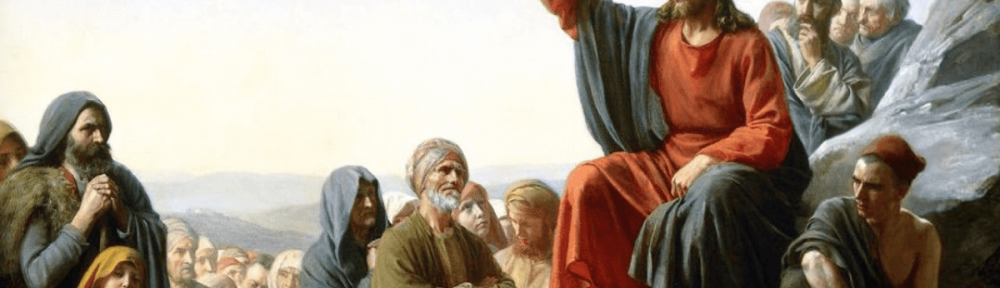
“Blessed are you who are poor, for the Kingdom of God is yours.” (Luke 6:12)
Over the years I have read many and varied interpretations of this single verse that reflect a rich diversity of thought within Christian theology rooted in various theological perspectives and contexts. The focus of thought hinges on the meaning/understanding of “poor” and “Kingdom of God.” Is it a literal promise to the economically poor? Perhaps it is a spiritual call to humility. Some offer its understanding as a prophetic vision for social justice. For others its primary meaning centers or eschatological hope. Perhaps the one overlap is that most understandings emphasize God’s concern for those who are marginalized, humble, or oppressed.
A promise to the economically poor. This view interprets the verse as addressing those who are literally poor in material wealth. Jesus is seen as proclaiming God’s preferential concern for the materially poor. Luke’s Gospel frequently emphasizes Jesus’ concern for the marginalized, including the poor, widows, and outcasts. Luke 6:24 contrasts the blessings for the poor with woes pronounced on the rich, implying a concern for economic justice: “But woe to you who are rich, for you have received your consolation” (Luke 6:24). This interpretation underlines God’s justice and care for the marginalized. It reflects the idea that the Kingdom of God reverses worldly values, uplifting the poor and humbling the rich.
Spiritual Poverty. Sometimes also seen as poor representing those who are spiritually humble and who recognize their dependence on God. This interpretation looks to Matthew’s version of the Beatitudes for support: “Blessed are the poor in spirit.” (Mt 5:3). The “poor in spirit” can refer to those who are aware of their need for God’s grace and salvation. In this view, poverty is not just about material lack but about a humble disposition that opens one up to God’s presence and blessings. This interpretation emphasizes humility and spiritual openness to God’s kingdom. It highlights the idea that those who recognize their spiritual poverty are blessed because they are ready to receive God’s grace.
The Reversal of Social Order. Some theologians, particularly those within the liberation theology movement, interpret this verse as a proclamation of God’s desire to overturn unjust social structures. Jesus is seen as advocating for the poor and calling for a radical transformation of society where the oppressed are liberated and the rich are challenged. This interpretation draws heavily on Luke’s broader emphasis on social justice, such as Mary’s Magnificat (Luke 1:52-53), which speaks of God bringing down the powerful and lifting up the lowly. This view interprets the Kingdom of God as a real, transformative force in the world that brings justice to the oppressed and seeks to dismantle systems of inequality. The poor are not just recipients of future blessings but agents of change in God’s Kingdom.
Eschatological Interpretation. This interpretation speaks to a future promise in which Jesus’ words refer to a future fulfillment in the Kingdom of God, which will be fully realized at the end of time. The “poor” are blessed because, in the coming Kingdom, their poverty will be alleviated, and they will experience God’s reign in its fullness. This interpretation aligns with many of Jesus’ teachings, where the Kingdom of God is understood both as a present reality and a future hope. In this way, the verse is a message of hope for the poor, promising a time when God’s justice will prevail.
Communal Sharing and Solidarity. Here, the verse is seen as a call to Christian communities to share their resources with the poor and practice radical economic solidarity. The Kingdom of God is seen as manifesting in the present through communities that reflect God’s concern for the poor by living in fellowship and mutual support. This interpretation draws on early Christian practices, such as those described in the Acts of the Apostles (Acts 2:44-45), where believers shared all things in common and cared for one another’s needs. As such the Kingdom of God is seen as something to be actively lived out in the present, especially through economic sharing and communal care for the poor. Christian communities are called to embody this kingdom reality in their relationships.
The Poor as a Symbol of God’s Chosen. In this view, “the poor” may not refer exclusively to those who are economically destitute but symbolize the faithful remnant of Israel or those who are humble and receptive to God’s will. This interpretation views the poor as representative of those who trust in God rather than in worldly wealth or power. The Old Testament frequently speaks of the “poor” as those who are oppressed but remain faithful to God (e.g., Psalm 34:6, Isaiah 61:1). This interpretation would align with Jewish understandings of the “anawim,” the poor and humble who await God’s deliverance. This view bridges Jesus’ words to the broader biblical theme of God’s special care for those who remain faithful under oppression. It suggests that God’s kingdom is for those who rely on divine grace, not human wealth or status.
And perhaps it is all of these things.
Image credit: Sermon on the Mount | Carl Heinrich Block (1887) | BYU Museum | PD-US
Discover more from friarmusings
Subscribe to get the latest posts sent to your email.
 friarmusings