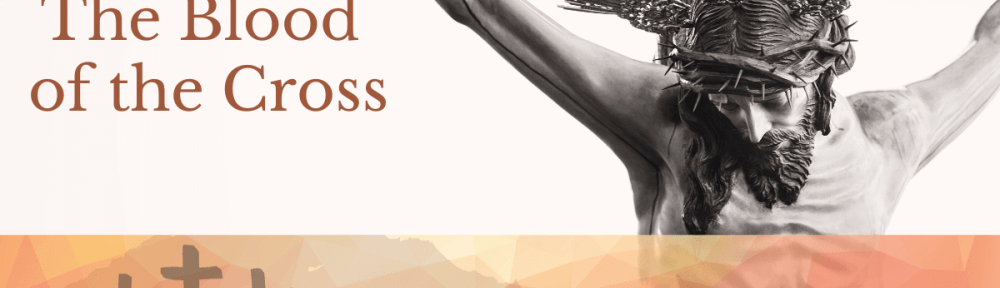
The first reading from Tuesday was taken from St. Paul’s Letter to the Ephesians. One verse stood out for me: “But now in Christ Jesus you who once were far off have become near by the Blood of Christ.” (Eph 2:13) … and in a reflection two days ago I asked “this is “the good news?” In that reflection I pointed out how often the New Testament refers to the Blood of Christ as central to the entire plan of salvation – and provided a sampling of verses from across the entire New Testament. It raised the question of why the “blood of the Cross” was the path by which we are redeemed.
To begin to unravel that question, let’s pause and consider sin and sacrifice in the Old Testament. As for sin, we need only look to Genesis 3 to sin the original sin of Adam and Eve, but then read the following chapters of Genesis and notice the spread of evil: Cain killed Abel. But only a few verses later we encounter a descendant of Cain, one Lamech who boasts: “I have killed a man for wounding me, a young man for bruising me. If Cain is avenged seven times, then Lamech seventy-seven times.” (Gen 4:23-24). It might be easy to dismiss one evil person, but keep reading and see how the evil spreads
“When the LORD saw how great the wickedness of human beings was on earth, and how every desire that their heart conceived was always nothing but evil, the LORD regretted making human beings on the earth, and his heart was grieved.” (Gen 6:5-6) That’s when the Lord chose Noah, flooded the whole world and began anew. But just consider the “heroes” of the Old Testament: Noah, Abraham, Isaac, Jacob, the 12 sons of Jacob, Moses, Joshua, the Judges, David, Solomon – and the list goes on. All of them fell into sin. The best of us. And now we can understand the Lord’s warning to Cain: “sin lies in wait at the door: its urge is for you, yet you can rule over it.” (Gen 4:7) Maybe we can resist, but too often we don’t.
And we regret our decision and seek to reconcile – and such is the foundation of sacrifice, an act to signify genuine repentance, a symbol of our contrition by giving up something of value to invite God’s forgiveness. Such was the understanding of the Old Testament folks – saints and sinners alike. It is in this flow of understanding that animal sacrifice took root. To give up an animal meant to give up something that was important in the livelihood of the family
Again, let us turn to Sacred Scripture to see the arc of the biblical narrative as regards sacrifice.
Cain and Abel (Genesis 4:3-5). This is one of the earliest accounts of sacrifice. Abel offers the firstborn of his flock, and Cain offers crops. God favors Abel’s offering, indicating a preference for animal sacrifice over plant offerings. Though the reason for God’s favor is not explicitly stated, Abel’s offering of the best from his flock is seen as a sign of deeper devotion. This begins the association of animal sacrifice with favorable divine recognition.
Noah’s Offering After the Flood (Genesis 8:20-21) After the flood, Noah builds an altar and offers clean animals as a burnt offering to God. God smells the pleasing aroma and promises never again to curse the ground because of humans. This act of sacrifice seals a covenant between God and humanity, showing that animal offerings can serve as a way to reconcile with God and establish a covenant.
The Sacrifice of Isaac Foreshadowed (Genesis 22:1-18) God tests Abraham by asking him to sacrifice his son Isaac, but before the act, God provides a ram as a substitute. This narrative foreshadows the concept of substitutionary sacrifice—where an animal is sacrificed in place of a human, a practice that becomes central in later sacrificial rituals.
Institution of Sacrifices in the Law of Moses (Leviticus) There are several types of sacrifices prescribed in Leviticus. But to put it all in context, take a moment to watch this overview of Leviticus. Here are the offerings:
- Burnt Offerings (Leviticus 1): These are voluntary offerings where an animal is completely burned, signifying total devotion to God.
- Sin Offerings (Leviticus 4-5): These offerings atone for unintentional sins. The blood of the sacrificed animal is used for purification.
- Guilt Offerings (Leviticus 5:14-19): A form of offering that involves restitution for wrongs committed, especially in matters of holiness or property.
- Peace Offerings (Leviticus 3): These express thanksgiving and reconciliation. Part of the animal is burned, while the rest is shared in a meal.
As animal sacrifice becomes formalized in Israel’s religious practice, the shedding of blood is linked to atonement for sin (Leviticus 17:11).
Although part of Leviticus, the Day of Atonement (Yom Kippur) in Leviticus 16 stands as the central heart of the book. Once a year, the high priest would offer a sacrifice for the sins of the entire nation. A goat is slaughtered, and another goat (the scapegoat) is sent into the wilderness carrying the sins of the people. This ritual emphasizes the role of sacrifice in atoning for collective sin, and the scapegoat becomes a symbol of the removal of sin.
Sacrificial offerings are part and parcel in the life of the Prophets before the Babylonian Exile. God rebukes the people for offering sacrifices without true repentance (Isaiah 1:11-17). Sacrifices are meaningless without obedience to God’s will. (Jeremiah 7:21-23) God desires justice, not ritual sacrifice (Amos 5:21-24). The prophet questions the value of thousands of sacrifices, declaring that God desires mercy, justice, and humility more than ritual acts (Micah 6:6-8). While animal sacrifice continues, the prophets emphasize that the heart and ethical behavior are more important than the act of sacrifice itself.
After the return from Exile the temple and sacrificial system are restored, showing the centrality of sacrifice in re-establishing the covenant with God (Ezra 6:17, Nehemiah 10:32-33). Sacrifices continue as part of temple worship, but the emphasis is shifting toward covenant renewal and the community’s relationship with God.
The New Covenant: Jesus as the Ultimate Sacrifice (Hebrews 10:1-18). While this falls into the New Testament, it reflects the culmination of the sacrificial system. Jesus is presented as the ultimate and final sacrifice, fulfilling the need for animal sacrifices. “It is impossible for the blood of bulls and goats to take away sins.” (Hebrews 10:4) Jesus’ sacrifice is seen as perfect, rendering the old system of animal sacrifice obsolete in Christian theology.
Step back and consider the meta-narrative Scripture presents
- Genesis: early sacrifices show the connection between offerings and favor with God.
- Levitical Law: animal sacrifices become a formalized system of atonement and reconciliation.
- Day of Atonement: atonement for the whole nation, illustrating the communal dimension of sacrifice.
- Prophetic Critique: ethical living and true repentance are prioritized over the mere ritual of sacrifice.
- Jesus’ Sacrifice: the New Testament redefines sacrifice, shifting from animals to the perfect, once-for-all sacrifice of Christ.
In the biblical narrative, animal sacrifice develops from a practice of offering one’s best to God, to a ritualized means of atonement for sin, and ultimately, to a theological symbol fulfilled in the self-sacrifice of Jesus.
But why bloody sacrifices?
Stay tuned….
Discover more from friarmusings
Subscribe to get the latest posts sent to your email.
 friarmusings