“The days are coming…[when] Judah will be made safe and Jerusalem shall dwell secure.” Such was the promise of the prophet Jeremiah to the beleaguered people of the City of David under the ominous cloud of war and death – the power of the Egyptian King Neco to the south and the armies of the Babylonian King Nebuchadnezzar to the north and east. That was then. Where are the prophets now when Jerusalem is a divided city and the missiles of Hezbollah, Hamas and Iran have the City of David within their reach. Are the prophets now replaced by the anti-missile technology of the Iron Dome? The system promises to protect Israel, but it cannot promise to save Israel, to make Jerusalem safe and secure.
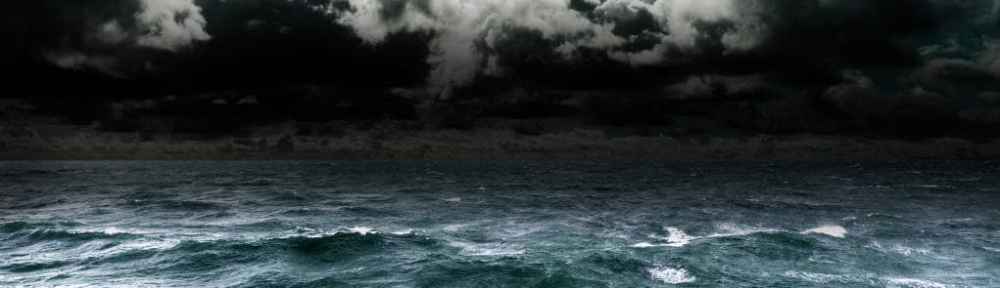
“There will be signs in the sun, the moon, and the stars, and on earth nations will be in dismay, perplexed by the roaring of the sea and the waves. People will die of fright in anticipation of what is coming upon the world.”
Maybe you think this is all the fantastical ruminations of a way-too imaginative mind. Maybe – just maybe. But Jesus does promise his disciples that there will come a time of great tribulation and difficulty and trial and testing and promises that during that time the son of Man will come in the clouds with great power and glory and his appearance will inaugurate the redemption of his followers.
It has been 2,000 years – and here’s the thing – we have seen the tribulation – perhaps that promise is fulfilled. But as for the coming on the clouds with power and glory…have you seen it, or anything remotely like it? The news of the last 14 months from Gaza and Israel sure seem like the trials and tribulation of the gospel. The roaring of sea and wave; feels like the evening news covering Hurricanes Helen and Milton. We have seen the sign, we are dismayed and perplexed, but do we feel safe and secure?
But isn’t it always that way? Years ago at a parish Bible Study we took about 20 minutes and listed all the epic and terrifying events of our lifetime. And the collective lifetime reached back into the late 1920s for some of the folks there. By the time one of our regulars walked in about 15 minutes after we had begun, the board was filled with wars, terrorist attacks, assassinations, assaults, death, doom, destruction, fire, flood, famine, pestilence, and plague. She took one look at the board, deeply sighed and said “this is depressing.” She might as well have asked, what could possibly save us? That deep sigh would find a friend in the Christmas poem, For the Time Being, in which W.H. Auden wrote: “Nothing can save us that is possible: We who must die demand a miracle.”
And there it is: when we are on the brink of despair, doubt, and dismay – from illness or failure or disappointment or heartbreak or calamity or oppression or depression or burnout or whatever – when we are keenly aware that we are insufficient and that we stand in desperate need of the miraculous, of salvation – it is then we realize we the merely possible or probable – the finite and mortal cannot makes promises that save.
Novels such as The Lord of the Rings and the more modern series, Hunger Games possess the basic premise: a world on the brink and the solution hinges on the impossible. Send a hobbit to defeat the Dark Lord of Sauron? A sixteen year old girl to stand against the central government of Panem. In their world of fiction, the authors are insightful: the impossible only comes to fruition in the promise of love. The love that forms among the unlikely band of brothers: a hobbit, a dwarf, an elf, and a human –that allows them to save Middle Earth. The young girl of Hunger Games, Katniss Everdeen standing against all odds, who lately but ultimately finds redemption and hope in the love of young Petra Mellark and is saved. In the end love accomplishes the impossible
And the gospel of Jesus is the foundation of and shares that notion: love accomplishes the impossible. A child wrapped in swaddling with refugee parents while a murderous king seeks to take their lives – a child to eventually stand before a people who want him crucified and a foreign government that chooses to execute him rather than make waves. What the gospel offers is the story of divine love – an impossible possibility, a reality that transcends the everyday real, a Truth deeper than all else we have been told is true, a story that stretches beyond and encompasses all our stories so as to give them meaning, integrity, and purpose. And it is in love that we are born into the world – and in love we are saved.
What could possibly save us? As Auden wrote: “Nothing can save us that is possible: We who must die demand a miracle.”
Our demand for a miracle is met in God’s promise – a promise too good to be true. A revelation that asserts not only that there is a God who has created and still sustains the vast cosmos, but that this God not only knows that you exist, but cares about you, deeply and passionately. Care about your hopes and dreams, successes and failures. Cares enough to send God’s only Son into the world to die so that we might have life.
It is a promise big enough to give us hope
Big enough to make us safe and secure
A promise big enough to save
Discover more from friarmusings
Subscribe to get the latest posts sent to your email.
 friarmusings
Amen!