This coming Sunday is the 7th Sunday of Ordinary Time in Lectionary Cycle C. In the 3rd and 4th weeks in the lectionary cycle, Jesus has been in Nazareth engaging the citizens of his own hometown (4:14-30). But as Jesus noted, no prophet is accepted in his own native place (v.24). And so leaving Nazareth, Jesus moved on to Capernaum. Again, he amazed people while teaching in the synagogue on the Sabbath. During that same visit, there was a man with the spirit of an unclean demon (v.33). Jesus casts the demon from the man, again astounding the people: For with authority and power he commands the unclean spirits, and they come out.”(v.36) Also while in Capernaum, Jesus cured Simon’s mother-in-law (vv.38-39) and all manner of people sick with various diseases (v.40) and chased out other demons (v.41).
42 At daybreak, Jesus left and went to a deserted place. The crowds went looking for him, and when they came to him, they tried to prevent him from leaving them. 43 But he said to them, “To the other towns also I must proclaim the good news of the kingdom of God, because for this purpose I have been sent.” 44 And he was preaching in the synagogues of Judea.
This is the first place in Luke where Jesus mentions proclaiming the Kingdom of God as a compelling necessity – something that will become a hallmark of later sections of Luke’s gospel.
In the 5th Sunday readings (Lk 5:1-11) we have the account of the calling of the first apostles from their labors as fishermen: “Do not be afraid; from now on you will be catching men.” (v.10). Luke 5 quickly recounts miracles that are seen as Messianic signs (curing a leper, curing the man on the stretcher/forgiving sins, answering why He ate with sinners), and then moves into Luke 6 where he narrates encounters with the Pharisees and scribes who question Jesus on the Mosaic Law. And then, Jesus “reconstitutes” a new Israel as he calls 12 apostles.
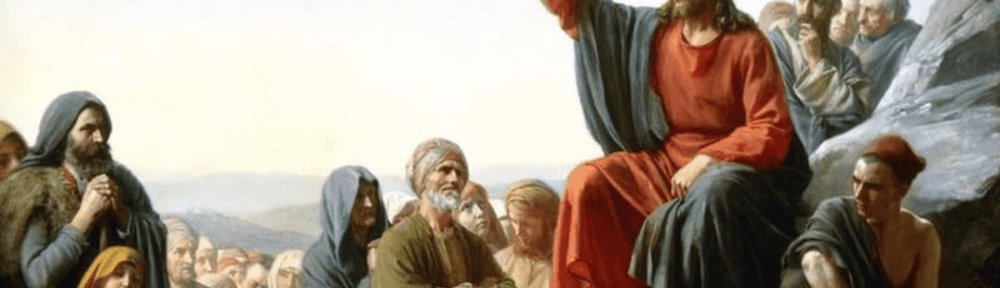
In the 6th Sunday gospel (Luke 6:17, 20-26) we have the Lucan version of the Beatitudes: The Sermon on the Plain (Matthew’s account is part of the discourse known as the Sermon on the Mount). In Luke the apostles are present as well as disciples and seekers. In Luke, the Sermon takes on the character of an official instruction for the whole church assembled under its leaders.
In the Lukan Beatitudes, there is a rhythm like a call and response: a condition not of the kingdom followed by a promise that the Kingdom will heal the problem. All of it is cast in the repetition of blessings and woes. “Blessed are you who are poor, for the kingdom of God is yours…But woe to you who are rich, for you have received your consolation.”
Luke’s “Sermon on the Plain” sets forth Jesus’ apostolic instruction/ethic for daily life in detail. The sermon begins with a recognition of the disciples’ blessing as a result of God’s grace. The rest of the sermon gives the ethical response to the grace of being such a beneficiary. Disciples are to live and relate to others in a way that stands out from how people relate to one another in the world. They are to love and pray for their enemies. Righteousness requires that they respond wisely to Jesus’ words by building their lives around his teaching. In sum, disciples are to live and look different from the rest of the world, even as they reach out compassionately to that world.
The gospel for the 7th Sunday marks a second part of the “Sermon on the Plain.”
Image credit: Sermon on the Mount | Carl Block, 1887 | Museum of Natural History at Frederlksborg Castle – Hillerod, Denmark | PD-US
Discover more from friarmusings
Subscribe to get the latest posts sent to your email.
 friarmusings