The law of unintended consequences, often cited but rarely defined, is that actions of people, and especially of governments, always have effects that are unanticipated or “unintended.” We live in a world that is a complex system with interconnections we do not know, can’t or have not yet imagined, or as the American naturalist John Muir offered: “When we try to pick out anything by itself, we find it hitched to everything else in the universe.”
A well-known example is when the British government in India offered financial rewards for people who killed and turned in cobras. People, reacting to incentives, began breeding the snakes. Once the reward program was scrapped, the population of cobras in India rose as people released the ones they had raised. This event gave birth to the term “the cobra effect” which describes an incentive that has an unintended and undesirable result that is contrary to the intentions of its designers. In other words, an unintended consequence.
When the Prohibition era in the United States began on January 19, 1920, banning the production, sale, transport, etc of alcoholic beverages, legislators should have known it would not go well. Previous attempts to outlaw the use of alcohol in American history had fared poorly. When a Massachusetts town banned the sale of alcohol in 1844, an enterprising tavern owner took to charging patrons for the price of seeing a striped pig. The town leaders did not expect that particular consequence.
What were the expectations of the legislators, federal and state, when passing the Eighteenth Amendment and the Volstead Act (the federal law implementing the constitutional amendment) which prohibited the manufacture, sale and transportation of intoxicating beverages? When the law went into effect, with more household income available the legislators expected increases in household goods and services, non-alcoholic beverage sales, clothing, and a whole host of consumer products. Real estate developers and landlords expected rents to rise as bars and saloons closed and neighborhoods improved. A whole range of business sectors expected to see economic growth. None of it came to pass. The first wave of indicators that something was amiss was a decline in amusement and entertainment industries across the board. Soon after restaurants failed as they could no longer make a profit without legal liquor sales. Few of the economic benefits that had been predicted came to pass.
The unintended economic consequences of Prohibition didn’t stop there. One of the most profound effects of Prohibition was on government tax revenues. Before Prohibition, many states relied heavily on excise taxes in liquor sales to fund their budgets. With Prohibition in effect, that revenue was immediately lost. At the national level, Prohibition cost the federal government a total of $11 billion in lost tax revenue, while costing over $300 million to enforce. And these are in 1920 dollars.
Did I mention the Eighteenth Amendment and the Volstead Act did not outlaw the possession or consumption of alcohol in the United States? Unintended consequences appear because we sometimes willfully ignore the inventiveness and ingenuity of people. One of the legal exceptions to the Prohibition law was that pharmacists were allowed to dispense whiskey by prescription for any number of ailments, ranging from anxiety to influenza. Bootleggers quickly discovered that running a pharmacy was a perfect front for their trade. As a result, the number of registered pharmacists in New York State tripled during the Prohibition era.
The law was unclear when it came to Americans making wine at home. With a wink and a nod, the American grape industry began selling kits of juice concentrate with warnings not to leave them sitting too long or else they could ferment and turn into wine. Home stills were technically illegal, but Americans found they could purchase them at many hardware stores, while instructions for distilling could be found in public libraries in pamphlets issued by the U.S. Department of Agriculture. The law that was meant to stop Americans from drinking was instead turning many of them into experts on how to make it.
Nine years after the introduction of Prohibition the Mayor of Berlin, Gustav Boess, visited New York City. The visiting mayor asked the host mayor James J. Walker, when was it that Prohibition was to go into effect. The question tells you how well it was working.
You have probably heard that the United States is raising tariffs on friends and foes alike. The promise is the advent of billions of dollars of revenue for the federal government. Maybe. The thing about unintended consequences is that they are not necessarily unanticipated. The 1936 work by the American sociologist Robert K. Merton (“The Unanticipated Consequences of Purposive Social Action) identified several sources of unanticipated consequences. The first two, and the most pervasive, were ignorance and error. Merton labeled the third source the “imperious immediacy of interest.” By that he was referring to instances in which an individual wants the intended consequence of an action so much that he purposefully chooses to ignore any unintended effects. Prohibition probably falls into that category. I think tariffs will, in the end fall into some degree of unintended consequences. Will it be epoch changing or just a blip on the road to progress.
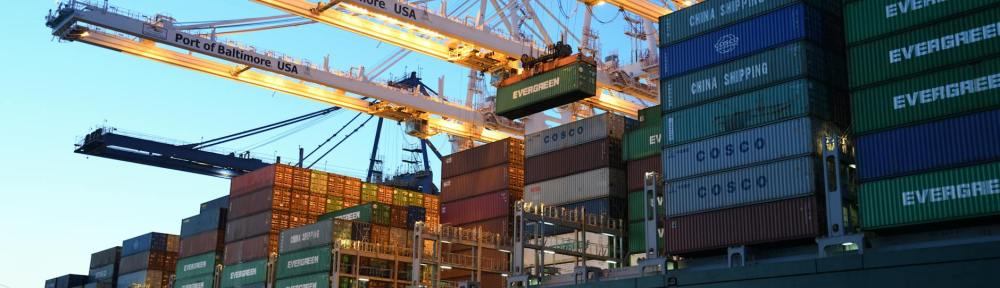
The initial round of tariffs announcements led to a market reaction – the stock market, sure – but, for example, autumn clothing and Christmas toy supply chains. Because anything loaded into cargo containers by April 9th was exempt from the new tariffs, there was a rush to order. Take a look at Marine Tracker. There are lots of ships at sea. If you had a subscription, you could sort through to find cargo ships heading from East Asia to US ports, especially Port of Los Angeles/Long Beach. There would still be a lot of ships heading east, all loaded with shipping containers that are being off-loaded…. with little to nothing to fill them. And so the remain racked and stacked in Los Angeles. And the stack keeps growing.
What are the consequences of the end of the nascent trade war when someone has to bear the cost of getting empty shipping containers back to countries of origin who are producing goods wanted in the United States? I have no idea.
Global trade is far, far more complex than cargo containers and where they are, but, “When we try to pick out anything by itself, we find it hitched to everything else in the universe.” And somewhere the consequences will surely be unintended.
Image credit: Pexels
Discover more from friarmusings
Subscribe to get the latest posts sent to your email.
 friarmusings
I appreciate your posting this, Father.
-Scott