
Sgt. John Basilone

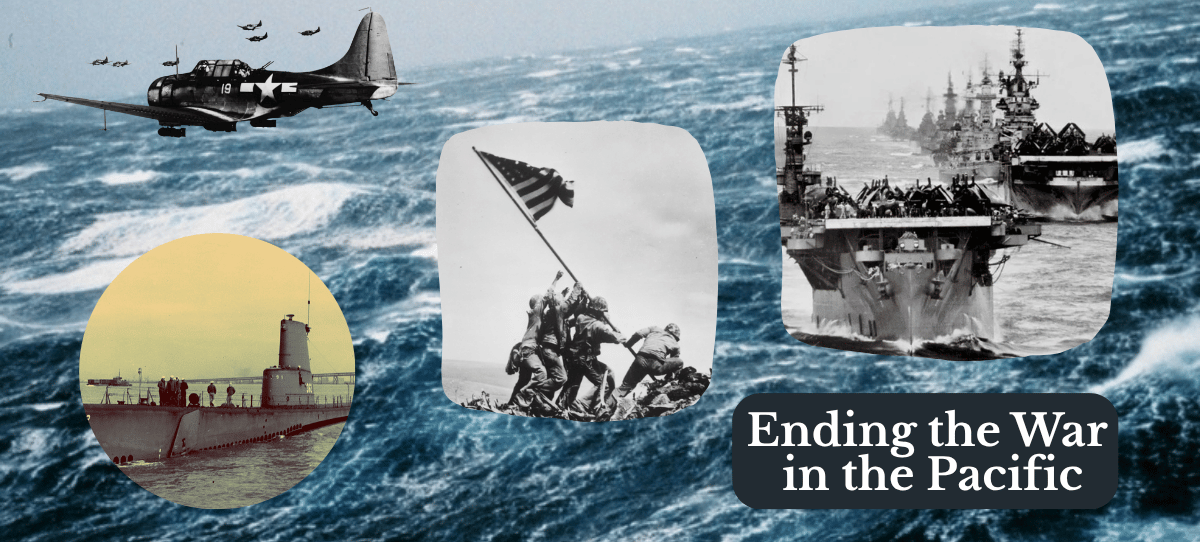
By early 1942, Japan had established a vast defensive perimeter across the western Pacific, including the Philippines, Dutch East Indies, and parts of New Guinea. After seizing Tulagi in the southern Solomon Islands in May 1942 the Japanese began construction of an airfield on Guadalcanal an island near the southwest end of the Solomon chain. Completion and operation of this airfield would threaten Allied supply and communication lines between the U.S., Australia, and New Zealand – effectively isolating the Allies from each other and placing Australia at risk of invasion.

The U.S. victory at Midway in June 1942 represented the first time Japanese offensive power had been thwarted and opened the possibility for limited Allied offensives. Admiral Ernest King, Commander in Chief of the US Fleet, proposed an offensive in the Solomon Islands and New Guinea. The Joint Chiefs of Staff approved the plan in July 1942. The first phase was the seizure of Guadalcanal, Tulagi, and surrounding islands to deny Japan their strategic airfield. The Guadalcanal operation was codenamed Operation Watchtower. Military historians have suggested that it should have been called Operation Shoestring. Initially planned as a limited operation by the U.S. Marines to preempt the Japanese airfield on Guadalcanal, it evolved into a protracted campaign that lasted from August 1942 to February 1943.

Continue reading

The signs of the times

This last post moves beyond the Sunday gospel (Luke 12:48-53) to include the following verses:

54 He also said to the crowds, “When you see (a) cloud rising in the west you say immediately that it is going to rain—and so it does; 55 and when you notice that the wind is blowing from the south you say that it is going to be hot—and so it is. 56 You hypocrites! You know how to interpret the appearance of the earth and the sky; why do you not know how to interpret the present time? 57 “Why do you not judge for yourselves what is right? 58 If you are to go with your opponent before a magistrate, make an effort to settle the matter on the way; otherwise your opponent will turn you over to the judge, and the judge hand you over to the constable, and the constable throw you into prison. 59 I say to you, you will not be released until you have paid the last penny.” (Luke 12:54-59)

The illustration (vv.54-55) seems to point to the weather patterns in the Near East. The Mediterranean Sea was to the west and winds from that direction brought rain. The desert was to the south and winds from that direction brought heat. It is not clear whether these words were spoken on the same occasion as the preceding verses. There is no direct connection. Matthew gives a similar saying in response to a request for a sign. Still, it is interesting to note that here, while Jesus is encouraging, exhorting people to “see,” he again uses the accusatory “hypocrite.”  Jesus has only used this expression once before in Luke’s gospel: “How can you say to your brother, ‘Brother, let me remove that splinter in your eye,’ when you do not even notice the wooden beam in your own eye? You hypocrite! Remove the wooden beam from your eye first; then you will see clearly to remove the splinter in your brother’s eye” (Luke 6:42).

Continue reading