
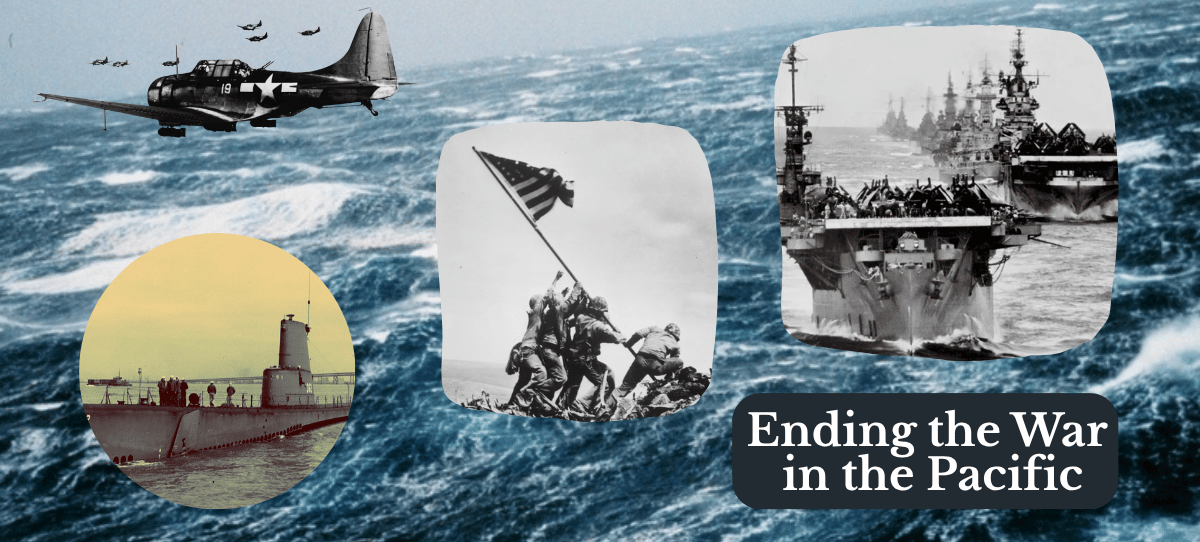
War in the Pacific to this Point

Since the beginning of this series on August 6th we have looked at a variety of topics, issues, and experiences that are being poured into the cauldron of war. The series was never intended to be a review of all the battles, campaign tactics, or evolving strategies – there are far better resources available in print, online videos and more – presented by far more knowledgeable people, scholars and historians. 

From the beginning, this series was never intended to describe the horror of combat, the mounting death toll, and  conclude with “the atomic bomb was the lesser of all the evils about to be faced.” But the series is intended to explore harsh realities about war that frame the landscape, not just of tactical options, but of the moral landscape that will face the war fighters – the ones who will bring home the memories of things that can not be unseen. This is even more important when one understands the long-term strategy of the two sides. 

On one side was Japan, a nation that had never been invaded and when the Mongols under Kublai Khan attempted just such in the late 13th century, a typhoon (a divine wind, kamikaze) destroyed the invasion fleet. On the other side were the Allies who 20 years after the armistice of World War I were facing another war from what they thought was a defeated enemy. This time the enemy would know they were defeated; surrender would be unconditional.

Continue reading

From the ends of the earth

This Sunday is the 21st Sunday of Year C with the gospel reading from Luke 13:22-30. There is another surprise: people will come from east and west and north and south, and will take their places at the feast in the kingdom of God. This means that all the nations will be blessed at God’s table. The blessed of God coming from everywhere echoes promises already proclaimed in Isaiah (cf. Isa. 45:6; 49:12). The disciples did not immediately grasp this truth and its implications. The special vision of Acts 10 was needed to reveal how it would work. Even though Israel has a special place in God’s plan, others are not excluded from blessing. We all have equal access to God’s blessing through Jesus (Eph 2:11-22). Even the promise to Abraham stressed how the world would eventually be blessed through the patriarch’s seed (Gen 12:1-3). 

So Jesus closes his words of warning with a note of eschatological reversal. Expectations are overturned as there are those who are last who will be first, and first who will be last. Many will get to the table, including some surprises. All are on the same footing. In today’s context the warning of this passage might be that those who are first (who have exposure to Christ through attendance at the church) may turn out to be last (excluded from blessing) if they do not personally receive what Jesus offers through the community. Simply put, Jesus is the key to the door of salvation

Luke’s Gentile audience would listen eagerly to these words, but they would also be challenged not to take for granted themselves their eating and drinking with Jesus at the Eucharist. The pronouncement closing this speech guards against both presumption and despair; as long as the journey is underway, some may fall away and others may still join.


Image credit: Pexels | Farouk Tokluoglu | CC-BY