
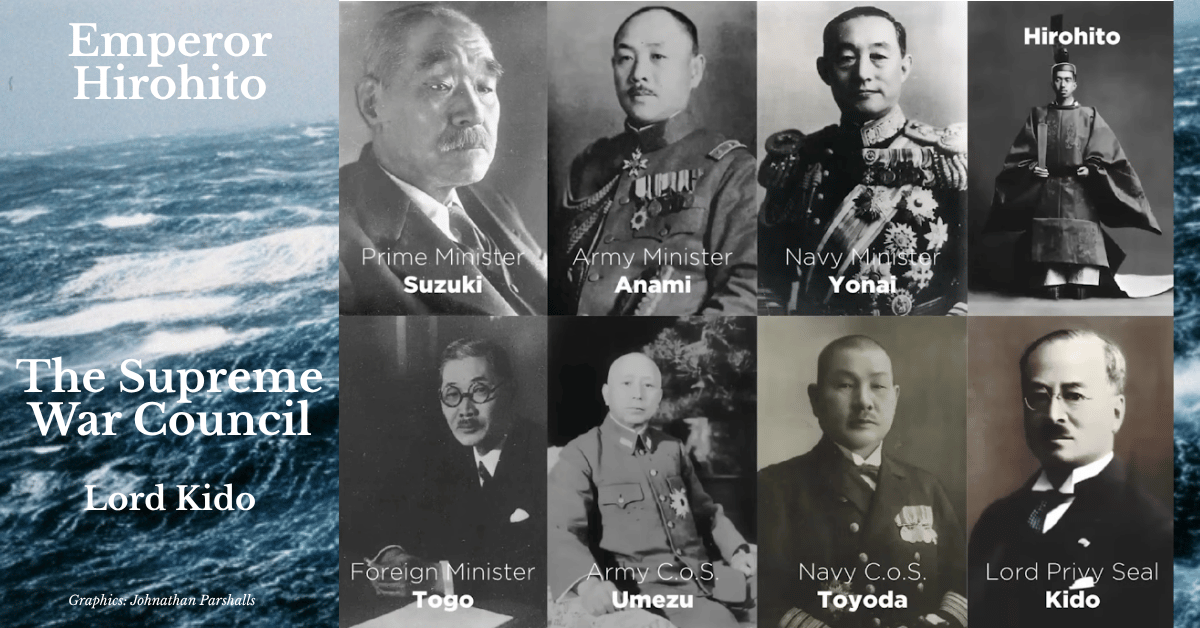
In the previous post we reviewed the legacy of battle as 1944 came to a close and noted the lethal legacy of Japanese military choices and led to one loss after another. The once powerful Combined Fleet of the Imperial Navy was but a memory. They had once roamed the western Pacific at will; now they were limited to coastal water and home island ports. The Imperial Army fared no better losing garrison after garrison, sacrificing their most experienced battlefield leaders and soldiers to death. There was no surrender. Japan wanted a “decisive victory” conclusion to conflict. What they started was a war of attrition they had no hope of winning. All the while war draws closer to the home islands. At this point one has to ask about civil and military leadership at the start of 1945.
Here is an overview of leadership dynamics and structures in January 1945 (as it had been through out the war):
- Real decision-making power rested with the military, particularly the Army, as it had since the 1930s
- The civilian government had limited independence, often subordinate to military interests.
- The Emperor held ultimate constitutional authority, but his actual role in daily governance and war policy remained ambiguous. Many war decisions were “approved” by his silence. That strikes us as strange, but that was the operative culture of governance.
 friarmusings