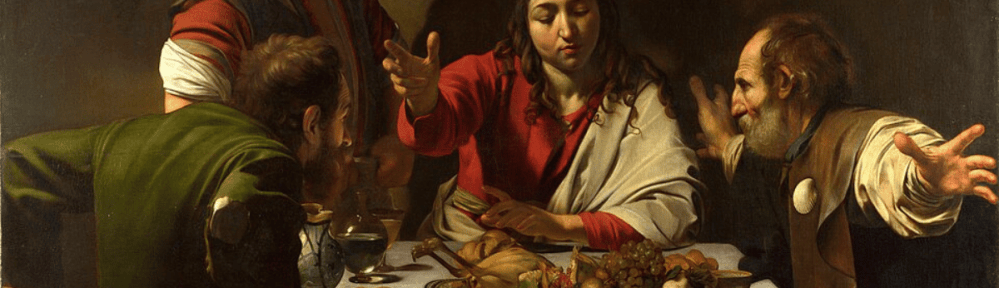
The gospel for the upcoming Sunday is taken from the Gospel of Luke describing an encounter with the Pharisees at a banquet. In yesterday’s post we discussed “humility”. Today we consider “honor.” The meal setting is common in many of the gospels as a metaphor for the celebration of the Kingdom’s come. But it is also often a setting of controversy. Consider that 14:1-6 centered on the debate at table regarding the lawfulness of curing on the Sabbath – reminiscent of earlier discussions about appropriate behavior on the Sabbath (e.g., 6:2, 9; 13:14–16). When Jesus asks if it would be lawful to cure the man with dropsy, those at the table are silent. When Jesus next asks if their son or oxen fell into a cistern would they pull them out, again, they are silent. The easiest take on their reaction is that Jesus has them timid and stumped. But there was a long standing tradition for debate about the understanding of the Law. I would suggest that given Jesus’ challenging questions, one would need time to think about the reasoning – and in the face of such challenging wisdom, perhaps there is a struggle for the host to figure out exactly where this wandering preacher from Nazareth should be sitting.
That dynamic then opens the way for Jesus’ larger questions about honor at meals. Notice that vv.7-11, addressed to guests, is parallel to vv. 12-14, addressed to hosts, both showing a common pattern in which humility plays out.
As Culpepper points out:
- to the guests
- “When you are invited…do not recline…place of honor…the host…may approach you…”
- “Rather, when you are invited…take the lowest place”
- “Then you will enjoy the esteem….”
- the eschatological implications (v.11)
- to the hosts
- “When you hold a lunch or a dinner….do not invite… in case…”
- “Rather, when you hold a banquet…invite”
- “blessed indeed will you be…”
- the eschatological implications (v.14b)
In 14:1–24 Luke depicts Jesus’ enjoying the hospitality of a leader of the Pharisees following a synagogue service on the Sabbath (14:1). Given, first, the importance of social status as determined by the perception of one’s contemporaries, and, second, the importance of the reciprocity of gift and obligation in ancient society, Jesus’ assertions on right behavior undermine the values and expectations that his meal companions would have taken for granted. The consequences of this right behavior leads to the construction of a new vision of life and community.
Already in this banquet there has been controversy about healing on the Sabbath (14:2-6). Within this opposition and tension, Jesus continued to instruct about discipleship – especially among the culture where pride, shame and honor, and social position are such strong factors in shaping attitudes and behaviors – and so often leading to pride. Jesus regards this dynamic as destructive to spiritual health and so Jesus emphasized that true disciples are marked by humility. There are times when humility is a hard lesson but as parable (v. 7) shows he regards this attitude as fundamental to discipleship. At the same time the parable forms a rebuke to others at the table – and perhaps to his own disciples who had not yet fully learned from Jesus’ earlier rebuke in Luke 9:46-48.
Image credit: Jesus at Supper | Caravaggio (1606) | National Gallery London | PD-US
Discover more from friarmusings
Subscribe to get the latest posts sent to your email.
 friarmusings