
As the War in the Pacific moves into 1945 it is clear that the Asia Pacific War will not end in victory for Japan. How will it end? For the Allies, the 1943 Casablanca Conference has already stated that the war in the Pacific will end in unconditional surrender as it soon will for Germany. But the nature of that war is different. Germany is virtually landlocked and is being pressed on its eastern, western and southern fronts. Japan is an island fortress. Japan sees the path leading to a decisive battle where either Japan wins or extracts such allied losses that the war ends at the negotiating table. It is like a high stakes hand of poker. The Allies have a strong hand but are they willing to go “all in” and invade the home islands as necessary. Japan is already committed to “all in” – or so it seems. But who is the hand holding the cards for Japan? Is it the Emperor, the Supreme War Council, the Military General Staff, or the Imperial Japanese Army across the far-flung empire?
We are at a point in this series when it is time for us to pause and return to the beginning to make sure we know the “hand holding the cards.” A good question is “how did it start.” And the answer is far more complicated than “when they attacked Pearl Harbor.”
At the center of the puzzle is Showa Emperor Hirohito. He was the 124th descendant of the Sun Goddess, son of Emperor Taisho, the son raised from birth to take his father’s place on the throne. He came of age as World War I began and ended. He served as Regent for five years (1921-1926) as his father’s health grew steadily worse. He watched as the genrō (elder statesmen) who had formed the Meiji Restoration passed away taking with them the wisdom and experience of navigating governance from the throne and what that meant in 20th century Japan. He was the man history fated to be Emperor of Japan during the years of aggressive military and nationalist expansion out from the home islands throughout Asia and the Pacific. He was Emperor, but was he in charge?
Emperor Hirohito – the early years
To understand the mindset of Emperor Hirohito it’s necessary to trace the path of experience that lead Prince Hirohito, son of the Emperor Taisho, through the years leading to life as Regent to an ailing emperor and then finally on Dec 25, 1926, ascending the Imperial Throne as the Showa Emperor.
Hirohito had traveled through Europe in the time after the Treaty of Versailles and establishment of the League of Nations, and before his ascension to the imperial throne. He recognized in the English Monarchy, Cabinet and Parliament a model of governance that shared some similarities to Japan’s model: Emperor, Cabinet and Diet. What most intrigued him was the role of the Monarchy.
Great Britain v. Japan. Great Britain was a parliamentary democracy under the Westminster system. The monarchy was constitutional, meaning the King (George V during the 1920s) reigned but did not rule. The King’s powers were limited by long-established conventions; real authority rested with Parliament, especially the elected House of Commons, and the Prime Minister.
Japan in the 1920s was governed under the Meiji Constitution (1889) and was formally a constitutional monarchy, but not quite. The Emperor was defined as sovereign: “sacred and inviolable” (Article 3), with ultimate authority over the state, including command of the armed forces. The constitution established a Diet (parliament), but sovereignty was not derived from the people, only delegated by the Emperor.
Where Great Britain had centuries of experience that set practical, established conventions, Japan was still a “work in progress” with only 30 years of experience. The system was conceived by genrō, elder statesmen with a view of leading Japan to a premier place in the community of world powers – as they navigated the kokutai of the nation from the Shogunate period to modern times.
Unlike the English monarch, the Emperor appointed the Prime Minister and cabinet ministers, who were responsible to him, not to the Diet. Cabinets often arose from the genrō, military, or court circles, not necessarily parliamentary majorities. Because of the Emperor’s role as Commander of all armed forces, the military had a direct line to the Emperor and significant independence, complicating civilian control. Military ministers were not accountable to the Diet but directly to the Emperor. This gave the military enormous autonomy, and by the 1920s this became a source of tension as democratic movements tried to expand civilian oversight – and the military resisted and even pushed back.
The Diet (House of Peers and House of Representatives) existed, but its legislative power was limited. The Emperor held supreme legislative authority while the Diet’s role was more consultative. The Emperor could dissolve the lower house at will.
Hirohito and the Monarchy. Historians speculate on Hirohito’s conclusions from his time abroad, but he seems to have realized a purely Constitutional Monarchy in which King George accepted the decisions of Cabinet and Parliament was not consistent with the Meiji Constitution. Yet, neither was the Emperor to be an absolute monarch as that was not in the spirit of Meiji.
His root problem was that his father Emperor Taisho had positioned the throne, for all practical purposes, as a Constitutional Monarch with no real powers – or at least Taisho did not exercise any power. Internal to Japan there were supporters of this dynamic as they desired for full democratic reforms. There were detractors that saw such reforming movements as an “infection” of western ideas. When Hirohito ascended the throne, he entered into an evolving system where the Cabinet and Diet establish policy and precedence internally and externally. Was this the intent of Meiji reforms? Was it an aberration? What was to be his role? Decision maker, Imperial “whisperer” whose position was only hinted at by the question asked, or, like his father, a symbol and endorser of already made decisions.
Civil Unrest. The time of Hirohito’s Regency was unsettled. In Nov 1922 Prime Minister Hara was assassinated by a person from the altra-nationalist movement. Three months later one of the key genrō, Yamagata, died. In this short span of time, Hirohito lost two key advisors who were meant to guide the Regent in the statescraft of internal governance. Soon after in Sept 1923 the Kanto earthquake devastated Tokyo. It was estimated that 100,000 died in the earthquake-induced firestorm and that 1 million were left homeless. It became the spark of civil unrest. In December 1923, an anarchist attempted to assassinate Hirohito.
Hirohito ascended the Imperial Throne on December 25, 1926. He ascended into a milieu of politics, economics, imperial legacy, religion, and a national identity, Kokutai, that defined the Emperor and the Empire. – but one that was open to interpretation.
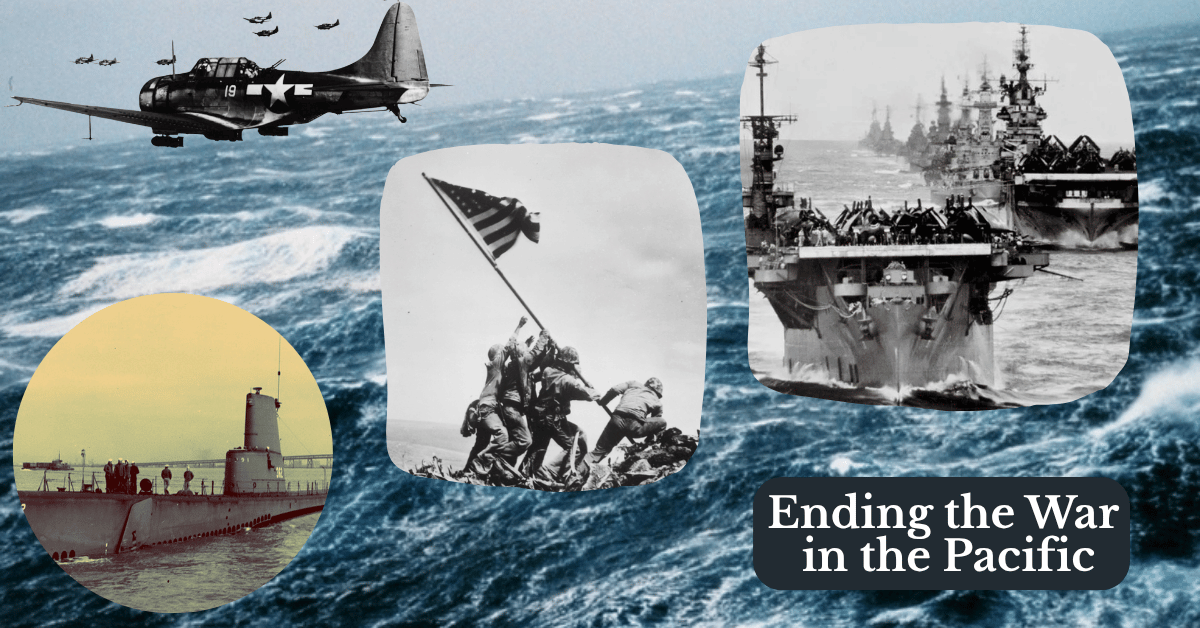
Image credit: various photographs from Naval Aviation Museum, National World War II Museum, and US Navy Archives.
Discover more from friarmusings
Subscribe to get the latest posts sent to your email.
 friarmusings