
In the previous post we considered the Regent Hirohito and the time in which he lived before ascending the throne. It was a time where the founders and elder statesmen of the Meiji Reform were dying or being assassinated. There were centers of power/influence all seeking more power and influence: the military, civil government, the Diet (Parliament), the Imperial Court, and leaders in civil society. In a way this story is as old as time, but in Japan the democratic institutions were new and offered levers of power and influence that were not necessarily part of the fabric of Japanese history and life.
To understand how we arrive at the ultra-nationalist and militaristic Japan of the 1930s, we need to look at the Meiji Reforms and the role the Western powers played in the transformation of Japan.
The Tokugawa shogunate had established itself in the early 17th century. Under its rule, the shōgun governed Japan. About 180 lords, known as daimyōs, ruled autonomous realms under the shōgun. There was an Emperor, but the shōgun established a code of behavior for the nobility in 1605. Under the code, the emperor was required to devote his time to scholarship and the arts and was confined to the palace in Kyoto. The Sakoku Edict of 1635 ended almost all Western trade with Japan, and barred Christian missionaries from the islands. Trade was limited to Asia partners, especially China.
In July 1853 Commodore Matthew Perry and his American Naval squadron sailed into Tokyo harbor. Perry sought to open Japan up to international trade albeit at the end of his naval cannons. For the first time in at least 250 years, the shogunate took the highly unusual step of consulting with the Imperial Court because of the crisis brought on by Perry’s arrival. The arrival of Western colonial powers as trading partners brought on an era of change. The Shōgun ruled through regional daimyōs who were played one against the other by western powers. As unrest spread a large number of young samurai, known as shishi or “men of high purpose”, began to meet and speak against the shogunate. The shishi revered Emperor Kōmei and long story, told short, these were the animating force that brought about the Meiji Reforms and ultimately the Meiji Constitution.
From 1868 until 1889 the Emperor was “in charge.” Continuing interface with western ideas eventually led Japan to adopt a government similar to Great Britain’s Constitutional Monarchy, but not quite. The role of the Emperor in the 20th century is an ongoing debate among historians with the Emperor as absolute monarch, symbolic leader only, and other positions along the spectrum.
The Meiji period (1868-1912) had the seeds of later militarism in policies and institutions. Here are some of the main points historians emphasize about the rise of Japanese militarism.
The Meiji government introduced conscription in 1873, creating a national army loyal directly to the Emperor rather than to feudal domains. This institutionalized the idea that the Emperor was the commander-in-chief with supreme military authority. Military officers gained a special status as “servants of the Emperor.” The emphasis of this movement was focused on the modernization of its armed forces, forming the Army on Prussian models and the Navy on British models.
At the same time the Meiji Constitution of 1889 gave the military independence from civilian control: the army and navy were responsible only to the Emperor. The cabinet required that the Army and Navy ministers be active-duty officers, giving the military a veto over governments. This structural design, established under Meiji, later allowed military leaders to dominate politics in the 1930s.
A year later the Imperial Rescript on Education (1890) promoted loyalty, filial piety, and self-sacrifice for the Emperor and the state. Over time, this moral and educational framework was mobilized to support militarism and expansionism. The framework was instilled in all levels of education, shaping the next generation of Japanese.
The military rose to great prestige in civil society’s eyes because of Japan’s victories in the First Sino-Japanese War (1894–95) and the Russo-Japanese War (1904–05). These reinforced the idea that military strength was central to Japan’s survival and success – especially against the intrusion of western influences.
It is generally agreed that the constitutional arrangements and reverence for the Emperor created an environment where, later, militarists could claim to act in the Emperor’s name—even when emperors like Taishō or Shōwa (Hirohito) had little practical control.
In the next post, we explore how the leadership within Japan developed an ideology that supported and fueled its regional aspirations. This is part of a series of posts that will try to explain the inner mind and beliefs of a nation that would launch Asia and Pacific into war on December 7, 1941.
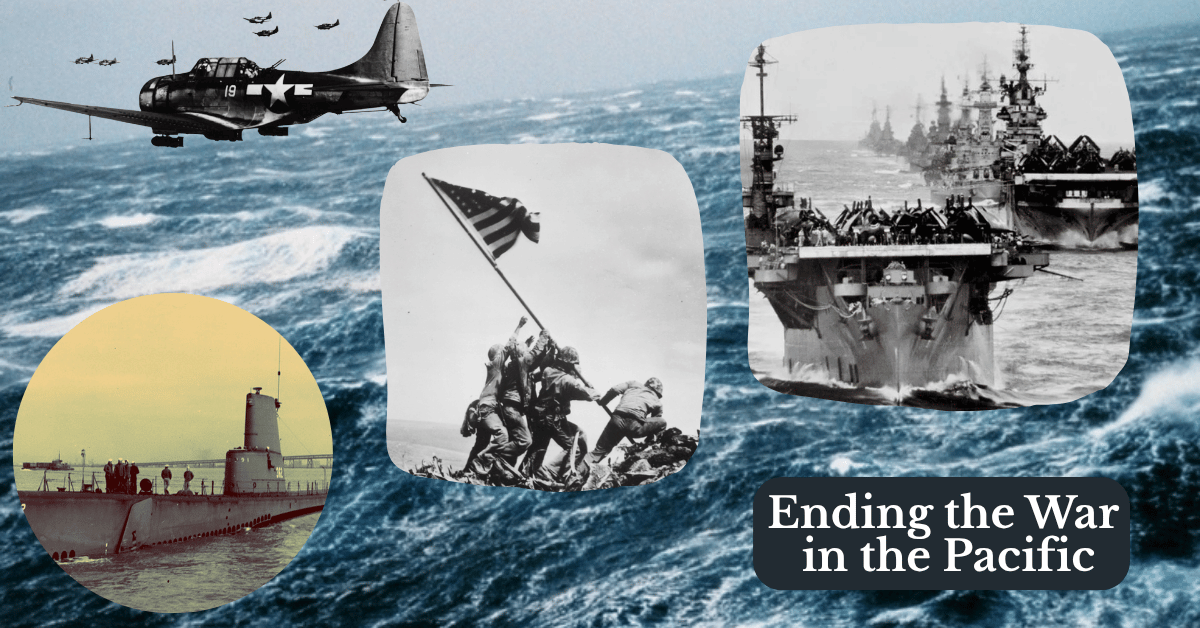
Image credit: various photographs from Naval Aviation Museum, National World War II Museum, and US Navy Archives.
Discover more from friarmusings
Subscribe to get the latest posts sent to your email.
 friarmusings