
In the previous posts we considered the early years of Hirohito’s time on the throne and tried to give a sense of what his role was and wasn’t as Emperor, his sense of the limits of his authority and role, and the events which – at least from the outside – seemed to show a “self-induced neutrality” in governance. The previous post also showed that loyalty to the throne had practical limits as seen in the frequent assassination attempts and attempted coup-d’etat. This “civil unrest” would be ever in the back of Hirohito’s mind. In addition, the Imperial Japanese Army (IJA) had a track record of doing what it wanted (e.g. Manchuria and establishing the puppet nation of Manchukuo).
The 1930s saw Japan withdraw from the League of Nations, naval treaties, and expand its empire into other parts of China, Korea, Taiwan, and French Indochina. Also, Japan signed the Tripartite Pact with Germany and Italy (1940) which was at war with the rest of Europe and parts of the Middle East.
Diplomacy with the United States
The Japanese war game plan, Kantai Kessen, was described in an earlier post along with the United States “War Plan Orange.” Both plans had been considered and studied since at least the 1920s. By the summer of 1941 evidence of aggressive Japanese imperial expansion was clear. In response, the U.S., Britain, and the Netherlands froze Japanese assets in the international banking system and imposed a total oil embargo (July 26, 1941). Japanese Admiral Nagumo described Japan as now being a patient on the operating table in need of immediate surgery. The question in the Japanese cabinet was whether Japan’s response would be diplomatic and/or war preparation. And if both – what would be the priority. As noted from diaries and post-war interviews, Emperor Hirohito agreed to both but made clear his preference for a diplomatic solution. Outside the ranks of historians, most people are not familiar with the topics of negotiations over the summer of 1941. We know that the Pearl Harbor attack was underway as the Washington Embassy of Japan tried to deliver formal notice of war before the attack (which it was unable to do.) But what were the terms and conditions of the negotiations between the total oil embargo and December 7, 1941?
It was clear early in 1941 from the US perspective that Japan would keep aggressively expanding until they were given some reason not to. It was evident that the Japanese goal was oil and other raw materials – natural resources not available on the home islands; natural resources without which the Japanese vision of Hakko ichiu” (“the eight corners of the world under one roof”) was nothing more than a vision.
Admiral Kichisaburō Nomura (Japanese ambassador in Washington) had been meeting Secretary of State Cordell Hull to seek some compromise since the early days of 1941. But after the U.S. oil freeze in July, Tokyo realized negotiations had to be escalated and took the first steps to avoid war. Prime Minister Konoe (brother of the Emperor) instructed Admiral Nomura to explore the possibility of a direct summit with Roosevelt. It was hoped that a personal meeting could bypass hardliners in both governments. Konoe offered to send a personal envoy or to come to Washington DC himself.
Roosevelt was intrigued but cautious. One of the great “what ifs” of the run-up to war was what if Roosevelt and Konoe had met. One of the problems for Konoe/Japan was MAGIC – we had already broken the diplomatic code. It was clear that Konoe did not have support of the Army, we understood that there needed to be unanimity among Japanese leaders directly advising the Emperor, and so it was clear that Konoe could not come to any meeting with the ability to commit the Japanese to anything agreed upon in any meeting. The fatal flaw was there was no real way to bypass the hardliners and militarists in Japan.
Roosevelt had his own hardliners: the American First movement that did not believe that we should in any way be embroiled in foreign wars. They had already claimed Roosevelt was dragging the U.S. into war. So, if the President met Konoe without preconditions, opponents would accuse him of “appeasement” — the same word used against Britain at Munich in 1938. And hence Roosevelt insisted he needed “substantial evidence of sincerity” from Japan before he could even consider a summit.
Word was relayed via Admiral Nomura that he might meet Konoe, but only if Japan showed good faith first. The US was the first to “put its cards on the table.” The US asked that:
- Japan must halt further aggression: no more moves into Southeast Asia or the Pacific.
- Respect the territorial integrity of China: withdraw from newly occupied zones and stop expansion.
- Renounce Axis obligations: the U.S. wanted assurances Japan would not support Germany if America entered the war in Europe.
- The U.S. would ease some trade restrictions.
Japan’s counter proposal was
- U.S. to accept Manchukuo (Japanese puppet state of Manchuria) as legitimate.
- U.S. recognition of its “special position” in China, with acknowledgement of a new economic order in East Asia that included China
- Stop aid to Chiang Kai-shek’s Nationalist China
- Stop reinforcing the Philippines and other U.S. Pacific outposts.
- Pledge to not interfere with Japan’s “Co-Prosperity Sphere.”
- Its alliance with Germany and Italy must be respected
At this point the positions were “oceans apart.”
During this time period there were a series of Imperial Conferences (Gozen Kaigi) where Emperor Hirohito, his cabinet, and senior military leaders debated the U.S. demands and Japan’s course of action. The first of these conferences was held September 6, 1941 – “Imperial Conference on the Empire’s Future Policy.” The cabinet and military presented Hirohito with two paths: (a) continue negotiations with the U.S. and Britain and (b) preparation for war if negotiations failed. Hirohito approved a resolution: negotiations would continue, but war preparations must be ready by late October if talks broke down. The Emperor made it clear that diplomacy was the priority and so he received the parallel path, but with a firm deadline.
Negotiations dragged on through September–October. Japan floated “Plan A” and “Plan B”:
- Plan A (Sept 1941): Japan would withdraw from southern Indochina and promise not to advance further, in exchange for resumption of U.S. oil exports.
- Plan B (Oct 1941): Japan would withdraw from all of Indochina after peace with China was achieved. For the time being, it promised not to expand further. The U.S. must supply 1 million gallons of aviation fuel immediately, and end asset freezes.
MAGIC intercepts continued to reveal that the Army and Navy were committed to a war footing and were letting the diplomats try to carry out something, anything that would allow the Japanese a path forward to colonial control of Asia and Western Pacific. As a consequence, both plan A and B were rejected.
Throughout October and November 1941 the Cabinet was deadlocked. Prime Minister Konoe favored compromise with the U.S. but without the support of the Army he had no way forward and so resigned in mid-October. Hirohito then appointed General Hideki Tōjō, a hardliner, as Prime Minister (Oct 18, 1941). Contrary to some expectations, Tōjō did not rush straight to war — he actually argued at first for one last round of diplomacy. This was rooted in his total loyalty to the Throne.
Then in November 1941 Secretary of State Cordell Hull delivered what was seen within Japan as an ultimatum. It required Japan to:
- Withdraw all military forces from China and Indochina.
- End support for any puppet regimes (i.e., dissolve Manchukuo).
- Recognize the Nationalist government (Chiang Kai-shek) as legitimate in China.
- Abandon the Tripartite Pact commitments.
- Agree to non-aggression pacts and equal commercial opportunity in the Pacific.
- In return, the U.S. would resume normal trade, including oil.
Japan’s leaders viewed this ultimatum as humiliating and as requiring them to give up everything they had fought for since 1931. Yet, Japan’s oil reserves were running out. The Navy warned that by late 1942 or early 1943, Japan would be unable to support its armed forces anywhere in the Pacific.
Historians have asked if Hull’s note was a rogue act and the historical record is clear that it was not. Negotiations were dragging on and MAGIC intelligence (diplomatic not military) pointed to Japanese troop movements toward Southeast Asia along with repositioning of naval assets in that general direction. Roosevelt and his Cabinet were increasingly suspicious of Japanese intentions, seeing the protracted delays in responses as “stalling” to complete their war footing.
Going to War
The Second Imperial Conference was held November 5, 1941 after weeks of Army–Navy–Cabinet debates. It was decided that Japan would give negotiations until early December. If no settlement was reached, Japan would launch war against the U.S., Britain, and the Netherlands. The military finalized operational plans — the Navy would strike Pearl Harbor while also moving into Malaya and the Dutch East Indies.
There was a final Imperial Conference on December 1, 1941. The cabinet reported to Hirohito that negotiations had failed. The Army and Navy both argued that war was now unavoidable. Hirohito approved the resolution that war with the United States, Britain, and the Netherlands would begin in early December. Diaries record Hirohito as somber, but he gave no objection. His silence ratified the decision. Hirohito performed the ritual reading of the imperial rescript that authorized hostilities. The debate was closed.
In his post-war memoirs, Lord Privy Seal Kido wrote that Hirohito considered the Hull Note a “humiliation” Japan could not accept. There are layers of reasons why, but from Japan’s perspective the U.S. was treating Japan like a defeated power before a shot was fired. Kido recorded that Hirohito was deeply offended that the U.S. would presume to dictate terms so sweeping without acknowledging Japan’s own status as a great power. Prime Minister and Foreign Minister Tōgō wrote that it was “tantamount to a demand for unconditional surrender” for a war that had not begun.
Japan had spent a decade building the “New Order in East Asia” and the Greater East Asia Co-Prosperity Sphere. The Hull Note demanded Japan dismantle these achievements entirely — which would have been politically impossible for the Army, and a blow to Hirohito’s prestige as the figurehead of expansion.
In Japanese political culture, especially at that time, “losing face” before domestic and international audiences was nearly as bad as military defeat. If Hirohito had accepted the Hull Note, he would have been remembered as the Emperor who surrendered Japan’s destiny without a fight. Even though he disliked war, he considered acceptance dishonorable and humiliating — worse than risking war with the U.S.
On November 26th, the Japanese First Air Fleet (Kido Butai) — the carrier strike force that attacked Pearl Harbor — sailed. It consisted of 6 aircraft carriers, 2 battleships, 3 cruisers, 9 destroyers, 8 oilers. At dawn on December 7 it launched its first wave of aircraft.
The War in the Pacific was underway.
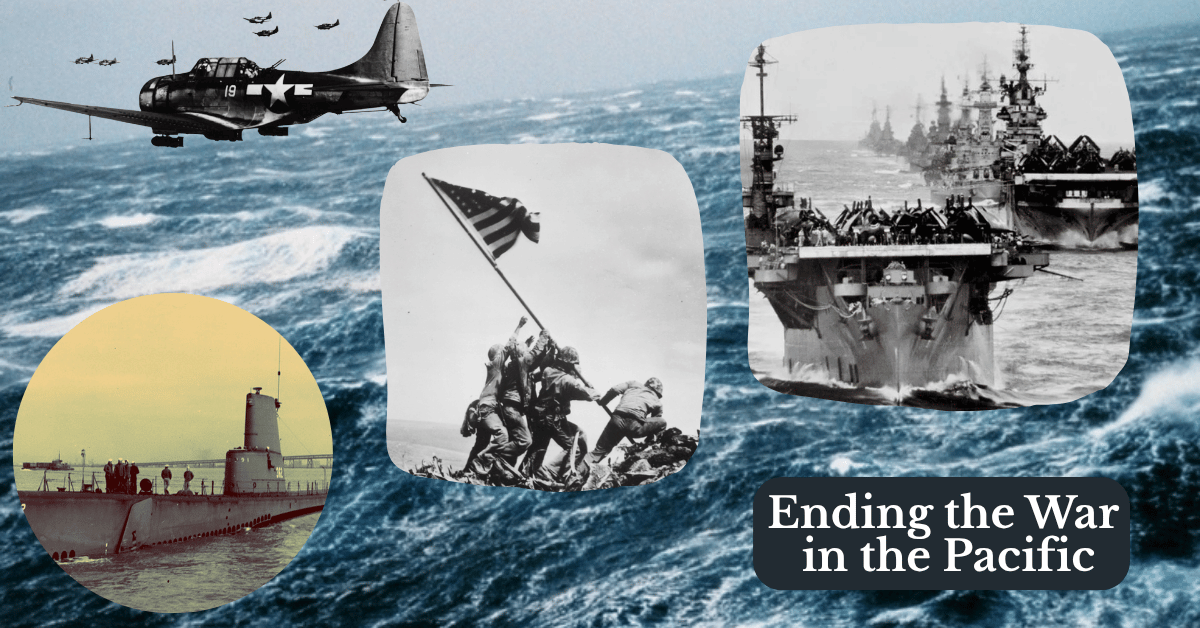
Image credit: various photographs from Naval Aviation Museum, National World War II Museum, and US Navy Archives.
Discover more from friarmusings
Subscribe to get the latest posts sent to your email.
 friarmusings