
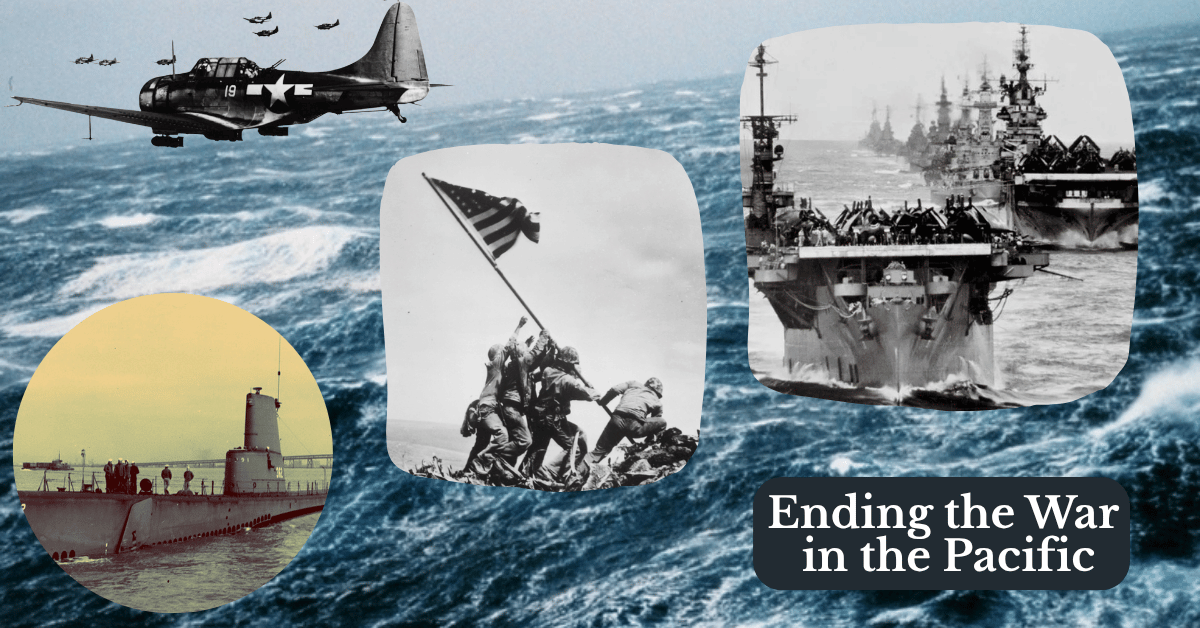
The Battle of Okinawa which began with the initial invasion on 1 April 1945 was the largest amphibious assault in the Pacific Theater of World War II. It was the bloodiest battle of the Pacific War. The most complete tally of deaths during the battle is inscribed on the Cornerstone of Peace monument at the Okinawa Prefecture Peace Memorial Museum, which identifies the names of each individual who died at Okinawa in World War II. At the time of the June 1995 unveiling 234,183 names were inscribed. Continued historical research leads to the addition of names. Today, the monument lists more than 242,000 names, including 149,634 Okinawans; 77,823 Imperial Japanese soldiers; 14,010 Americans soldiers, Marines and sailors; and smaller numbers of people from other countries.
What is little known is that more naval personnel (4,907) were killed in action than either Army (4,675) or Marine (2,938) soldiers.
The amphibious landings at Okinawa and surrounding islands were supported by American and British fleets. The British Fleet, having been released from Atlantic duties, was redeployed to the Pacific.
The U.S. naval forces supporting the Battle of Okinawa (April–June 1945) were the largest assembled in the Pacific War, reflecting the strategic importance of the operation. They were a combined armada of fleet carriers, battleships, cruisers, destroyers, and amphibious landing craft tasked with escort, fire support, air cover, and logistical support. Admiral Raymond A. Spruance was overall commander of the Fifth Fleet, responsible for naval gunfire and carrier operations. Vice Admiral Richmond Kelly. Turner was the amphibious operations commander, coordinating troop landings. The fleet was deployed to the east of Okinawa
Fast carrier task forces (Task Force TF-58 under Vice Admiral Marc A. Mitscher) provided air cover, close air support, and strikes against Japanese airfields in Okinawa, Kyushu, and surrounding islands. Under his command were 12 fleet carriers including: Enterprise, Essex, Lexington, Yorktown) as well as 8 light carriers. The US fleet also included
- 15 Battleships (Iowa, New Jersey, Missouri, and others) providing naval gunfire support for troops ashore.
- Shore bombardment, anti-aircraft defense against kamikaze, and surface screening were provided by 24 heavy and light Cruisers.
- There were more than 100 Destroyers (as many as 180) in multiple task groups whose role was advanced radar picket duty, anti-submarine patrols, and escort of carriers and transport ships. Destroyers formed an outer perimeter and were often the first to encounter kamikaze and thus their losses were heavy with 12 sunk and dozens more damaged.
- More than 300 auxiliary and support vessels: oilers, hospital ships, supply ships, and repair vessels critical for sustaining operations over the nearly three-month battle.
- 1,200 landing craft to deliver Army and Marine units to the landing beaches
British Task Force 57 was composed of 4 fleet carriers (Indomitable, Formidable, Victorious and Implacable), 2 escort carries, the battleships HMS King George V and Howe, several cruisers, 4 destroyer flotillas, and over 70 support and auxiliary vessels, including oilers, repair ships, minesweepers, and hospital ships. TF-57 protected the southern approaches to Okinawa and patrolled to the southwest off the Sakishima Islands suppressing any potential air support from Formosa (Taiwan) or other Ryukyu Islands.
As noted it was the largest fleet assembled in the Pacific War.
It presented many targets of opportunity for kamikaze missions flying from Kyushu (the southern most of the major Japanese home islands), some 350 miles from Okinawa, and from Formosa. A table of all the ships damaged and sunk can be found compiled here. The table lists a total of 147 damaged ships, five of which were damaged by enemy suicide boats and another five by mines. The attacks resulted in the sinking of 36 ships and the damaging of 218 others, with 4,907 U.S. Navy personnel killed and nearly 4,800 wounded.
USS Franklin suffered over 800 killed and missing and USS Bunker Hill suffered 396 killed and missing. At least seven other ships lost 100+ killed or missing due to kamikaze attacks
One source estimated that total Japanese sorties during the entire Okinawa campaign exceeded 3,700, with a large percentage being kamikaze attacks. These operations were part of Operation Kikusui, a series of mass suicide air raids aimed at inflicting significant damage on U.S. and British naval forces operating near Okinawa.
Where Iwo Jima gave pause and concerns for landing and ground casualties during the invasion of the Japanese home islands (Operation Downfall), the off-shore losses due to kamikaze attacks gave equal concern about the potential losses during Operation Downfall. At Okinawa, the Japanese flying from Kyushu had to fly some 400 miles over open water. If flying from Formosa, 450 miles. During Operation Downfall, the kamikaze would only travel some 10-20 miles mostly over land which would obscure radar detection. In other words, there would be little to no warning. Allied intelligence estimated that Japan had a fleet of 10,000 kamikaze aircraft with plans to send waves of 300 flights/per hour. The first three hours of Downfall would see the same amount of flights as experienced in the entire Battle of Okinwaw.
How could any one give any assessment of loss and damage under such onslaught? By the beginning of May, Admiral Nimitz began to have doubts about Operation Downfall. On May 25th, he cabled Admiral Ernest King (CNO) that he withdrew his support of Operation Downfall. Nimitz recommended continued blockage, bombardment, and strategic bombing.
Image credit: various photographs from Naval Aviation Museum, National World War II Museum, and US Navy Archives.
Discover more from friarmusings
Subscribe to get the latest posts sent to your email.
 friarmusings