
The final death blow to the Japanese Imperial Navy occurred during the Battle of Okinawa – the sinking of the super-battleship Yamato. This pride of the Imperial Japanese Navy (IJN) was named after Japan itself, IJN Yamato, the historic name for Japan and was the pride of the nation.
Yamato was the largest warship ever built up to that time. Compared to ships of the time it was simply a monster. It carried larger guns (18-inch) than any warship and could fire a 3,200 lb armor-piercing projectile more than 26 miles. For reference, a Ford Escape weighs about 3,200 lbs. 26 miles, as the crow flies, is about the distance from the White House to the runways at Dulles International Airport. It was armored to withstand the impact of a 3,200 lb armor-piercing shell. And it was fast.
It saw action at Biak and the naval battles around Leyte Gulf, suffered damage and returned to the naval shipyards in Japan for repair and refit in the Fall of 1944. In the spring of 1945 the Battle for Okinawa began. During a briefing of the Army and Navy for Emperor Hirohito the leaders described the actions and efforts of the land-based army forces and the combined Army-Navy air force kamikaze attacks. It is said that the Emperor turned to Admiral Toyoda, Chief of Staff of the Navy, and inquired what would be the contribution of the surface navy: “”But what about the Navy? What are they doing to assist in defending Okinawa? Have we no more ships?” In the rarefied language of the Japanese imperial court, the question could have been taken anywhere from simply a question to a challenge to a rebuke. Admiral Toyoda seemed to take it as a rebuke.
Toyoda then ordered the IJN Yamato to sally forth with a small fleet of one light cruiser Yahagi, eight destroyers, and no combat air cover, sail to Okinawa, beach itself and support the Japanese army as a massive artillery platform. It was a suicide mission. It was Operation Ten-Go, literally Operation Heaven.
When the commanding officers of Yamato, Yahagi and the destroyers learned of their orders they “pushed back” just short of an outright refusal. Despite obeying orders to prepare for the mission, the commander of the Ten-Go force, Vice-Admiral Seiichi Itō, still refused to actually order his ships to carry it out, believing the plan to be futile and wasteful. Vice Admiral Ryūnosuke Kusaka flew from Tokyo on 5 April in an attempt to convince Itō and the assembled commanders of the Combined Fleet to accept the plan. Kusaka then explained that the Navy’s attack would help divert U.S. aircraft away from the Army’s planned kamikaze attacks on the U.S. fleet at Okinawa. He also explained that Japan’s national leadership, including the emperor, were expecting the Navy to make their best effort to support the defense of Okinawa. Upon hearing this, the Combined Fleet commanders relented and accepted the plan. All of the ship captains reduced crew size to that necessary to execute the one-way mission. This included 67 cadets of the Japanese Naval Academy.
Meanwhile Naval Intelligence had decoded ULTRA message traffic. We knew the sortie was planned.
On April 7, 1944 US Navy aircraft spotted Yamato and began their attacks at 12:34 pm. Yamato and her escorts were discovered 250 miles away from Okinawa and were engaged by aircraft from Task Force 58’s ten aircraft carriers. Three different waves of at least 110 aircraft in each wave relentlessly attacked. Yamato, Yahagi, and four of the escorting destroyers were sunk with the loss of over 4,300 Japanese sailors. American losses were 10 planes and 12 crewmen.
At 14:20, Yamato capsized completely and began to sink. At 14:23, she suddenly blew up with an explosion so large that it was reportedly heard and seen 200 km (120 mi) away in Kagoshima and sent up a mushroom-shaped cloud almost 20,000 ft into the air as her ammunition magazine exploded. The death throes of Yamato were witnessed by US Naval aviators as well as Mitsuru Yoshida, an ensign who served aboard the super-battleship Yamato. He is the author of Requiem for Battleship Yamato, a detailed account of the last fateful voyage of the pride of the nation of Japan.
Operation Ten Go had zero chance of success. It was the brainchild of a single person Admiral Toyoda based on what he surmised the Emperor to be saying. He sent more 4,000 sailors to their death in a suicide mission.
The captains and commanders of the ships knew it was suicidal and had no merit, yet when told it was the desire of the Emperor, they agreed.
In a way it was indeed the opening note of the requiem of the nation of Japan. Admiral Toyoda was a member of the Supreme War Council who would never agree to a surrender until after Operation Ketsu Go, the defense of the home islands against an allied amphibious invasion. Toyoda was a part of the wartime governance that adhered to Ichioku gyokusai – “One Hundred Million Shattered Jewels” – urging the entire Japanese population to fight and die for the Emperor.
The requiem began as the first note shattered more than 4,000 jewels in a needless effort.
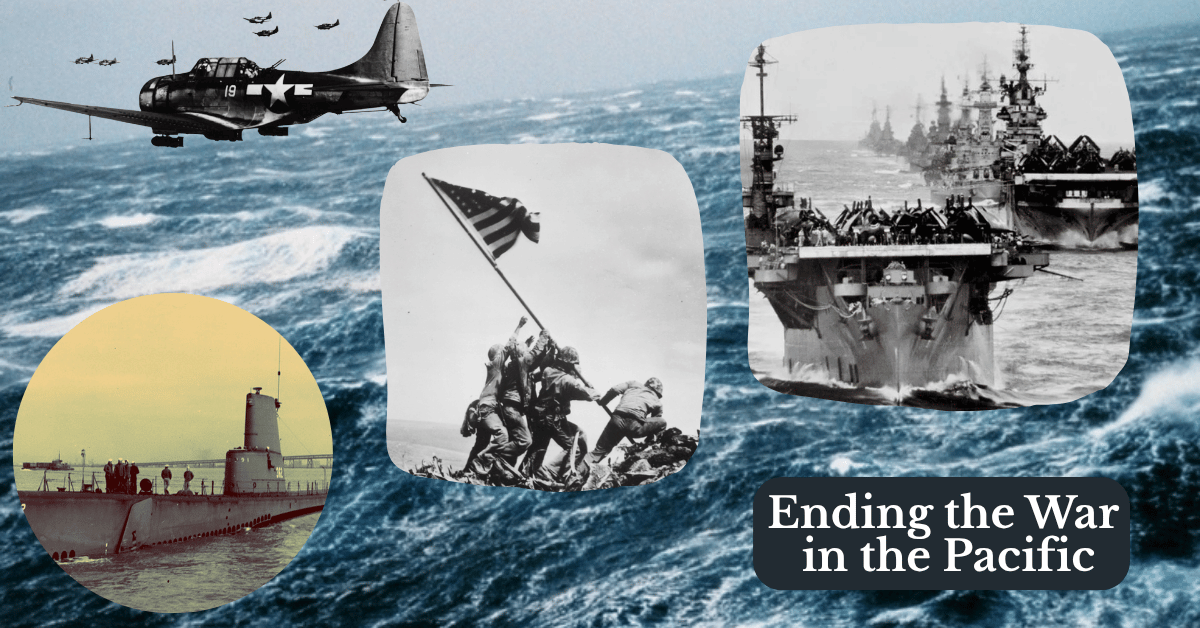
Image credit: various photographs from Naval Aviation Museum, National World War II Museum, and US Navy Archives.
Discover more from friarmusings
Subscribe to get the latest posts sent to your email.
 friarmusings