
Before we delve into the aerial bombing campaign, we should consider an event which was seared into the minds of Tokyo and Yokohama residents – an event which shaped emergency preparedness: the 1923 Tokyo earthquake, also known as the Great Kantō Earthquake (the Kantō plane is the broad area on Honshu island that encompasses some of the great cities of Japan)
The earthquake struck on September 1, 1923, at noon when people were cooking lunch. The ~8.0 magnitude earthquake caused extensive damage that was further exacerbated by widespread fires that swept across the wooden neighborhoods of Tokyo and Yokohama. Both cities were devastated as well as surrounding prefectures. The earthquake caused over 130 fires, some of which merged into firestorms. The most infamous was in the Hongō district, where around 38,000 people perished in an open space where they had taken refuge – heat and oxygen deprivation caused by the firestorm being principal causes.
Tokyo’s infrastructure—including roads, bridges, water supply, and railways—was either damaged or destroyed, crippling transportation and communication. Yokohama, then a major international port, was almost entirely flattened. An estimated 105,000–142,000 people were killed, with over 570,000 homes destroyed leaving more than a million people homeless. The event and its aftermath reshaped Japan’s approach to urban planning, emergency preparedness, and national resilience.
New building codes were instituted – although not always followed. Tokyo was partially redesigned with wider roads (to act as firebreaks), more public parks, and designated evacuation zones. At the same time the government established agencies focused on disaster planning and coordination. These agencies organized response teams at all levels, reaching down to neighbor disaster response teams.
The earthquake was a pivotal moment in Japanese history that transformed Tokyo’s landscape and established a national culture of disaster preparedness that continued into the days of WWII and beyond.
There was perhaps no city in the world that had more civil disaster response plans and capabilities in place before the start of World War II. In his war diaries, the Danish diplomat Lars Tillitse, noted that Japan’s first air raid drills were held in 1928 even though it was the bedrock belief that Tokyo could not be bombed. That belief was shattered on April 18, 1942 during the Tokyo air raid led by Lt.Col. James Doolittle flying B-25s from the USS Hornet. The actual damage was small and on-the-ground casualties light, but the shock to morale was extensive. Which was the intent of the raid as well as boosting morale on the American homefront. With no further raids the official Japanese government position was that the home islands were unassailable. It was only with the fall of Saipan in July 1944 that Tillitse observed, “Japanese with insight knew that Japan had to prepare for the worst.” With Saipan as an US air base, the new B-29 bombers had the range to begin bombing of the home islands of Japan.
The government tried to convince people to relocate outside of Tokyo beginning in the autumn of 1944 – to no avail. By January 1945 there was an attempt, like the British during the Blitz of London, to persuade families to send their children to the countryside. Again to little avail.
Japanese cities were not prepared for the coming 1945 bombing campaign of Japan.
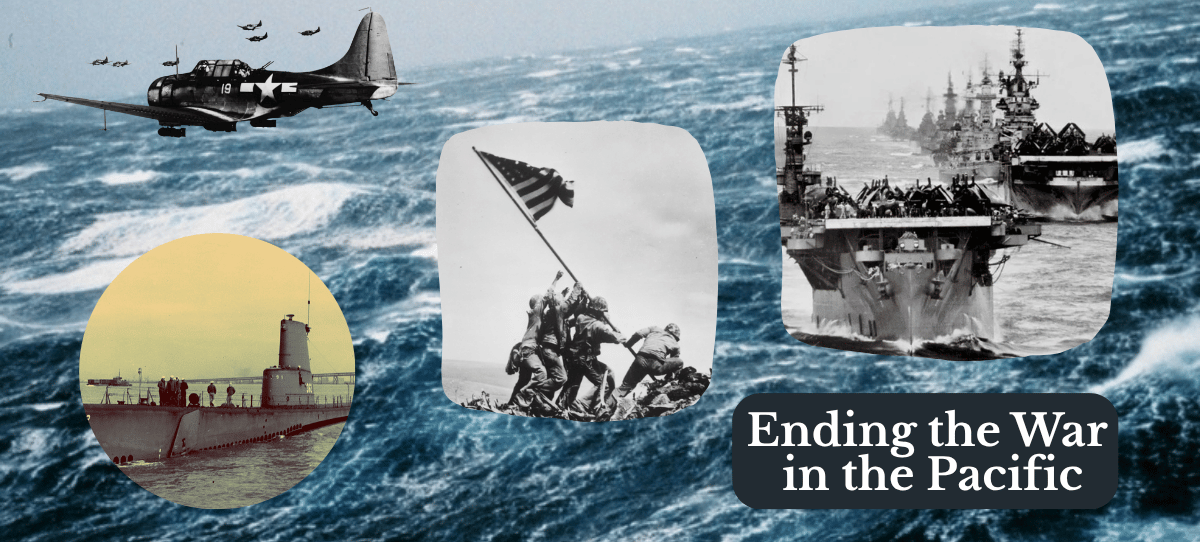
Image credit: various photographs from Naval Aviation Museum, National World War II Museum, and US Navy Archives.
Discover more from friarmusings
Subscribe to get the latest posts sent to your email.
 friarmusings