
There was an early phase of B-29 bombings on the Japanese home islands as part of Operation Matterhorn. These were planes launched from China. The airfields in China were highly vulnerable. Supplies and logistics had to be flown over the Himalaya Mountains. There were no accompanying fighter escorts. Targets were typically industrial or military facilities near western coastal cities (e.g., steel works, shipyards, aircraft plants). Damage was limited due to small bomb loads, long flight distances, and weather conditions. All in all, the raids were psychologically unsettling, but neither tactically or strategically valuable.
That began to change in late November 1944.
The airfields on Saipan and Tinian were ready and more were being built. The XXI Army Air Force Bomber Command began their missions against Japan but from bases much closer than those in China. This meant that the bomb loads could be at design capacity. The flights were still long and the weather problematic. The allies also discovered something that we take for granted—the jet stream.
Japanese meteorologist Wasaburo Ooishi conducted weather balloon experiments from 1923 onward at a station near Mount Fuji. By 1930, he had documented a strong, persistent west-to-east wind at high altitude—the jet stream. Although he published his study results, his work was unknown in the West. This would be vital information to Allied planners.
The B-29 was designed to operate at 30,000+ feet, well above anti-aircraft fire. Aviators encountered the jet stream with winds as high as 250 mph. The net effect was more-than-expected fuel consumption causing many early flights to make emergency landings on Iwo Jima or to ditch in the ocean. One B-29 landed during the on-going battle for Iwo Jima. The other key effect was on bomb trajectory with the jet stream scattering bombs even driving them “backwards” into the Pacific. This was all in addition to poor weather conditions over Japan. Reliance on high-altitude, daylight precision bombing yielded limited accuracy and results. Again, like Operation Matterhorn the effects were mixed—tactically disruptive, psychologically unsettling, but not yet strategically crippling. The targeted factories continue to produce – notably aircraft and munitions outputs continued to rise.
Civilians were impacted but deaths were limited. As in England during their blitz, Japanese authorities began moving children and some factory workers out of major cities by late 1944, anticipating larger attacks. The raids prompted fear and resentment, but did not cause panic or collapse of public support for the war. But it did begin to raise doubts. If the government announced victories were so impressive, how are the Allies now able to bomb us?
Militarily these raids did require the diversion of planes, pilots, AA weapons, and radar units to home defense. Paradoxically the raids encouraged decentralization of industry, which led to the widening of U.S. targeting.
The ineffectiveness set the stage for a shift to low-altitude, nighttime incendiary bombing beginning with the massive Tokyo raid of March 9–10, 1945.
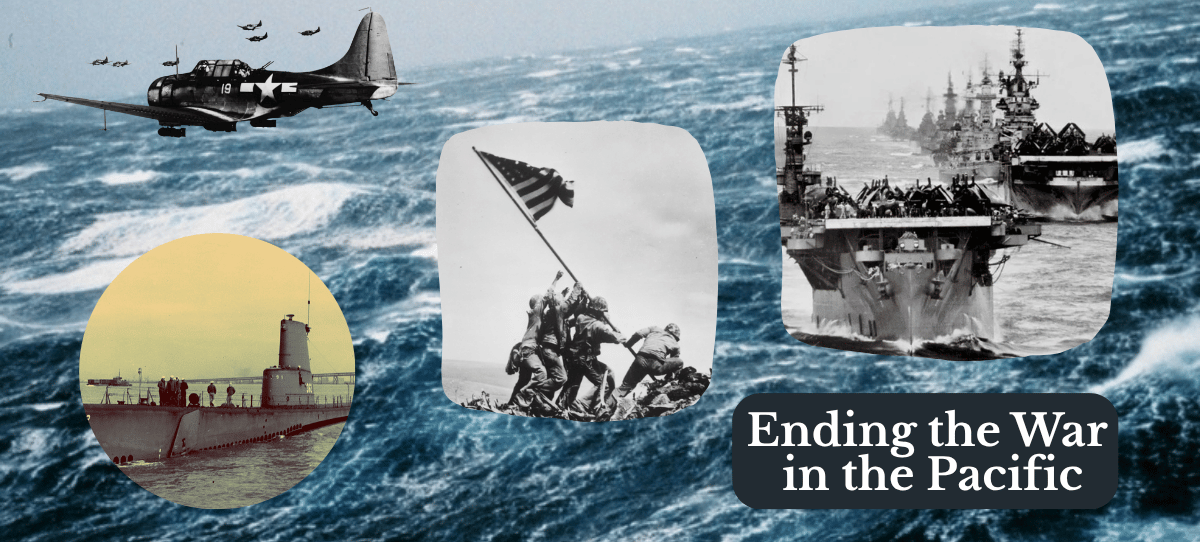
Image credit: various photographs from Naval Aviation Museum, National World War II Museum, and US Navy Archives.
Discover more from friarmusings
Subscribe to get the latest posts sent to your email.
 friarmusings