
The capture of the Saipan and Tinian (July 1944) gave the allies air bases for the B-29 Super Fortress bombers. The home islands of Japan were within range and the Allies were now able to initiate sustained bombing of Japan without risking aircraft carriers which would have operated within range of Japanese counter attacks. The B-29 raids began on November 24, 1944. Tokyo was the first target. It consisted of 111 B-29s striking the Musashino aircraft engine plant on the outskirts of Tokyo. The raid was executed as a high-altitude precision raid (but with little effect). As noted in a previous post, the Allies faced major challenges over Japan: high-altitude jet stream winds disrupted bombing accuracy; weather conditions, especially cloud cover, reduced visibility.
The bombing campaign was focused on Japanese cities. The goal was to destroy key industrial and military targets such as aircraft factories, shipyards, and transportation hubs. The strategy was modeled on the efforts against Nazi Germany which concentrated production in large factory settings. Japanese industry was decentralized, with small workshops spread throughout urban residential areas. These workshops were as small as home-based, then feeding large operations, still in residential areas, again working up the supply chains to large operations, often located on the edge of residential areas. While there were critical war production located apart from residential areas, e.g. shipyards, other production (ammunition, airplane assembly, weapons, etc) took place in the labyrinth of major city residential areas.
Due to the failures of high-altitude precision bombing, the USAAF adopted a new strategy in March 1945: low-altitude night area bombing with incendiaries aimed at destruction of Japan’s military production capability that was already being strangled by submarine warfare on wartime merchant shipping, denying Japan needed raw materials for the war machine. This meant targeting Japan’s flammable, wood-and-paper cityscapes.
During late February 1945 (23rd-25th) there were small-scale raids on Tokyo, Nagoya, Osaka, Kobe using incendiary bombs to test effectiveness. The weapons dropped were M-69 incendiary bomblets, clusters of small napalm-filled tubes designed to penetrate roofs and ignite fires. The results of these first raids revealed the extreme vulnerability of Japanese cities to fire. The most devastating raid was soon to come.
Operation Meeting House was the Tokyo firebombing (March 9–10, 1945). General Curtis LeMay launched a plan wherein the B-29 bombers would fly only 5,000 – 9,000 feet high to eliminate the effects of visibility and jet stream variables on drop accuracy. The attack consisted of 334 bombers dropping over 1,600 tons of M-69 incendiary bomblets. The city was already beset by gale force winds when the raid began their bombing runs. The resulting firestorm destroyed 16 square miles of the city, killed ~100,000 people, injured many more people and left over 1 million homeless. It was the deadliest single bombing raid of the war. “The devastation of Tokyo was of such a scale that it resembled a nuclear attack in all but the weapon used.” (Frank, Downfall, 1999). It was the deadliest air raid of WWII, surpassing Dresden and Hiroshima in immediate casualties.
Over the next week there were similar raids on Nagoya (2 attacks), Osaka, and Kobe. The raids resulted in combined destruction of 31 square miles of urban area, hundreds of thousands homeless, tens of thousands dead. In April–May 1945 the raids were a plan of systematic destruction. 33 key industrial centers were crippled, disrupting war production beyond major cities. Cities attacked included Kawasaki, Yokohama, Toyama, Hamamatsu, and many others. The tempo and destruction of firebombing was less in June and July as key industrial sites were attacked with high-explosive devices. By the beginning of August there were few targets left.
In total, there were 67 cities attacked. It is estimated that 40% of Japan’s urban areas were destroyed. Estimates of deaths range from a low of 300,000 to a high figure of 500,000. Millions were left homeless. While difficult to read, the map below indicates the extensive nature and breadth of the bombing. The Japanese cities are shown with their US counterparts (by population) indicated in parentheses. Some examples include: (city, % destroyed by area, American city)
Tokyo, 38.5% (New York)
Yokohama, 57.6% (Cleveland)
Kobe, 55.7% (Baltimore)
Osaka, 35% (Chicago)

The morale of the people reached a low point. When Emperor Hirohito visited the Tokyo devastation he was largely ignored by the people
Morale of the People
The bombing campaign was intended not just to destroy military capacity but to break Japanese morale. The 1941 Air War Plans Division Plan 1 (AWPD-1), a foundational document for U.S. air strategy, outlined that “morale”, especially of the enemy population, was a legitimate and necessary target. Although it strongly emphasized targeting industry, it introduced the idea that breaking the will to resist was an essential part of strategic air power. AWPD-1 stated the objective was to “conduct a sustained air offensive against the German military and economic system, and the morale of the people.” Although AWPD-1 was focused on Europe, it influenced later thinking in the Pacific Theater as well.
General Curtis LeMay, who directed the firebombing campaign, openly acknowledged that breaking Japanese morale was a key aim: “The war would be over if we could destroy the Japanese will to resist… and the way to do that was to burn down their cities.” It was hoped that by terrorizing the Japanese population would instigate civil unrest that would lead to a demand to end the war. The “end game” was Japanese surrender without a costly allied land invasion.
Was civil unrest a concern of the key leaders of Japan? Was firebombing necessary?
Whether the firebombing of Japan in 1945 was “necessary” is still one of the most debated moral and strategic questions of World War II. The answer depends on the frame of reference—military necessity, political necessity, or moral necessity—and on which contemporaneous or historical viewpoint one accepts. If judged by 1945 military thinking: firebombing was seen as necessary to end the war swiftly by eliminating the industrial base behind the Japanese war machine and reducing Allied invasion casualties. If judged with hindsight: many historians argue it was not strictly necessary, given Japan’s collapsing position and other pressures in play. Then again the “collapsing” was due in part to the massive bombing campaign. “Other pressures” most often refer to a future Soviet invasion but even at the initiation of the firebombing campaign, Russia had a neutrality agreement with Japan to not enter the war in the Pacific.
At the Yalta Conference (Feb 1945) Stalin gave Roosevelt and Churchill concrete promises: the USSR would enter the war against Japan three months after Germany’s surrender. In exchange, Stalin secured territorial concessions (Kuril Islands, southern Sakhalin, influence in Manchuria). This effectively confirmed to U.S. leaders that the neutrality pact would not be renewed and that Soviet action against Japan was planned. In this same period diplomatic inquiries between Japan and the Soviets were non-productive, leading the Japanese Ambassador in Moscow to suspect that the Soviets would not renew the treaty. To the Japanese mind this meant April 1946 was the earliest the Soviets would enter the war. Did all this constitute pressure? Suspicions to be sure, but not necessarily Soviet invasion into Manchuria in the near future. During this same time period the Japanese Army was transferring its best troops from Manchuria to Luzon, Iwo Jima, Okinawa and Kyushu.
If judged morally: firebombing remains one of the starkest examples of the tension between military expediency and civilian protection. Gen. LeMay remarked, “If we don’t win this war, I will be tried as a war criminal.”
A historical note: In 1945, there was no clear, enforceable body of international law that explicitly prohibited strategic bombing of cities, even when civilians were the main victims. The devastation of places like Tokyo, Dresden, and Hamburg—combined with the atomic bombings—created a postwar push to define limits on targeting civilians. And yet In 1945, there was no clear, enforceable body of international law that explicitly prohibited strategic bombing of cities, even when civilians were the main victims. However, the devastation of places like Tokyo, Dresden, and Hamburg—combined with the atomic bombings—created a postwar push to define limits on targeting civilians. And yet, the 1949 Geneva Conventions, while it expanded protections to civilians in wartime by prohibiting indiscriminate attacks on civilian populations, did not contain detailed aerial bombardment rules.
It was not until the 1977 Additional Protocol I (to the Geneva Convention) that attacks whose primary purpose was to terrorize the civilian population were explicitly prohibited. It also prohibited indiscriminate attacks, including area bombardment, where military targets cannot be distinguished from civilians.
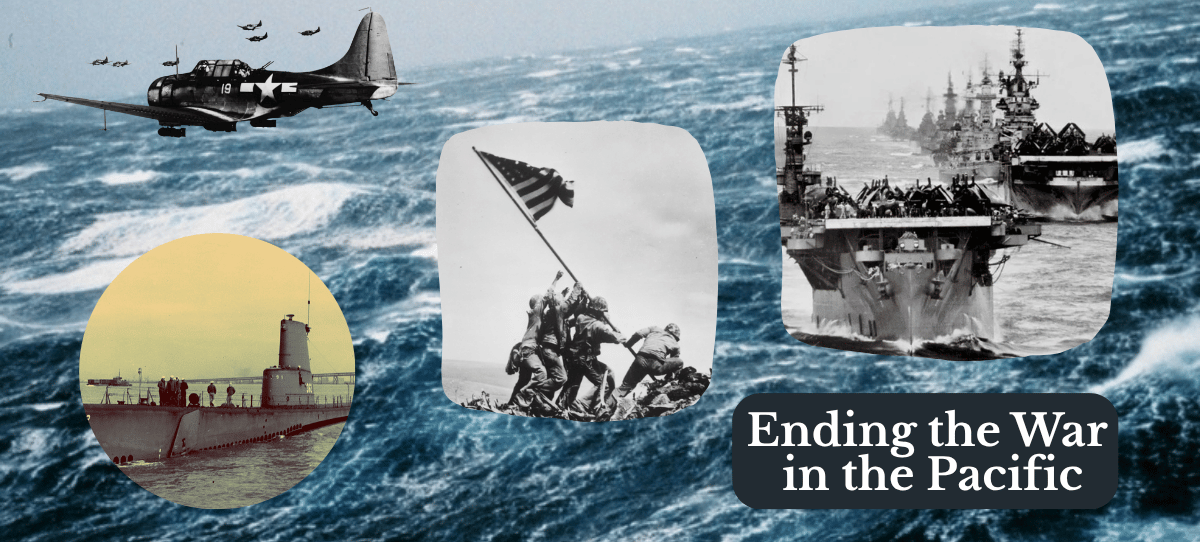
Image credit: various photographs from Naval Aviation Museum, National World War II Museum, and US Navy Archives. | Firebombing map from Alex Wellerstein “Restricted Data” website
Discover more from friarmusings
Subscribe to get the latest posts sent to your email.
 friarmusings