
Courage and Urgency

To the Lord our God belongs justice; to us, people of Judah and inhabitants of Jerusalem, to be shamefaced, as on this day” (Baruch 1:15)

These words from the prophet Baruch are not just a historical lament of the first wave of exiles to Babylon. It is not a “woe-is-me” indulgence. It is a realization that the choices they made have led them to this moment: exile. The people of Israel, in exile, finally recognize the root of their suffering: their refusal to listen to God, their stubbornness, and their idolatry. It’s a moment of collective repentance, a turning back to the Lord. They should be a mirror held up to every generation, including our own. 

In Jesus’ time the cities of Chorazin, Bethsaida, and Capernaum were probably faithful people, no foreign gods among them. Where Baruch’s generation turned back to God, here and now, God turns to the people in the person of his Son who performed signs and miracles. But people are unmoved. They chose indifference to the grace that was evident to them. Jesus’ words are a lament of love rejected. 

In our modern spiritual lives, these readings challenge us in two profound ways: having the courage to confess and an urgency to respond. 

Continue reading
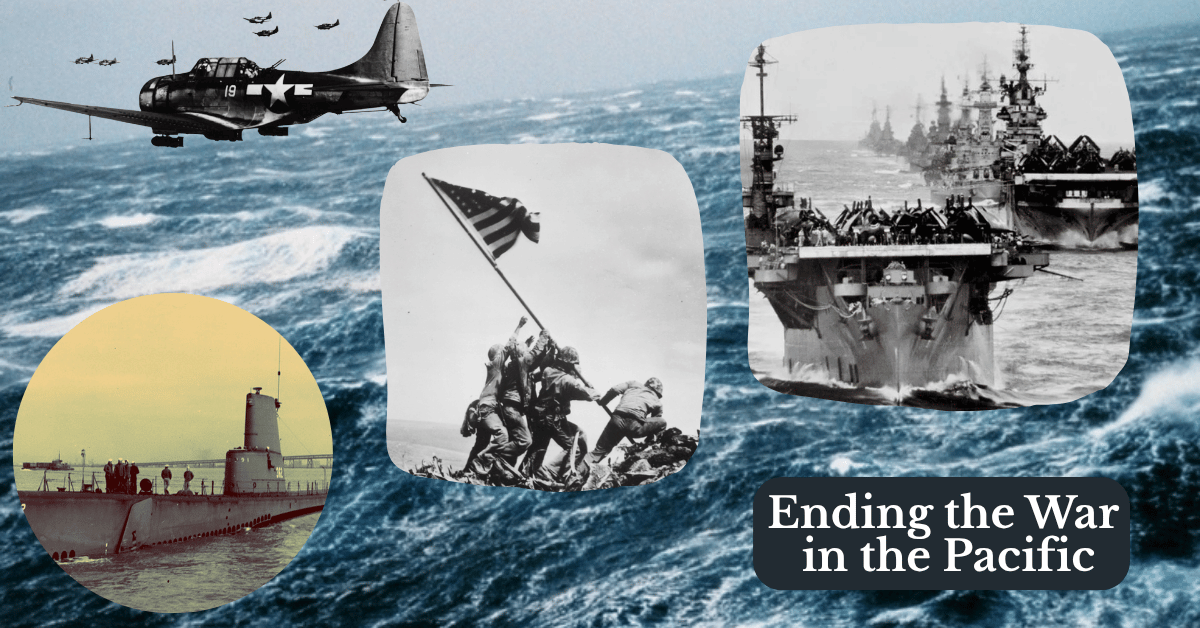
Defeat and Surrender

To understand in the inner workings of the wartime governance of Japan there are three keys to keep in mind:

  1. Cabinet and Supreme War Council recommendations to the Emperor must be unanimous and if unanimity can not be reached, the government collapses and a new cabinet and council must be promoted.
  2. In accord with the Meiji Constitution, certain cabinet members must be filled by active duty members of the military. In the context of #1 above, this means that the military holds a de facto veto on anything with which it does not agree. A single military member can either “filabuster” or simply resign – either achieve the same thing: collapse of the government.
  3. In accord with the Meiji Constitution, the Emperor is a Constitutional Monarch, but at the same time is “Supreme Commander” of the Military (daigensui).

Does #3 mean that the “buck stops” with the Emperor? Hardly. As described in earlier posts, the received tradition was that the Emperor was not an absolute monarch – and that is consistent with the Meiji Constitution. Then again, the Emperor was not a symbolic monarch like the King of England. In practice, the Emperor’s role lived somewhere between the two on a spectrum of direct influence, passive influence, and removed from decision making. Emperor Hirohito’s father was quite removed from decision making or shaping the future of Japan. Hirohito was… well, that has been the subject of debate by historians for the last 80 years and more.

The post-war tribunals placed the blame and responsibility for the war on the military, ultranationalists, and the zaibatsu (financial clique). But Emperor Hirohito escaped post-war tribunals because Gen. MacArthur (SCAP – Supreme Commander for Allied Powers) excluded him from the tribunals for reasons associated with SCAP’s vision for post-war Japan. This provided a post-war orthodoxy that Emperor Hirohito was a peace loving constitutional monarch who could not prevent the military from their desire for war. That view could not withstand the passage of time and the declassification of wartime documents.

Continue reading

The Faith of a Mustard Seed

“If you have faith the size of a mustard seed, you would say to (this) mulberry tree, ‘Be uprooted and planted in the sea,’ and it would obey you. (Luke 17) One might expect Jesus to well receive the request for more faith, but the response seems to imply that the disciples do not (yet) understand the real nature of faith. The saying is grammatically complex in Greek.  The first part of verse 6 is a construct that implies the disciples do have faith, but the second part of the verse contradicts that positive assessment with the implication that the disciples have not yet scratched the surface of the real nature of faith.

The disciples assume that they have faith and they will need more to accomplish what Jesus has taught in vv.1-5.  Jesus seems to be saying they don’t even have faith is the smallest quantity (hence the reference to the mustard seed). The point is not that they need more faith, but that they need to understand that faith allows God to work in a person’s life in ways that defy ordinary human experience.  This saying is not about performing extraordinary miracles, but that with even the smallest of faith, God can help them to live by his teachings on discipleship.

[Note: other commentaries suggest that Jesus is affirming their faith – in other words, they do not need more. If they believe and act on the faith that they already have, then they can rebuke and repent and forgive within the community. In essence, he seems to imply that they don’t need more faith, but to make use of the faith that they already have.  Why the difference?  It depends on how one assesses the conditional primary and secondary clauses present in the verse.]


Image credit: The Exhortation to the Apostles | James Tissot | ca. 1890 | Brooklyn Museum NYC | PD-US