Today’s first reading is from the Book of Jonah, one of my favorites. It is about our calling, our mission in life, our choices, and the unintended consequences for others.
The Lord called Jonah to go to preach repentance to the Assyrian capital city of Nineveh, the home of Israel’s most feared enemy. There was his mission laid before him by the Lord. But Jonah made ready to flee to Tarshish away from the LORD. He went down to Joppa, found a ship going to Tarshish. Why Tarshish? Take a look at the map. A picture is worth a thousand words.
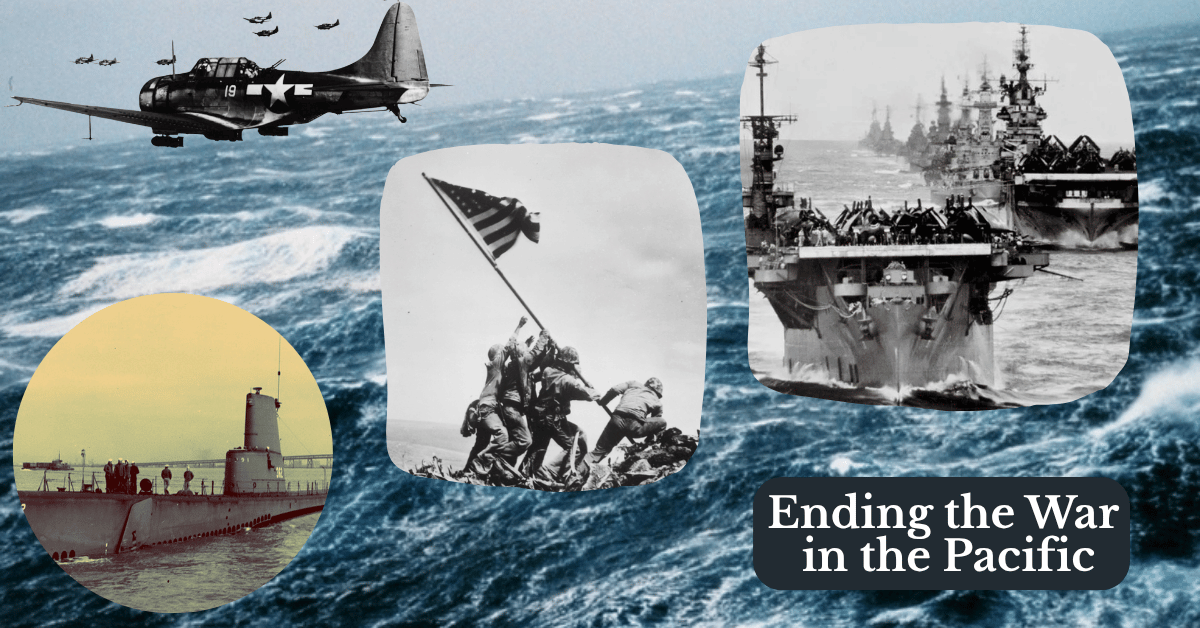
In the summer of 1942, as outlined in the post “Before the War”, Japan pursued parallel paths: diplomacy and war preparations. The military (members of the cabinet, IJA Headquarters, and influential flag officers) flush with success in Manchuria, China and French Indo-China (Vietnam) wanted to unleash the Army against the entire Asia-Pacific region in order to establish the Empire of Japan under the guise of the Greater East Asia Co-Prosperity Sphere. The Navy was circumspect with part of its leadership desirous of some means to achieve “glory for the Emperor” as the Army had already done. But another part of its leadership understood that meant taking on the US and British Pacific Fleets. The United States was particularly worrisome given three factors: (1) the fleet at Pearl Harbor, (2) that US shipyards were already building a new generation of aircraft carriers, battleships, cruisers and fleet tankers that would be commissioned in 1942, and (3) that was without the full engagement of the industrial base of the nation. That meant the war plan “decisive battle” would not be engaged in Philippine Island waters, but needed to be a “knockout blow” at Pearl Harbor to take out battleships and aircraft carriers.
In the autumn of 1941 there were a series of Imperial Conferences (Gozen Kaigi) where Emperor Hirohito, his cabinet, and senior military leaders debated the U.S. demands for a diplomatic settlement and Japan’s course of action. The first of these conferences was held September 6, 1941 – “Imperial Conference on the Empire’s Future Policy.” The cabinet and military presented Hirohito with two paths: (a) continue negotiations with the U.S. and Britain and (b) preparation for war if negotiations failed. Hirohito approved a resolution: negotiations would continue, but war preparations must be ready by late October if talks broke down. The Emperor made it clear that diplomacy was the priority (for reasons outlined in the previous post) and so he accepted the parallel path, but also set a firm deadline for agreement or war.
The Second Imperial Conference was held November 5, 1941 after weeks of inconclusive Army-Navy-Cabinet debates it was agreed that the military would strike Pearl Harbor while also moving into Malaya, the Dutch East Indies, and the Philippines. At a final Imperial Conference on December 1, 1941. The cabinet reported to Hirohito that diplomatic negotiations had failed. The Army and Navy both argued that war was now unavoidable. Hirohito approved the resolution that war with the United States, Britain, and the Netherlands would begin in early December. Diaries record Hirohito as somber, but he gave no objection. His silence ratified the decision. Hirohito performed the ritual reading of the imperial rescript that authorized hostilities. The debate was closed. The Combined Fleet had already set sail for Pearl Harbor on November 26th. Army troops were already being deployed throughout the Asia Pacific region.
This coming Sunday is the 28th Sunday in Year C with the gospel taken from Luke 17. The narrative of the Journey to Jerusalem (begun in Luke 9:51) returns; new characters are introduced – ten lepers – the disciples play no role in this story. For a brief moment the on-going theme of forming discipleship seemingly takes a backseat, as the accent is upon God’s mercy and salvation. Several commentators hold that this account marks a new turn in Luke’s telling of the gospel moving from an accent on discipleship to the larger theme of “Responding to the Kingdom” as the cleansing of lepers is taken as a sign of the in-breaking of the Kingdom.
This story is only in Luke. (While at first glance Mark 1:40-45 may appear parallel to our passage, it is considered parallel to Luke 5:12-16.) Culpepper notes that there are two instances of seeing that serve a lynchpins to the narrative:
And when he [Jesus] saw them (v.14)
And one of them, realizing he had been healed (v.15) – the word translated as “realizing” is idōn whose primary meaning is to literally “see” in a way that leads to insight and perception.


 friarmusings