Today’s first reading is from the Book of Jonah. There is a large gap in the storyline from yesterdays’ reading and reflection. Long story short, the crew of the ship that was giving passage to Jonah, throws him overboard into the tempest. John is swallowed by a large fish, has a conversion of some kind, the “deposited” on the beach when the whale regurgitates him (Jonah 2:11)
Jonah has been given a second chance. In its own way it parallels the life of St. Peter whose forgiveness for denying Jesus was sealed by the repetition of his initial summons “Follow me,” (John 21:19) Jonah is called again to be the divine messenger to Nineveh: “The word of the LORD came to Jonah a second time: ‘Set out for the great city of Nineveh and announce to it the message that I will tell you.’” (Jonah 3:1-2)
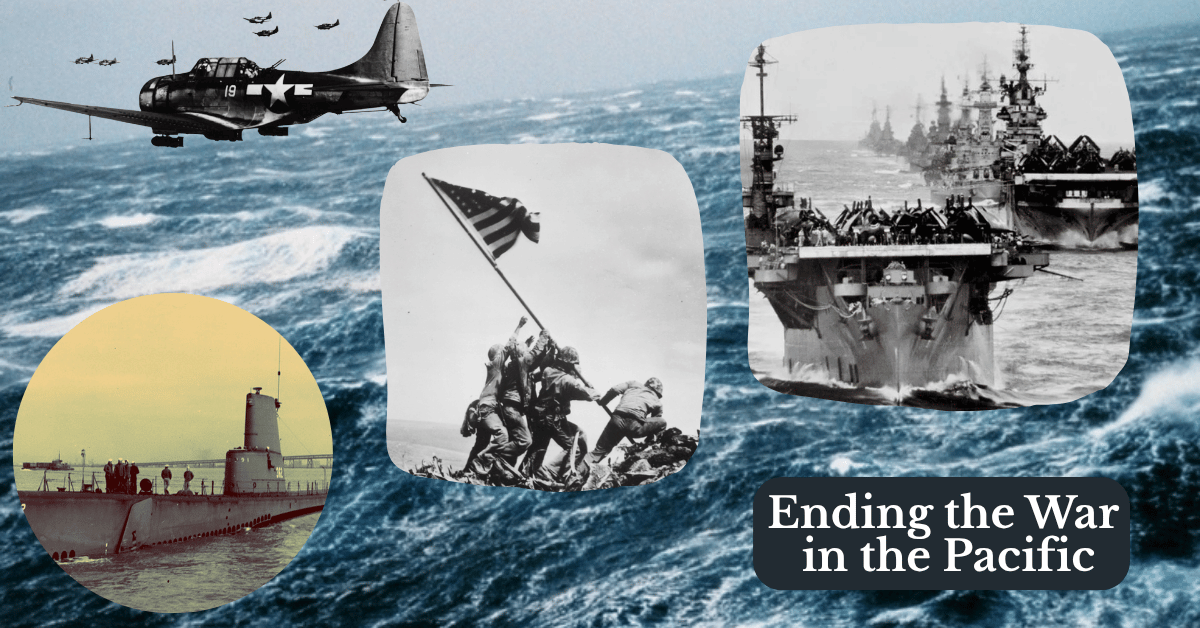
The two previous posts were meant to give the reader a sense of the Emperor’s role in war-time governance in Japan. To be sure, I have not done the topic justice as just like “Washington insider” machinations (then and now) Japan had its own “system” to navigate to achieve decisions. Some of this was already covered. A review of two posts would be helpful: Ketsu-Goand Governance and Ketsu Go. The former describes Japanese plans for the “decisive battle” that would bring the Allies to a negotiation table and away from their demands for unconditional surrender. The latter describes the sequence of events that took Ketsu-Go from a strategic idea (January 45) to a formally approved plan of action (March 45) – and gave some sense of the internal factions within the government along with their agendas. In this post we look “behind the curtain.”
The previous posts have tried to show that Hirohito, as Emperor, moved from “self-induced neutrality” in decisions to a more animated Emperor in decisions about the war. He was briefed and was aware of war progress and failures. He asked critical questions. He knew of cases where the military subverted his expressed views. And he deftly navigated the reach and influence of his power while remaining the Emperor in a constitutional monarchy where the power lay with the military.
What is uncertain was the quality of information the Emperor was receiving. While there were cases in which military leaders hedged reports, these same leaders were at the mercy of field commander reports which often were greatly exaggerated. This was especially true among Imperial Army (IJA) ranks; less so from the Imperial Navy (IJN). It was hard to obfuscate the loss of aircraft carriers, battleships, cruisers and more. A subtext of much of the reports, as the historian Edward Drea notes, was a dismissive view that “Americans [were] products of liberalism and individualism and incapable of fighting a protracted war.” This is what drove the Japanese to find the “Decisive Battle” to bring the Allies to a negotiation to end the war. Midway, Guadalcanal and especially Saipan were to be those battles. And yet the allies pressed forward with the war. The Emperor supported the drive to bring about the decisive battle – but as a necessary precursor to his end-game: a negotiated peace. Or perhaps a negotiated continuity of the Imperial Household.
This coming Sunday is the 28th Sunday in Year C with the gospel taken from Luke 17.
They stood at a distance from him 13 and raised their voice, saying, “Jesus, Master! Have pity on us!” 14 And when he saw them, he said, “Go show yourselves to the priests.” As they were going they were cleansed. 15 And one of them, realizing he had been healed, returned, glorifying God in a loud voice; 16 and he fell at the feet of Jesus and thanked him. He was a Samaritan. 17 Jesus said in reply, “Ten were cleansed, were they not? Where are the other nine? 18 Has none but this foreigner returned to give thanks to God?”
The telling of this encounter seems straight forward: (a) Jesus encounters a group of lepers on the road to Jerusalem, (b) they ask for his mercy, (c) they are cured, but (d) only one returns to thank Jesus and that one is a Samaritan. A simple miracle story, yes? A narrative about faith as the foundation of healing? Such simple summaries, even if true, miss several key aspects of the encounter and the chance to reflect further on our own life of faith in Jesus.

 friarmusings