
God is still waiting

Today’s first reading is again from the Book of Jonah. From yesterday’s reading, we recall: “10 When God saw by their actions how they turned from their evil way, he repented of the evil that he had threatened to do to them; he did not carry it out.” (Jonah 3:10) Great! The Ninevites repented, God relented, and Jonah’s prophetic mission is complete. As mentioned, that would have been an “they all lived happily ever after” ending. But there is another chapter in the story whose first verse gives us an idea that the story’s ending is anything but happy.

But this was greatly displeasing to Jonah, and he became angry.” (Jonah 4:1) Jonah’s reaction reveals something about the nature of repentance. In Nineveh, the King and all the subjects repented in their heart and in their actions. And Jonah? While externally he is obedient, he has long since lost the inspiration that fueled his prayer in the belly of the great fish. When God relents of the destruction of Nineveh, the “fuse” runs out on Jonah’s own internal bomb. The prophetic saboteur falls prey to his own true feelings. When it becomes clear that Nineveh will be saved by the gracious mercy of God, Jonah is infuriated.

Continue reading
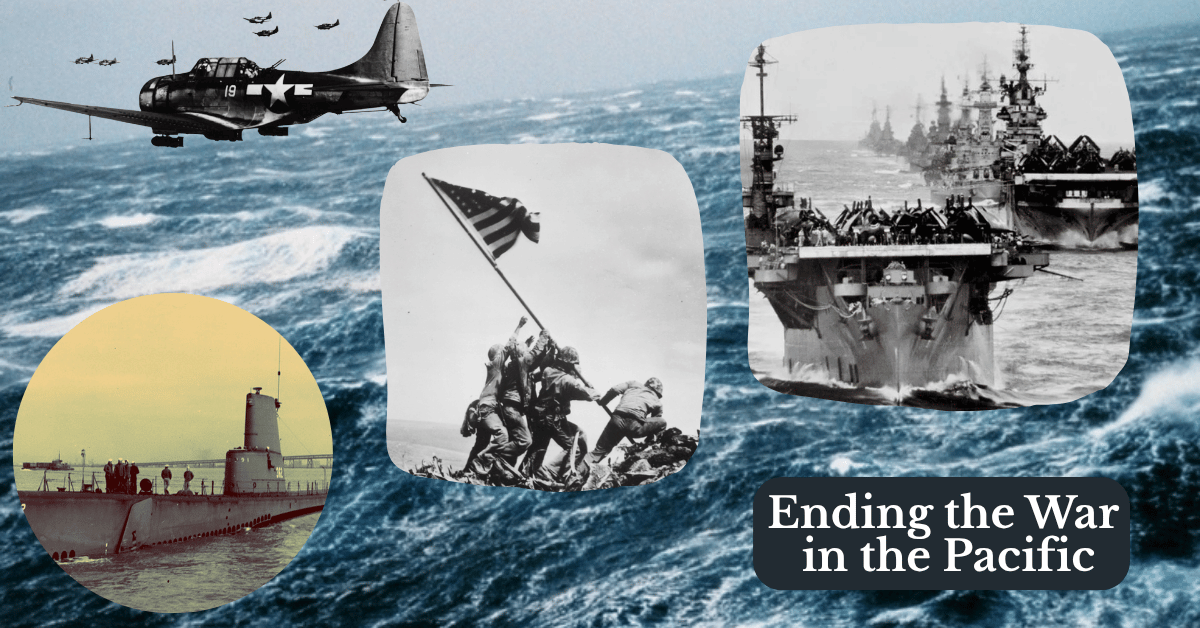
Before Potsdam

Who were the allied leaders whose decisions would be the most impactful on the Asia- Pacific War? And equally important what were key inter-allied conversations and decisions that would shape the manner and outcome of the war?  Unlike Japan that had no effective dialog or connection to its Axis partners, the Allied met quite regularly in high level conferences with its partners. Quite early in the war, the allies agreed that both the war in Europe and the Asia-Pacific would end in unconditional surrender.

At the January 1943 Casablanca Conference the Allies (U.S., Britain, USSR*) demanded, as pertains to Japan, that Japan surrender without preconditions, meaning:

  • total disarmament,
  • Allied occupation of the home islands,
  • war crimes trials, and
  • Reshaping of Japan’s government along democratic lines.

At no point did the policy mention the future of the Emperor, a central figure in Japan’s political and spiritual life.

This policy did not emerge from a vacuum but was rooted in and shaped by the experience of World War I, current knowledge of WWII axis war crimes, and concerns over postwar stability. 

Continue reading

Healed, saved and made whole

This coming Sunday is the 28th Sunday in Year C with the gospel taken from Luke 17

11  As he continued his journey to Jerusalem, he traveled through Samaria and Galilee. 12 As he was entering a village, ten lepers met (him). They stood at a distance from him 13 and raised their voice, saying, “Jesus, Master! Have pity on us!” 14 And when he saw them, he said, “Go show yourselves to the priests.” As they were going they were cleansed. 15 And one of them, realizing he had been healed, returned, glorifying God in a loud voice; 16 and he fell at the feet of Jesus and thanked him. He was a Samaritan. 17 Jesus said in reply, “Ten were cleansed, were they not? Where are the other nine? 18 Has none but this foreigner returned to give thanks to God?” 19 Then he said to him, “Stand up and go; your faith has saved you.”

Stand up and go; your faith has saved [sozo] you” (v.19). Such are the words spoken to the Samaritan leper, the only one who returned and gave thanks to Jesus.  sozo has as a basic meaning, “to rescue from danger and to restore to a former state of safety and well being.” Thus it is translated with words like “save,” “heal,” “make whole,” depending upon how the danger is understood.  How are we to understand the use of sozo here in this verse?

Continue reading